
Written by the Al Jory Marble team. We fabricate and install in our own shop at 4711 135th St in Crestwood, IL, serving Chicago and the suburbs. See our site at aljorymarble.com.
Marble is in our name, and we will still be the ones to tell you it is not right for every kitchen.
That is not a sales tactic. It is that marble is the one stone where expectations and reality separate most often, and the separation always shows up six months after installation rather than on install day. Homeowners who understand what marble does before they buy it tend to love it for decades. Homeowners who were sold it as a maintenance free luxury surface tend to be unhappy by summer.
So here is the honest version, from a shop that stocks it, cuts it, and installs it across Chicagoland.
The One Thing to Understand: Etching Is Not Staining
Almost every marble complaint traces back to confusing these two.
Staining is discoloration from something soaking in. Marble is porous, so oil, wine, or coffee left sitting can darken the stone. Sealing helps significantly, and stains can often be drawn out.
Etching is a chemical reaction. Marble is calcium carbonate, and acid dissolves it. Lemon juice, vinegar, tomato sauce, wine, and many common cleaners will lightly dissolve the polished surface where they touch it, leaving a dull spot that is slightly rougher than the stone around it.
Here is the part that matters: sealer does not prevent etching. Sealer is a stain barrier, not an acid barrier. Nothing you apply to marble makes it immune to acid, because the acid is reacting with the stone itself. Any company that tells you their sealer makes marble etch proof is either confused or selling you something.
Etching is not damage in a structural sense. The stone is fine. It is a change in surface sheen, and it is permanent unless the surface is refinished.
Patina: The Question You Have to Answer Honestly
In Europe, a marble counter that has been in a kitchen for forty years with a soft, uneven, lived in surface is considered beautiful. That accumulation of etches and wear is called patina, and for a lot of people it is the entire point.
For other people, it looks like a ruined countertop.
Neither reaction is wrong, but you need to know which one you are before you buy. Ask yourself directly: if there is a faint dull ring where someone set a glass of wine down, and it does not come out, how will I feel in that moment?
If the answer is that it will bother you every time you see it, you want quartzite or quartz, and we will happily show you both. If the answer is that it will look like a kitchen someone cooks in, marble is going to make you very happy.
Honed vs Polished Changes Everything
If you do want marble in a working area, this is the single most useful decision you can make.
Polished marble has a glossy, reflective surface. It shows the color and veining at their most dramatic, and it shows every etch, because an etch is a dull spot on a shiny field.
Honed marble has a matte, satin finish. The veining is softer and the color reads quieter. Crucially, because the surface is already matte, etching is far less visible. It is still happening, you just have to hunt for it.
For a kitchen, honed is almost always the better call. For a bathroom vanity, a fireplace surround, or a bar back where acid exposure is minimal, polished is a reasonable choice and it looks spectacular.
Where Marble Genuinely Belongs
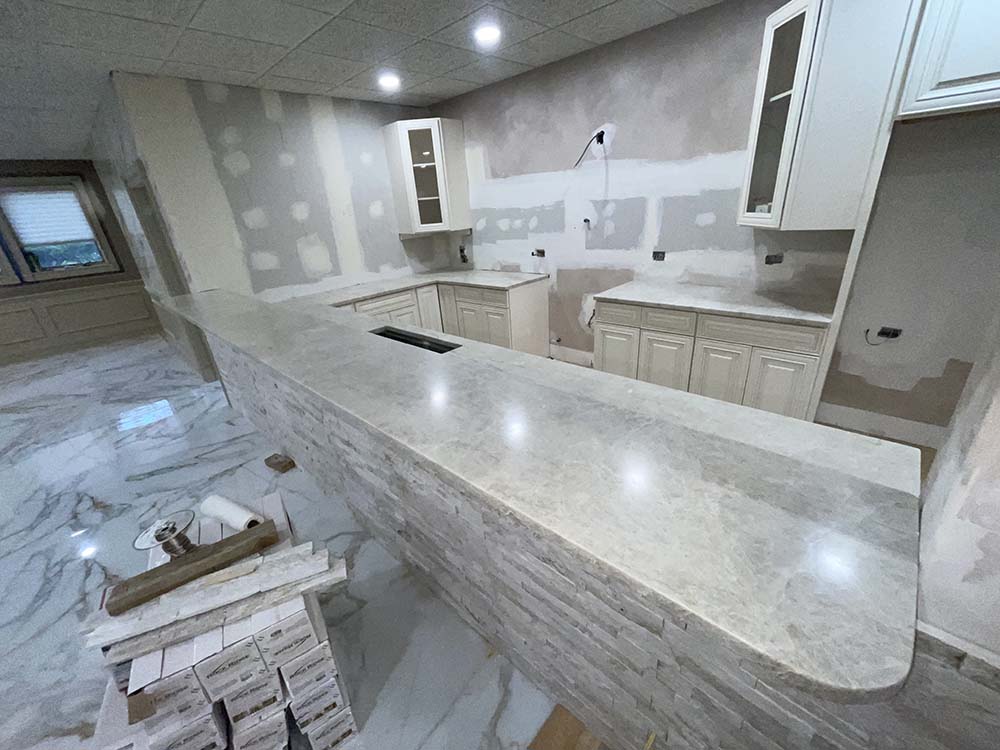
There are rooms where marble is not a compromise at all. These are the projects we recommend it for without hesitation.
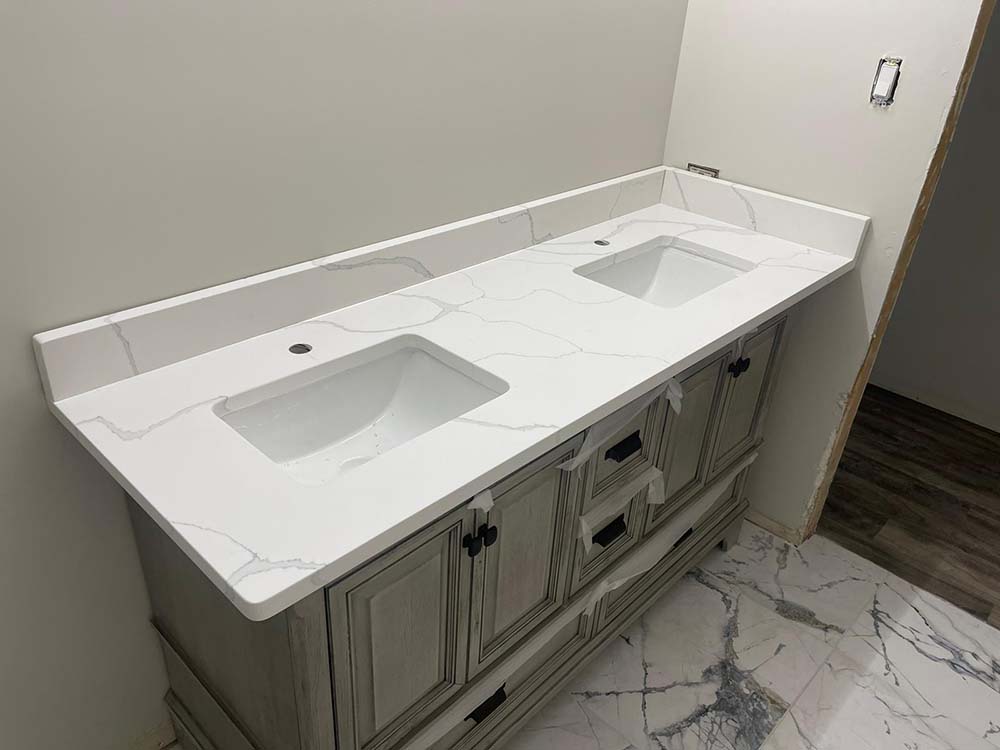
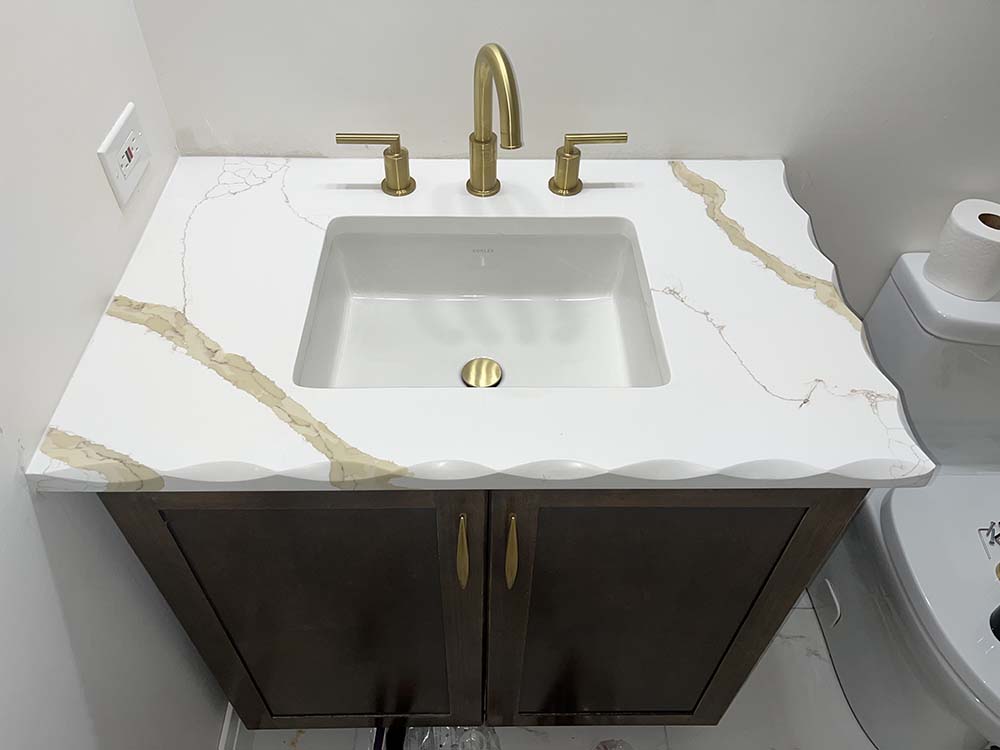
Bathroom vanity tops. The best marble application in the house. Almost no acid exposure, low heat, and the material is at its most beautiful in a space you see every morning. Cosmetics and cleaners are the only real concern, and switching to a stone safe cleaner solves it. See our bathroom vanity tops page.
Fireplace surrounds and hearths. Very little use, maximum visual impact, minimal square footage. Often a remnant project, which makes premium marble surprisingly affordable.
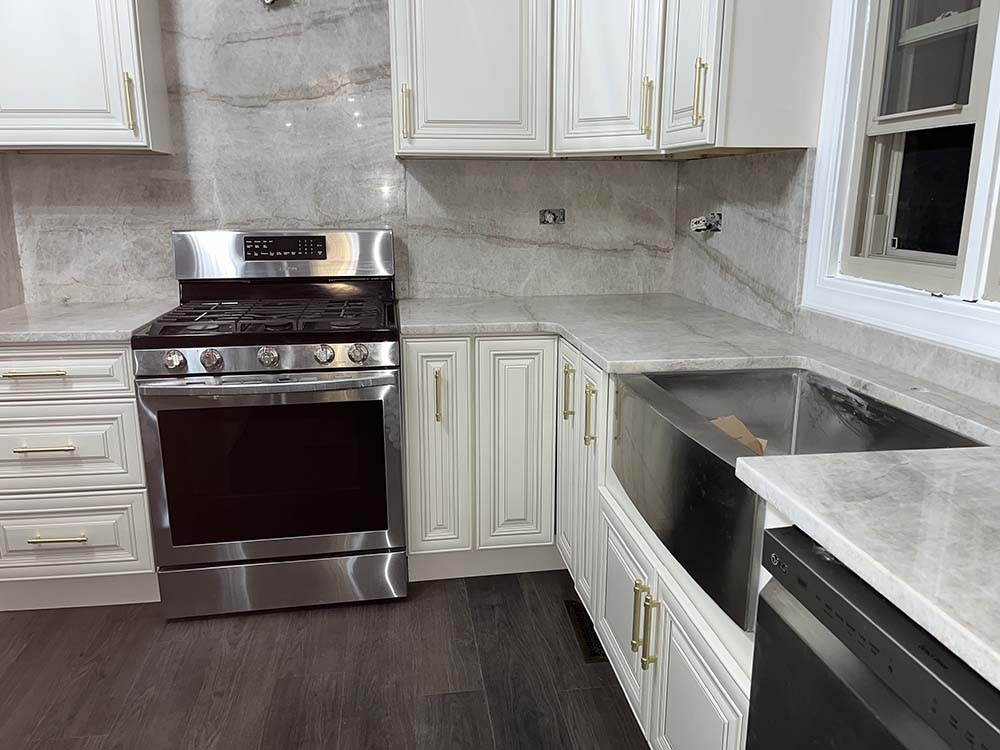
Backsplashes. Vertical surfaces do not get cutting boards or wine glasses set on them.
Baking stations and pastry areas. Marble stays cool, which is why serious bakers have wanted it for centuries. A dedicated marble baking slab or section is a legitimate reason to put it in a kitchen.
Bar tops and butler’s pantries. Provided the household understands that citrus and wine are acidic.
Waterfall island faces and vertical panels. All of the drama, none of the food contact.
Where It Struggles
Heavy use kitchen perimeters in a house that cooks daily with acidic ingredients. This is the classic mismatch.
Households where nobody will use a cutting board or a coaster. Not a judgment, just a fact about how the stone behaves.
Rental properties and flips. You cannot control how the next occupant treats it, and marble punishes inattention.
Commercial food prep surfaces. Porous natural stone is generally not the right answer for food contact areas in a licensed kitchen. We cover the details in our post on restaurant and cafe countertops in Chicago.
The Marble Look Without the Marble Behavior
If you love the light, veined, luminous look but the honest self assessment above pointed away from marble, you have two very good options and we stock both.
Quartzite. Natural stone, harder than granite, and it genuinely reads like marble. It resists scratching and etching far better because it is quartz based rather than calcite based. It is a natural stone, so it still needs periodic sealing. Worth knowing: some material sold as quartzite in the trade is actually dolomitic marble, which behaves like marble rather than quartzite. We test and we will tell you what you are actually looking at. See quartzite countertops.
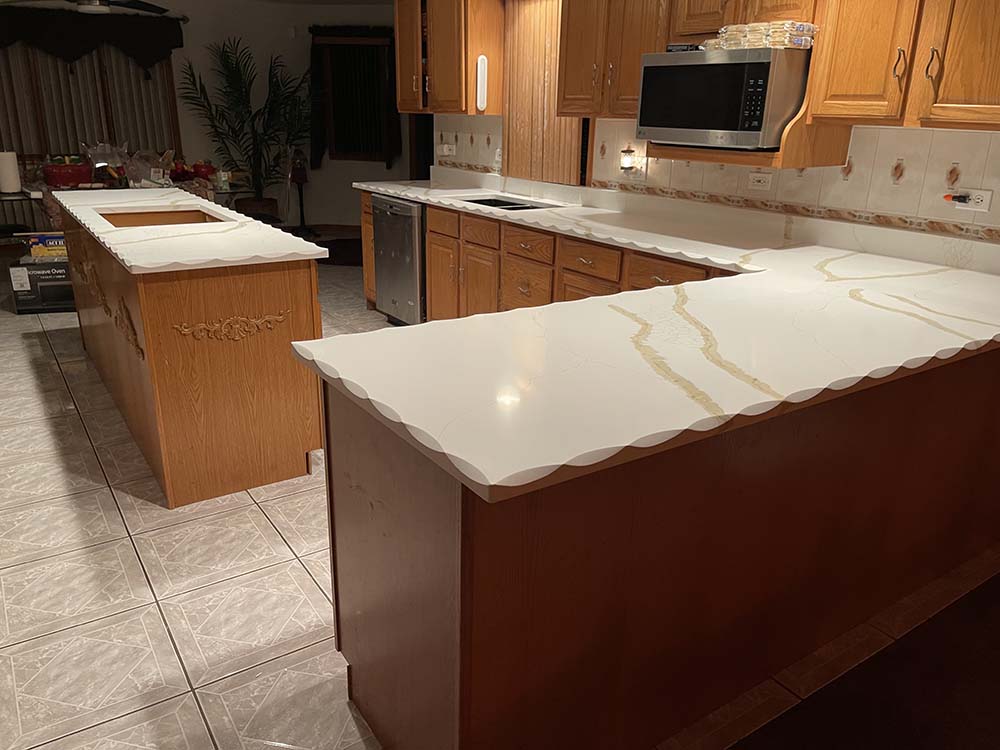
Quartz. Engineered, nonporous, never needs sealing, and modern veined patterns imitate Calacatta and Carrara convincingly. Completely predictable, which is why it is the most installed material in Chicagoland kitchens right now. It is less heat tolerant than natural stone, so trivets matter. See quartz countertops.
Our quartz vs granite vs quartzite comparison puts all three side by side, and our granite countertops guide covers the fourth option.
Living With Marble, Practically
If you go for it, these habits do most of the work:
- Wipe acidic spills right away. Not eventually. Right away.
- Use a stone safe cleaner. Skip vinegar, bleach, and most general purpose sprays. Warm water and a pH neutral stone cleaner is the whole routine.
- Use cutting boards and coasters. The stone will not stop you, but it will remember.
- Seal periodically. For stain resistance, not etch resistance.
- Consider honed. It matters more than any product you can buy.
Why See the Actual Slab
More than any other stone, marble has to be chosen in person. Veining runs in a specific direction across a specific piece, and where that veining lands on your island is a design decision, not a coincidence. A two inch sample chip cannot tell you whether the dramatic vein will run diagonally across your sink or disappear into the corner.
We keep marble slabs at our Crestwood yard so you can see full pieces end to end before you commit. Bring your cabinet door and a flooring sample. Because we cut in our own shop, we can lay out your pieces on the slab with the veining where you want it, and we can show you the plan before the saw runs. That is what custom fabrication actually means, and it is the part a middleman cannot offer. Where the seams fall is part of that same conversation, which we explain in our post on countertop seam placement.
We fabricate and install marble across Chicago, Orland Park, Naperville, Downers Grove, Schaumburg, and the rest of the suburbs, for kitchen countertops and commercial countertops alike.
Come Look at Marble in Person
We will show you polished next to honed, marble next to quartzite, and tell you honestly which one suits how you actually use your kitchen.
Visit the showroom at 4711 135th St, Crestwood IL 60418, Monday through Saturday, 9:00 a.m. to 6:00 p.m. Call (708) 362-7674 or request a free estimate and we will bring samples to your home and measure at no charge.

Serving Chicago & Surrounding Areas
Get Your Free Kitchen Countertop Estimate
Fill out the form and our team will get back to you in next 24 hours.