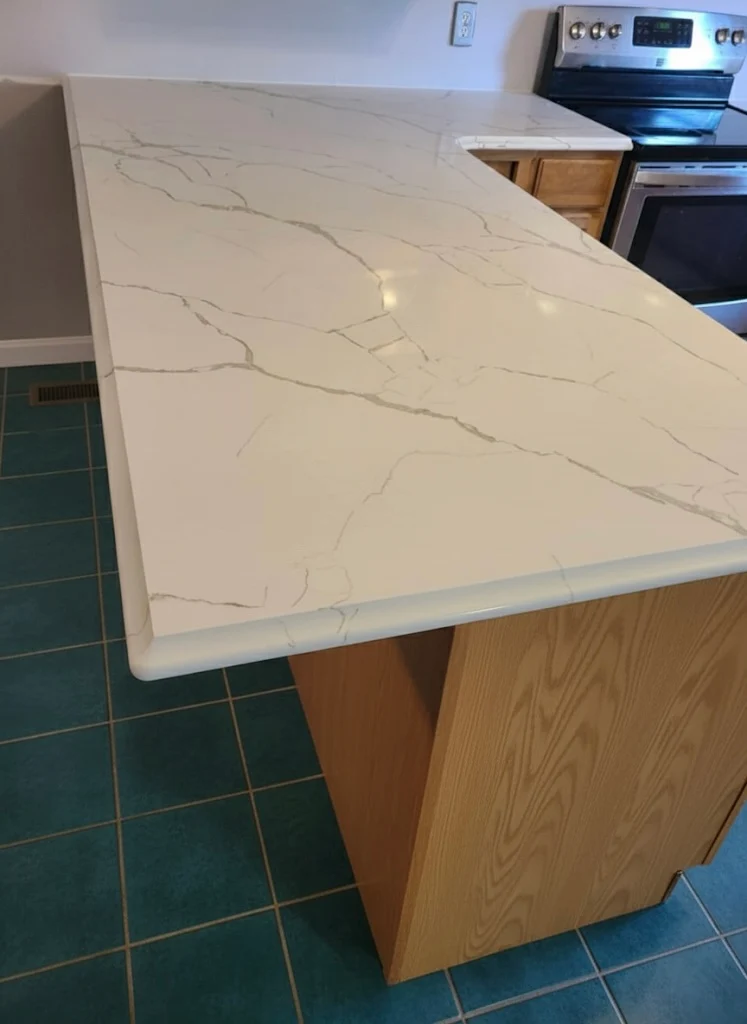
What Is Calacatta Quartz?
Calacatta is the marble look everyone wants: a bright white field crossed by bold, well spaced veining. Al Jory Marble stocks and fabricates a full range of Calacatta countertops, mostly engineered quartz, so you get that high end marble appearance without the sealing, etching, and staining that come with real marble. We fabricate in our own Crestwood shop and install across Chicago and the surrounding suburbs. Come see full Calacatta slabs in person before you decide.
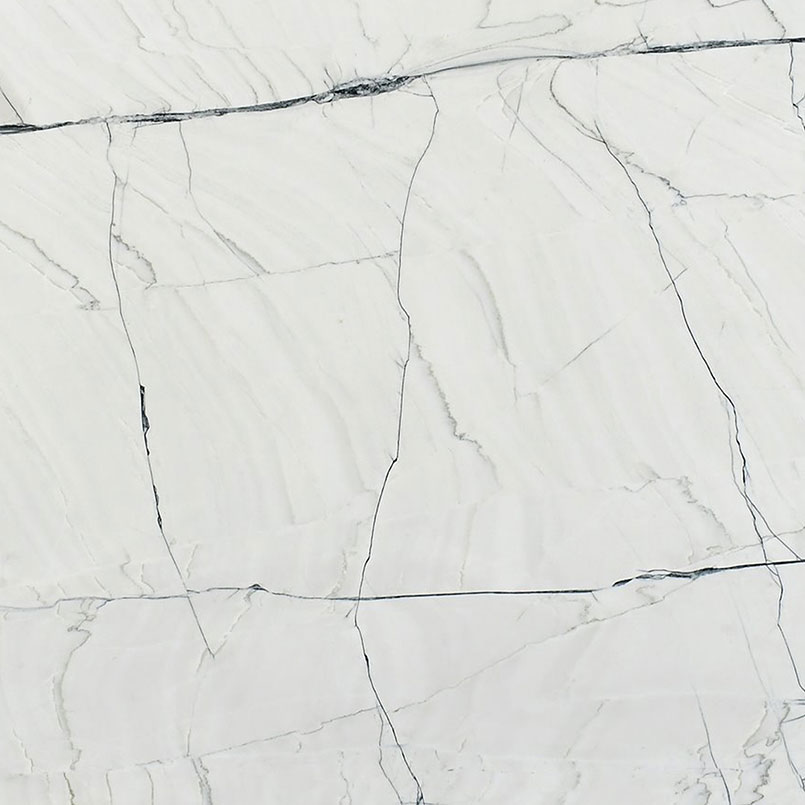
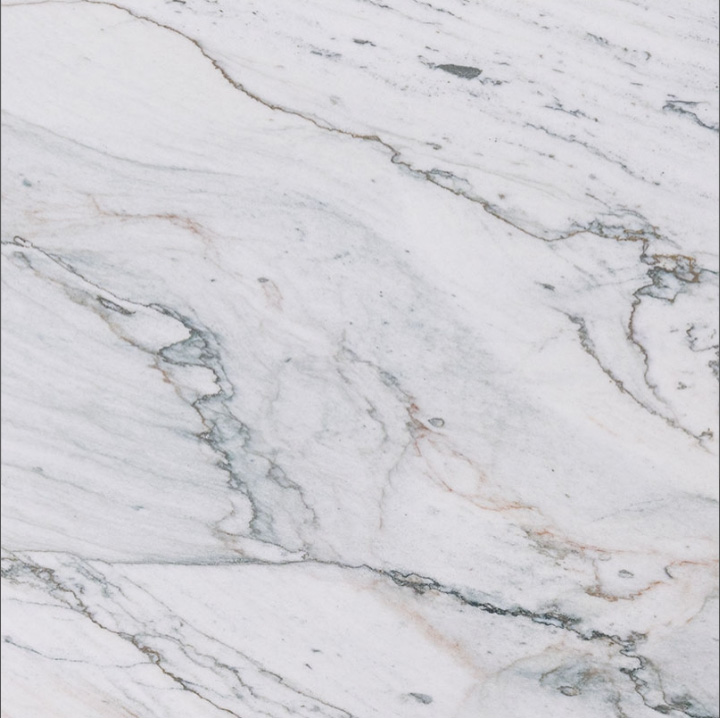
Calacatta started as a prized Italian marble known for its white background and dramatic grey and gold veining. Engineered quartz makers recreated that look in a nonporous, low maintenance material, and Calacatta quartz has since become one of the most requested countertop styles in Chicagoland kitchens.
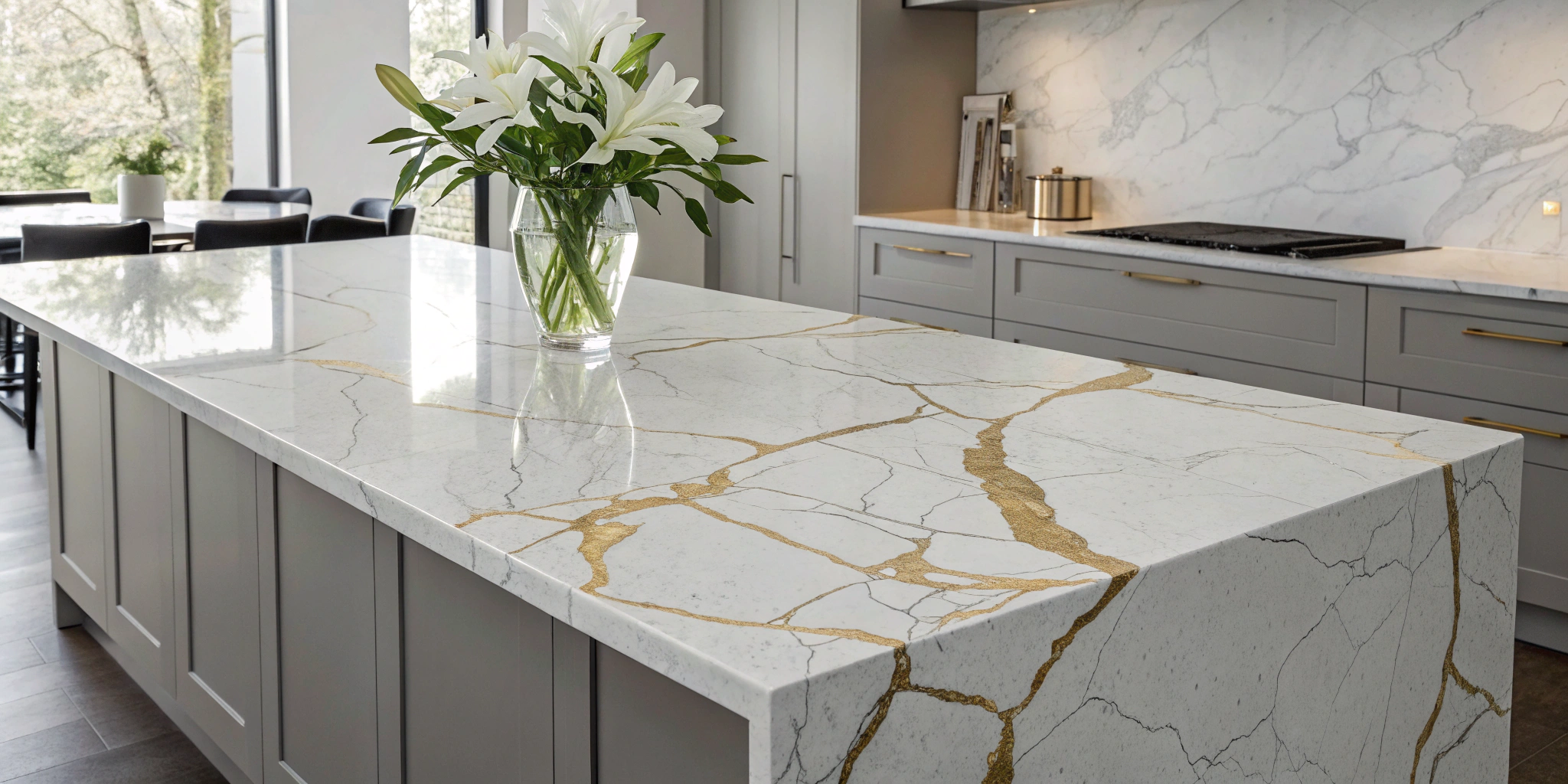
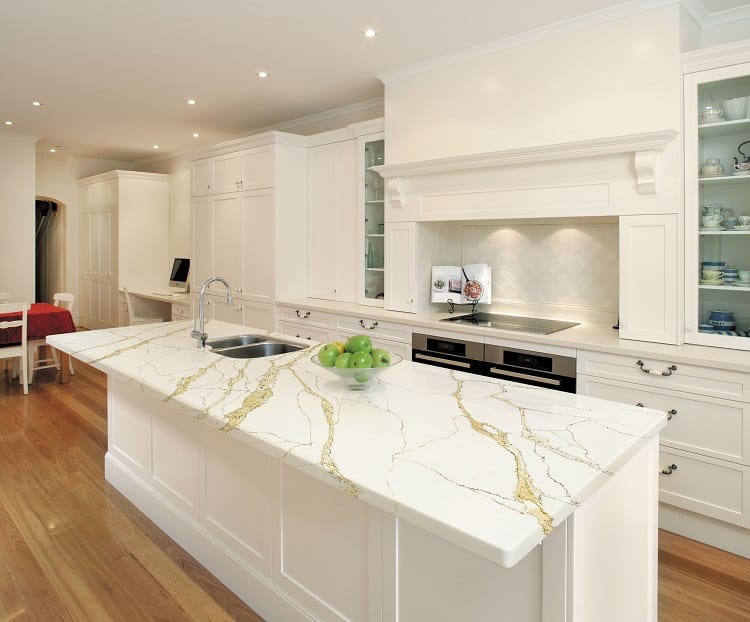
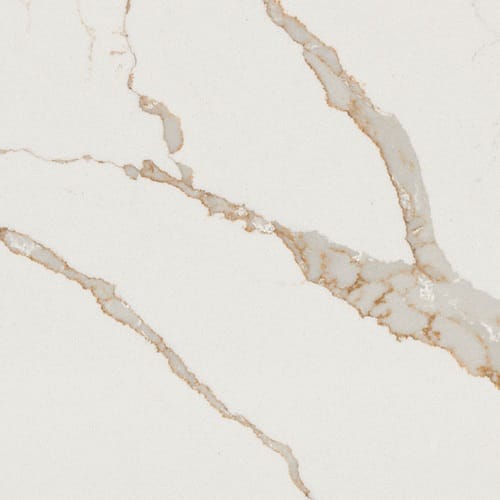
The difference between Calacatta and the more common Carrara look comes down to the veining. Carrara tends toward soft, feathery grey lines on a cooler white. Calacatta runs bolder, with thicker veins, more open white space between them, and often a warm gold or taupe undertone. That contrast is why Calacatta reads as the more luxurious of the two, especially on a large island where the pattern has room to show.
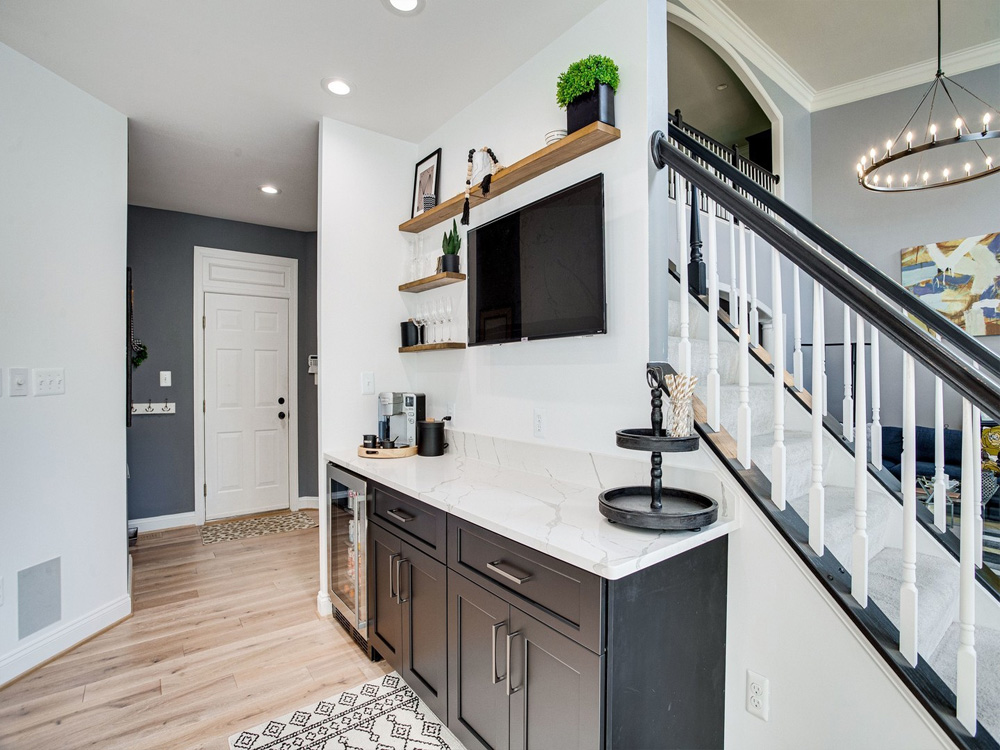
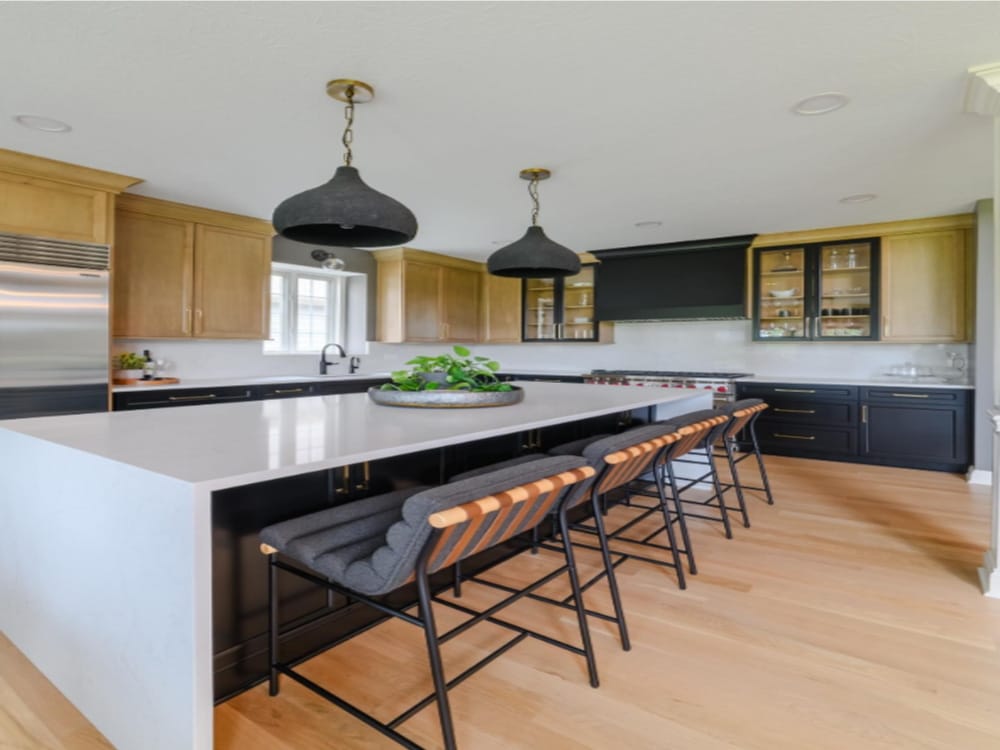
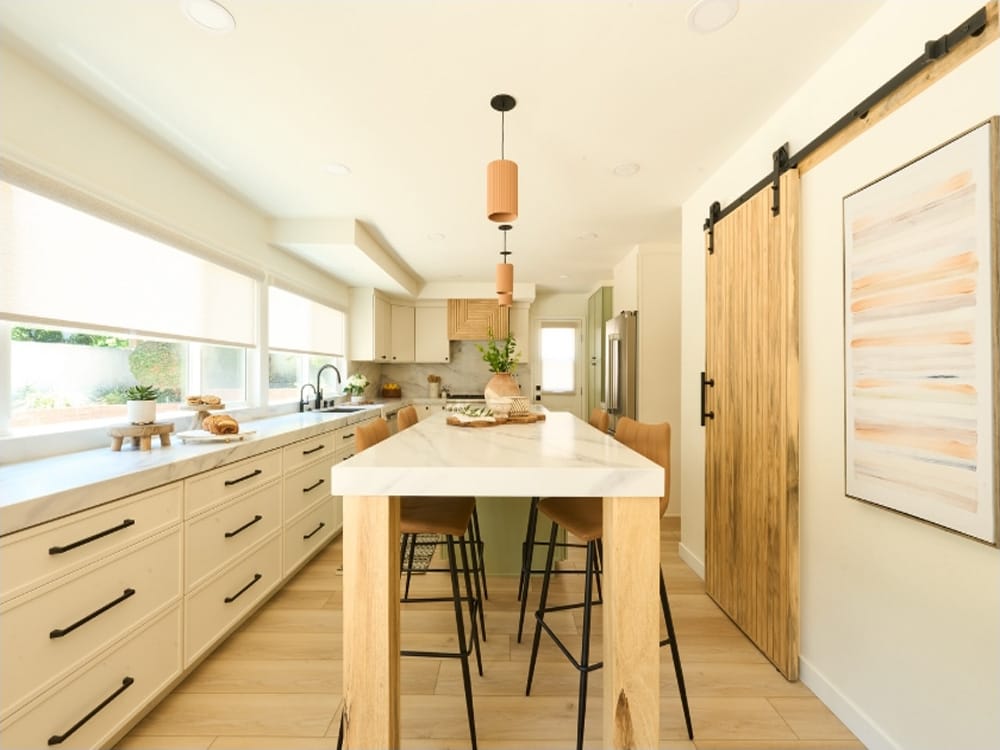
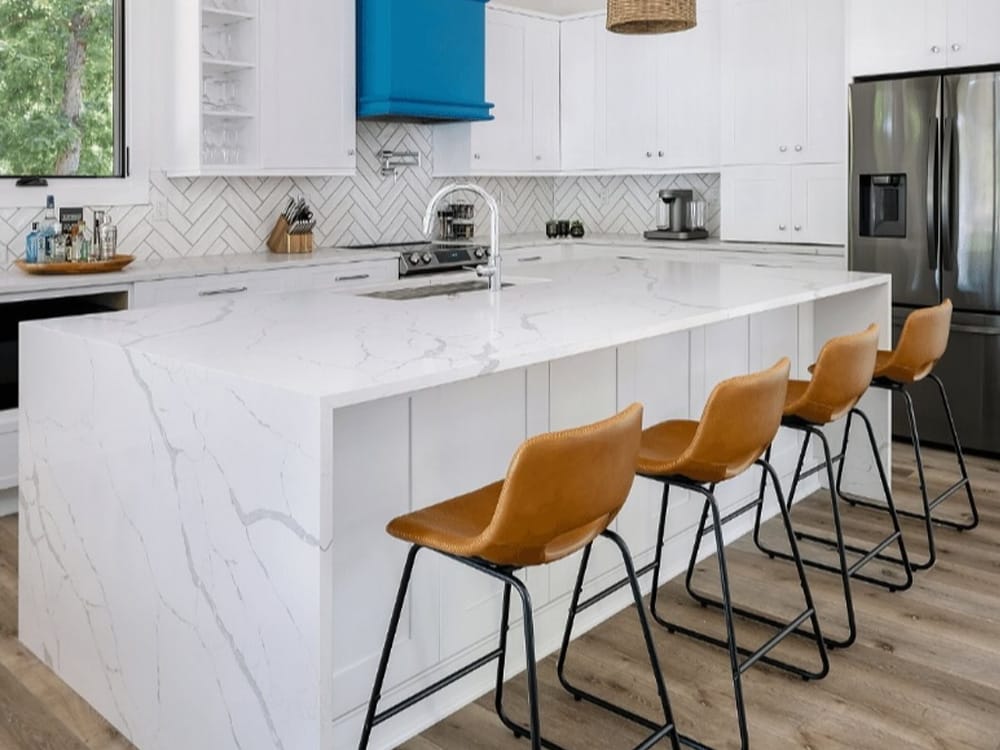
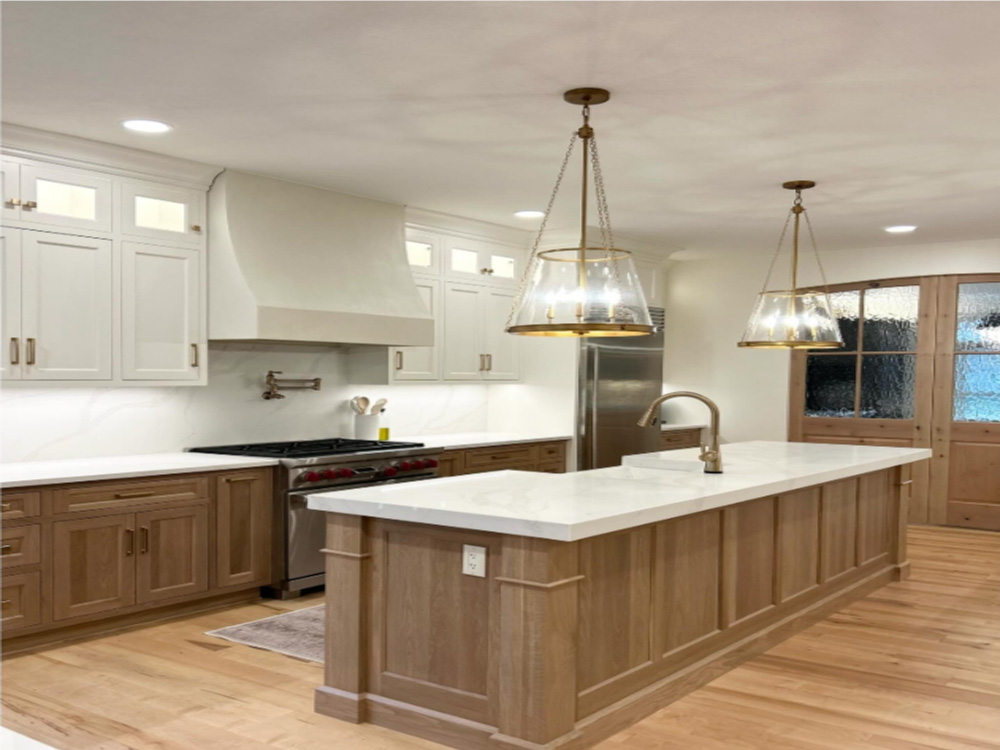
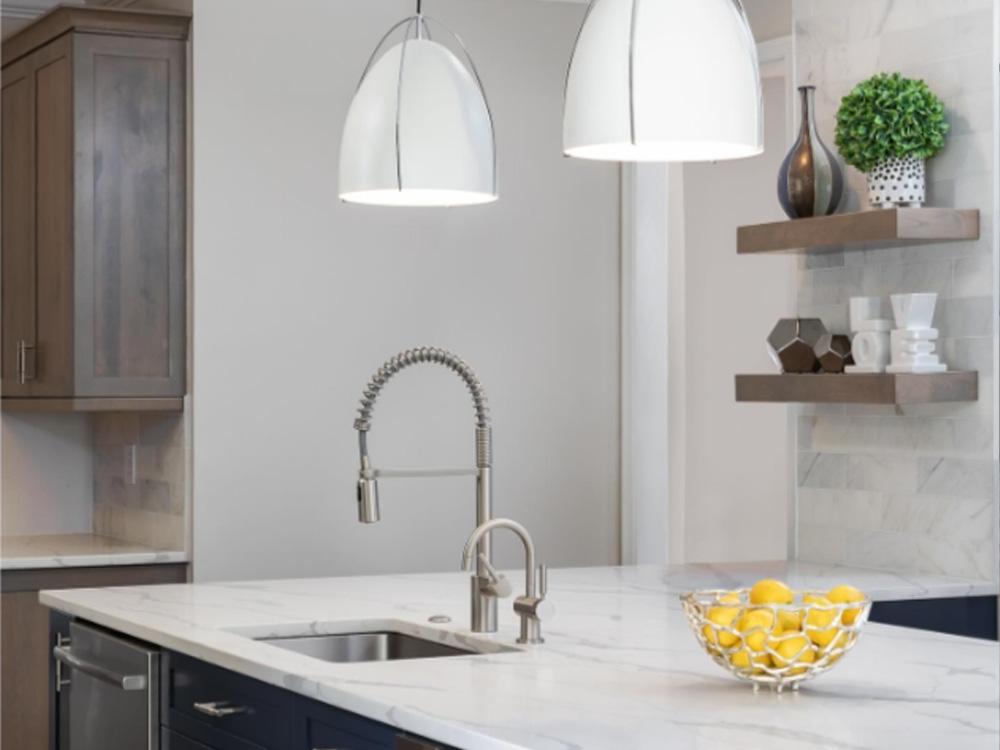
Calacatta Quartz vs Calacatta Marble
If you love the look but want to know what you are actually buying, the choice comes down to upkeep.
Calacatta marble is natural stone. It is porous, it etches when acidic food or drink sits on it, and it needs regular sealing. Many people accept that because they want a genuine marble that develops a patina over time.
Calacatta quartz is engineered. It is nonporous, never needs sealing, and shrugs off the lemon juice, wine, and coffee that would etch marble. The pattern is printed into the slab consistently, so what you see on the sample is what lands in your kitchen. For a busy family kitchen, quartz is almost always the better call. For a low traffic vanity or a client set on real stone, marble still has its place.
Al Jory Marble fabricates both. Most of our Calacatta lineup is quartz, with a couple of natural quartzite options for buyers who want a harder natural stone that reads like Calacatta.
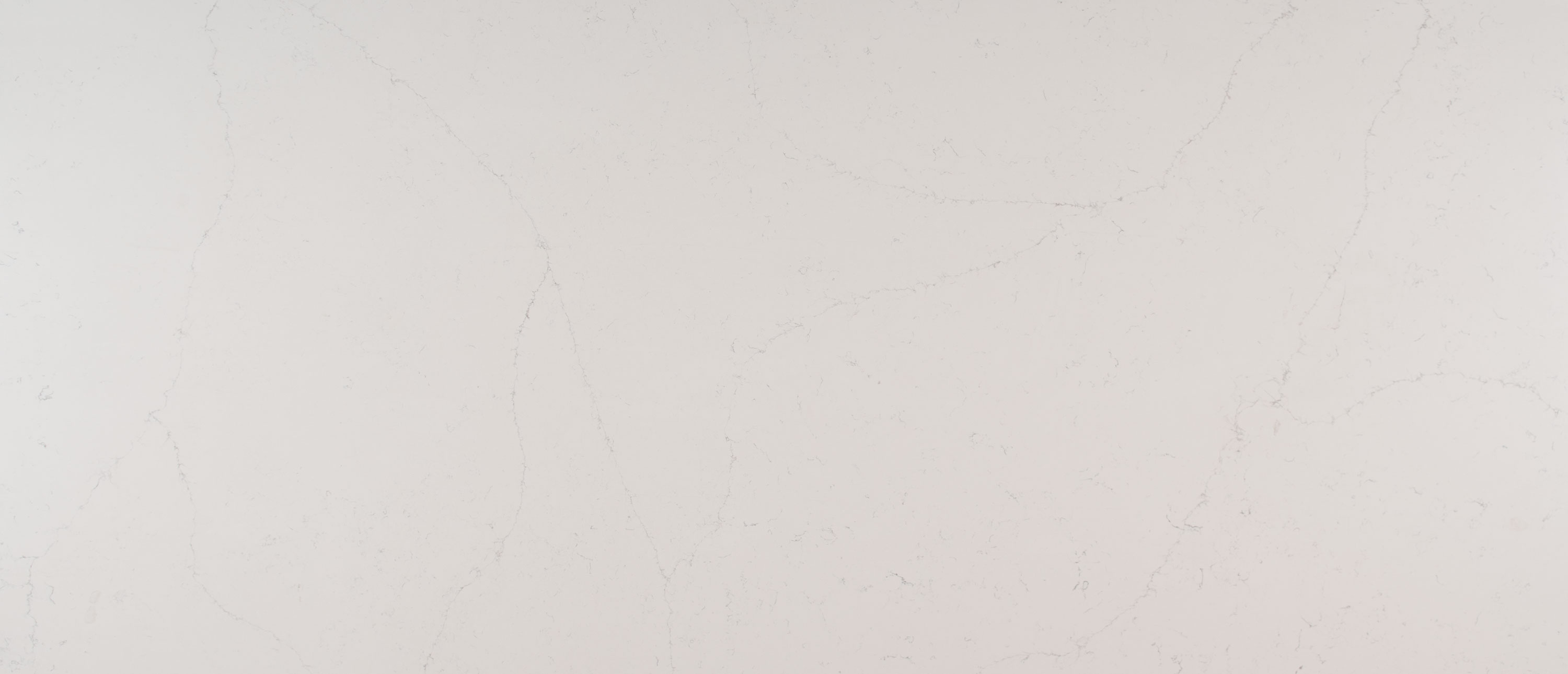


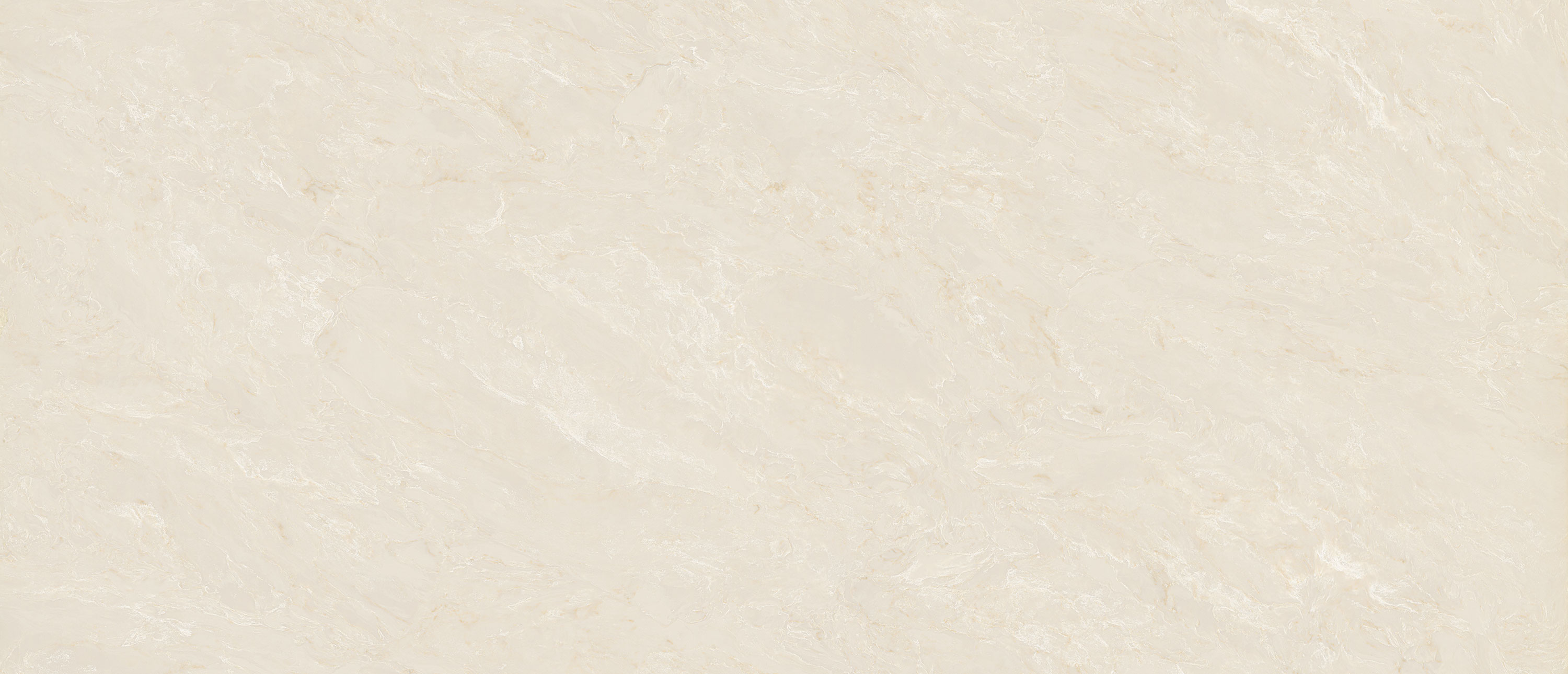
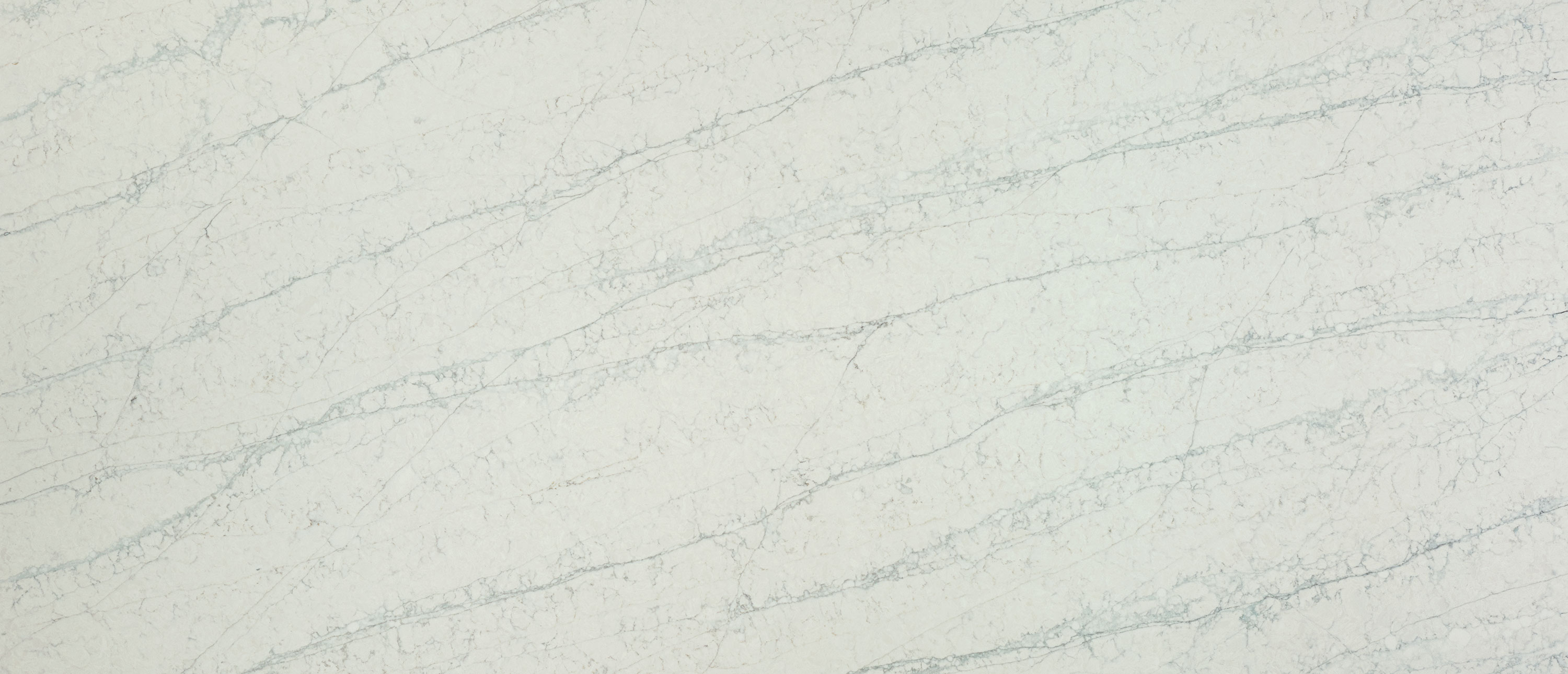
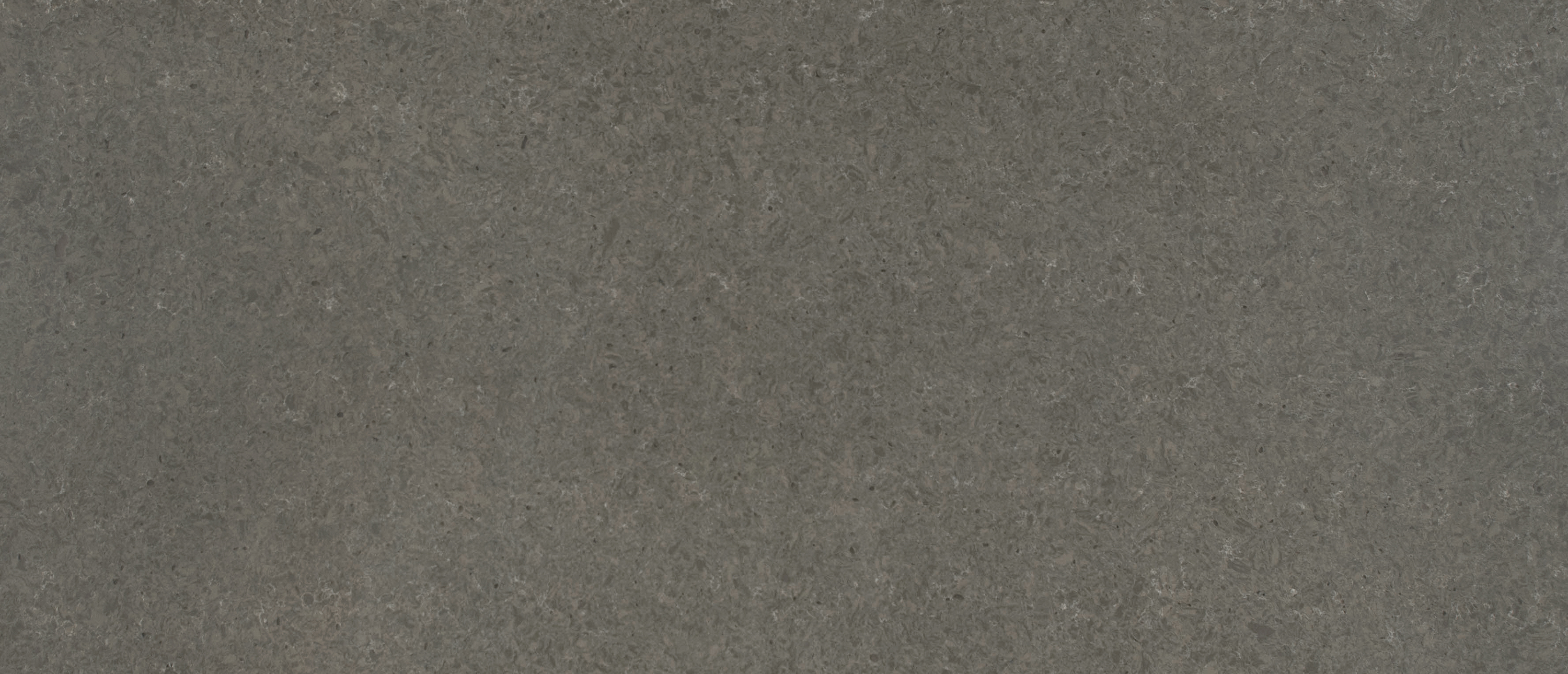

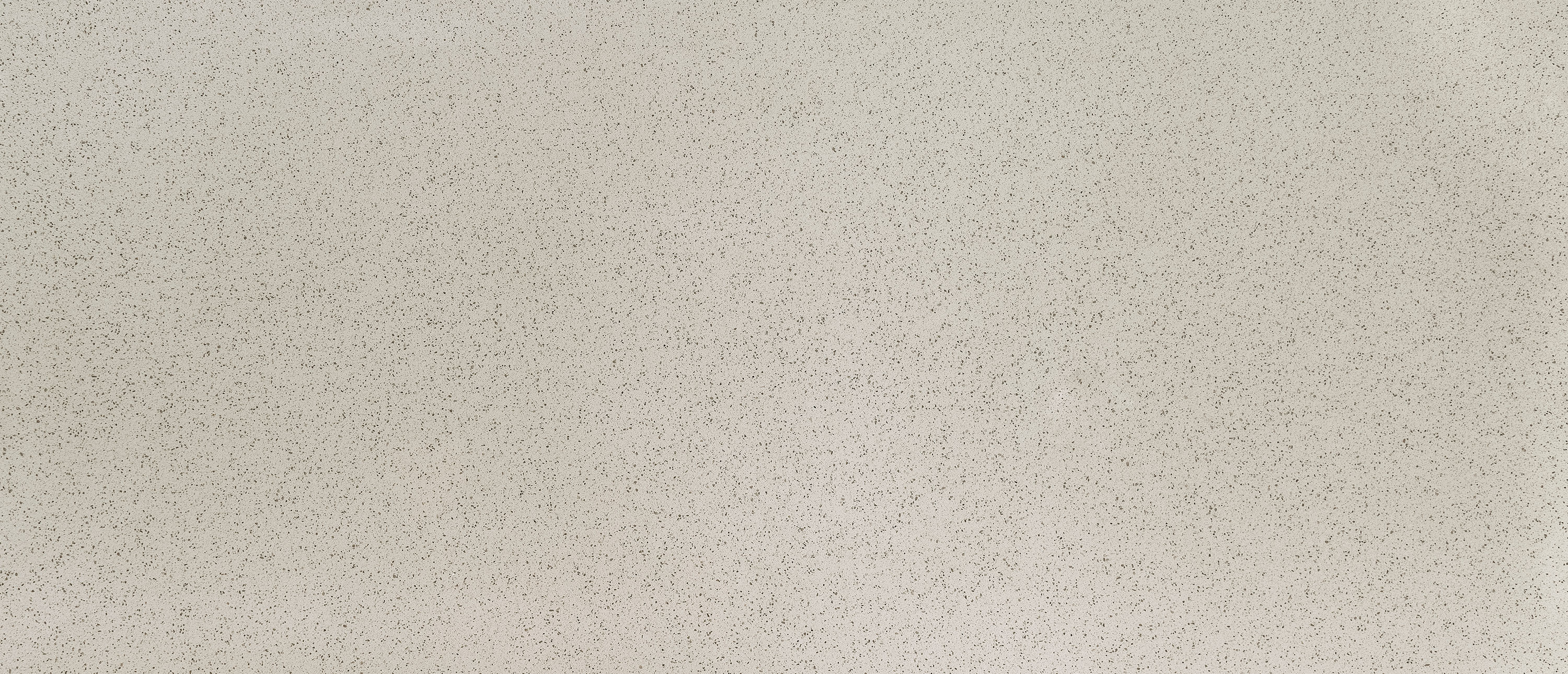
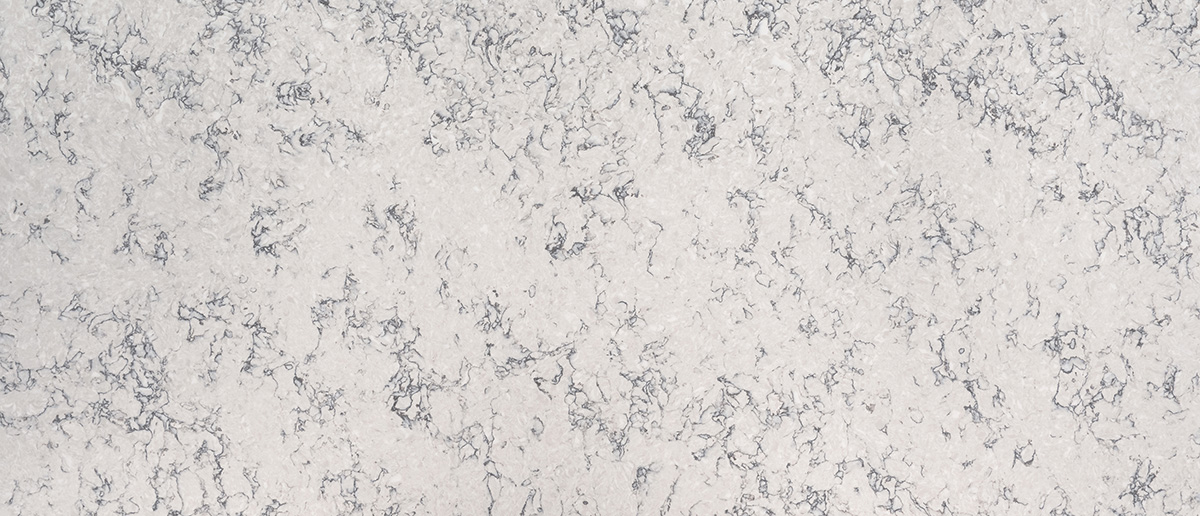

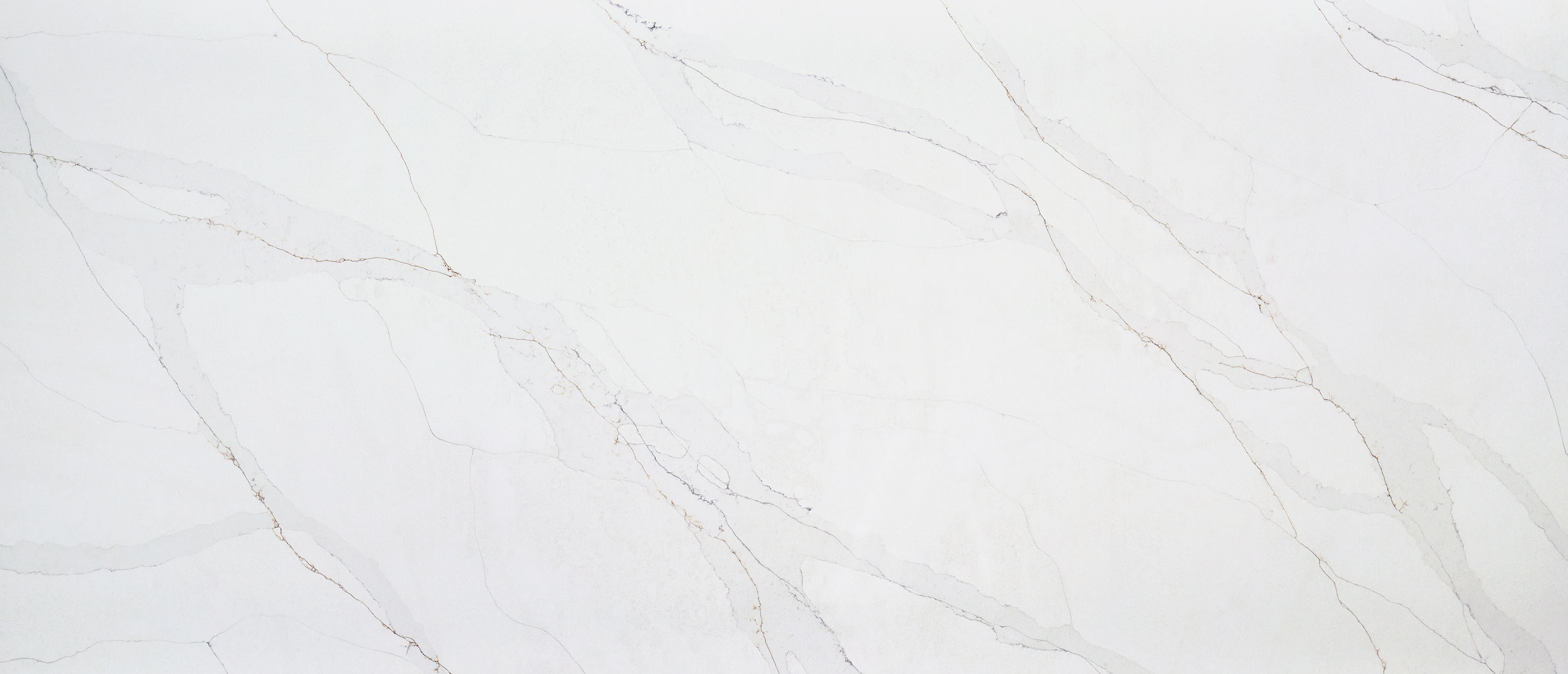
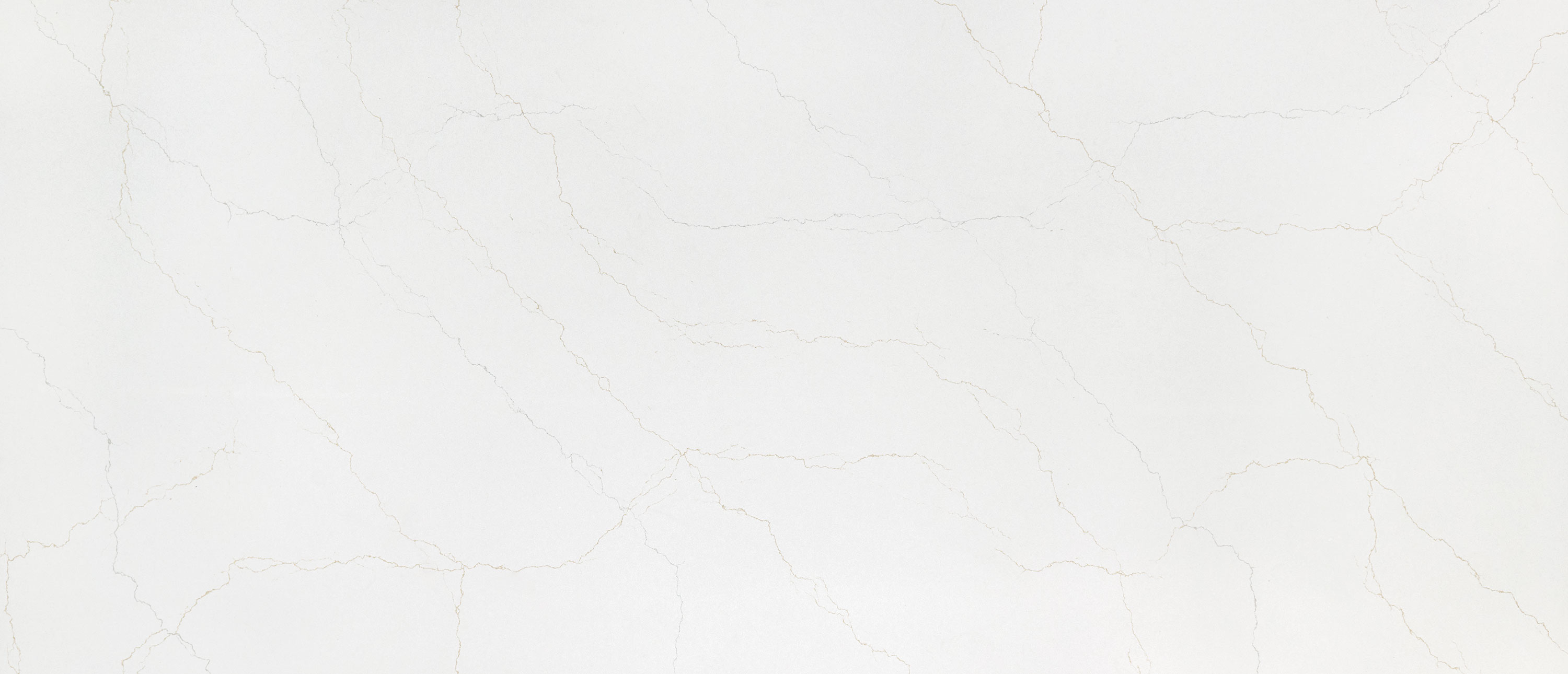

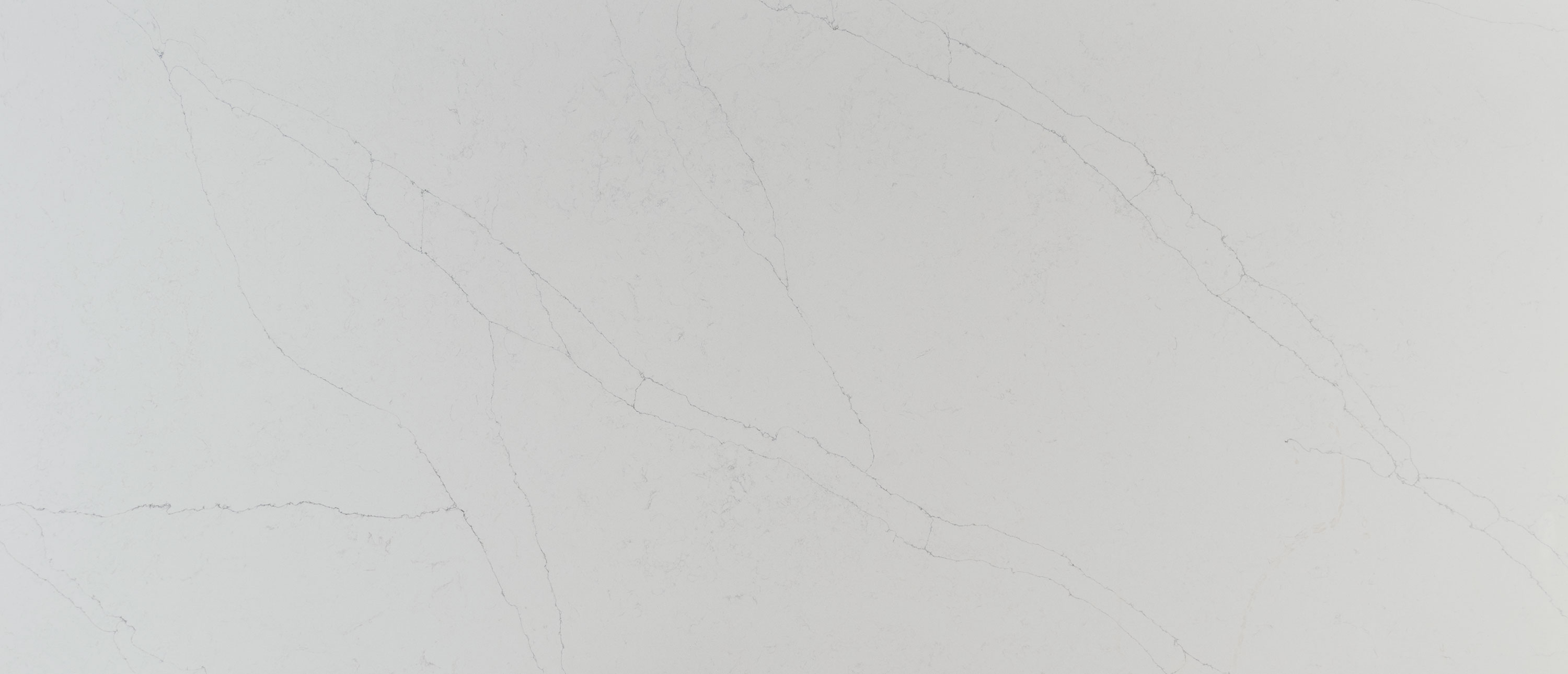
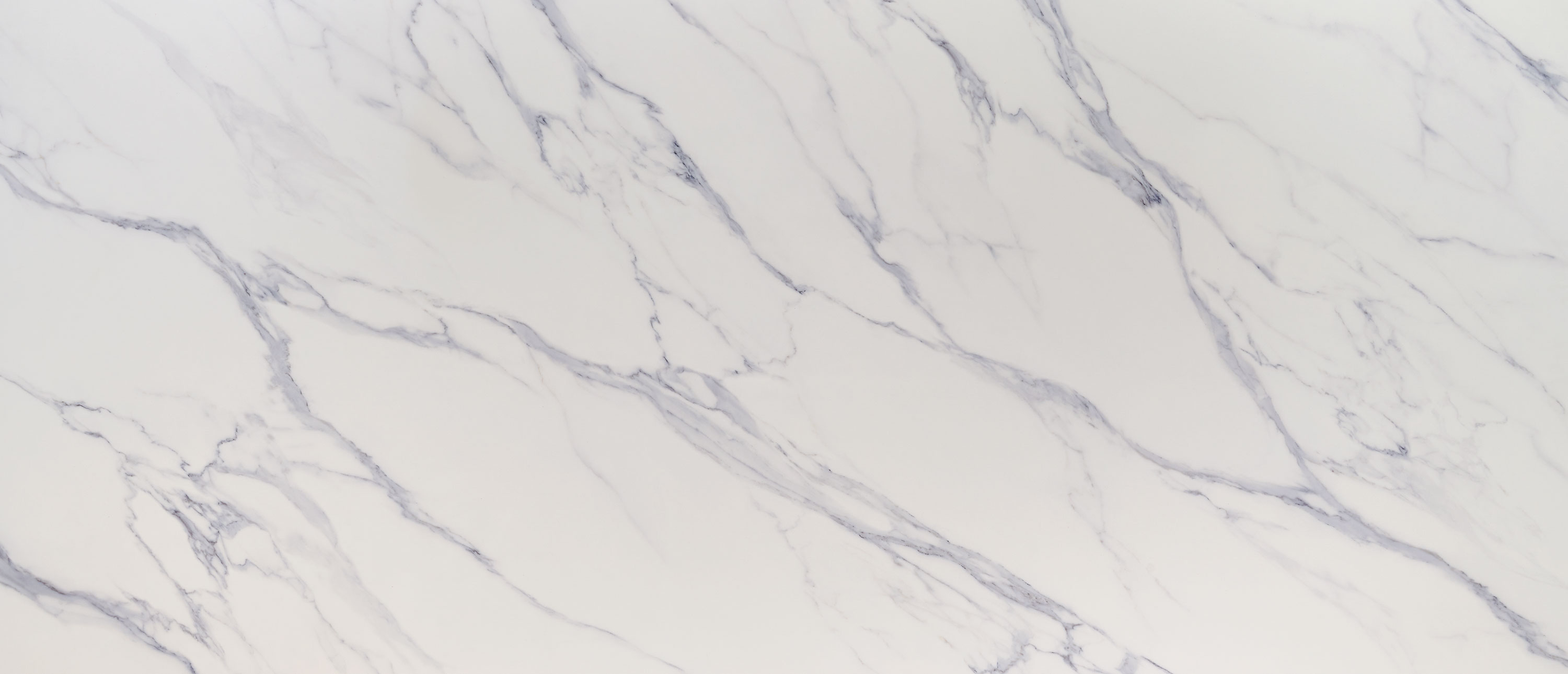
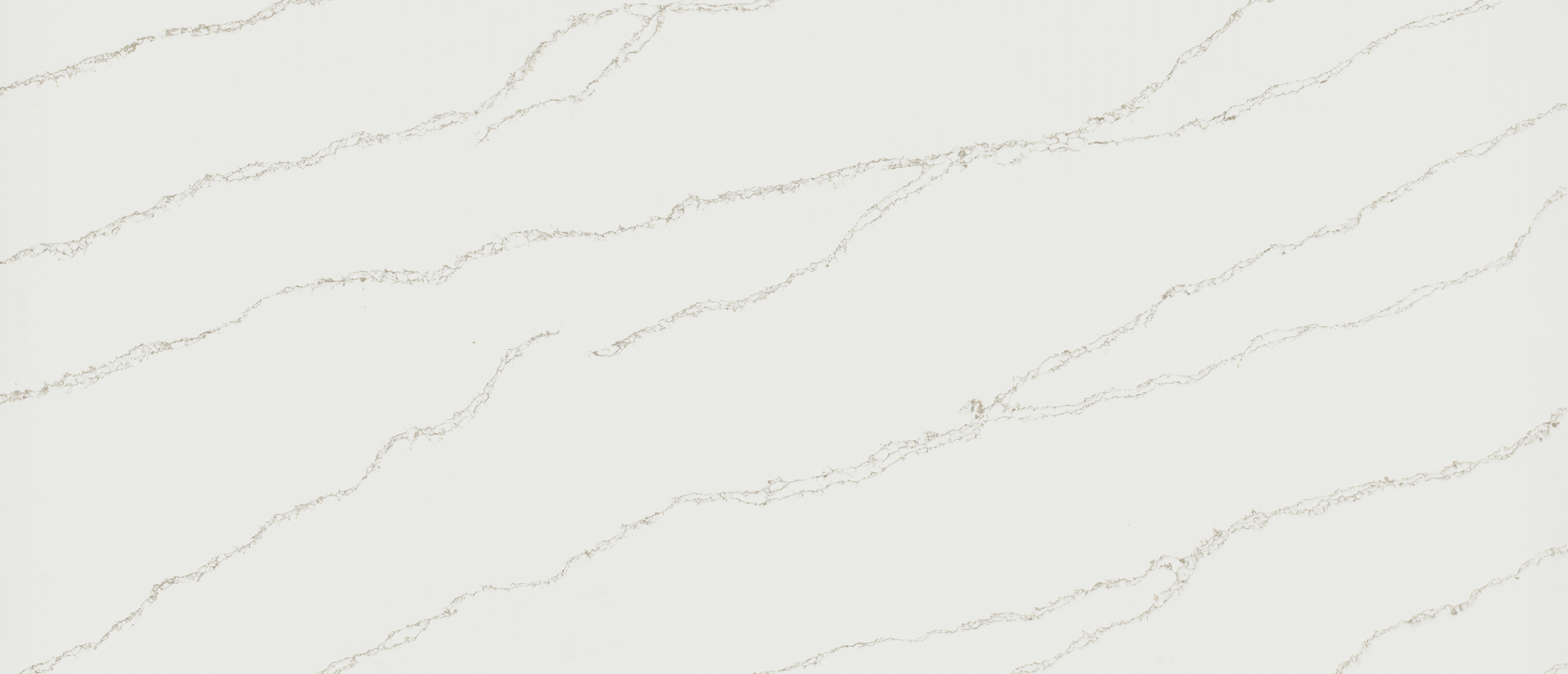
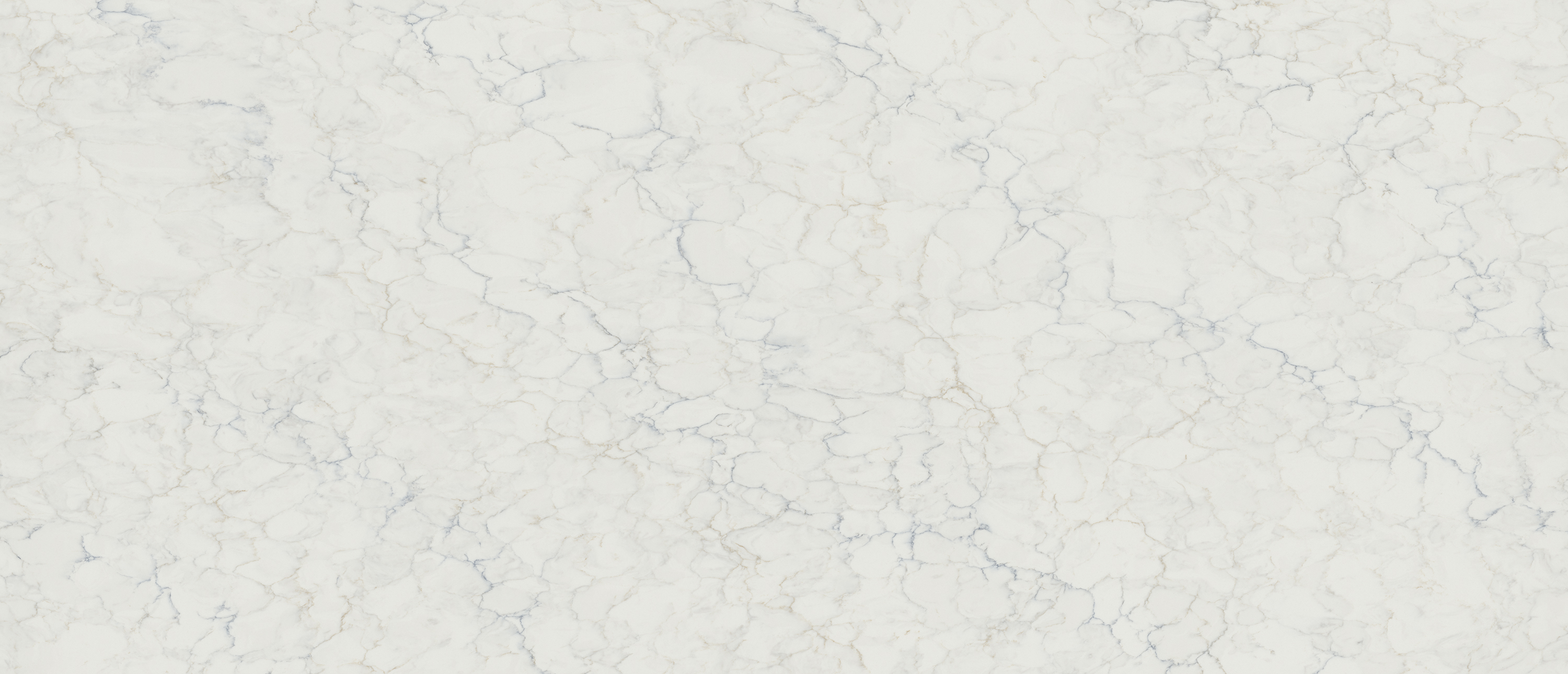
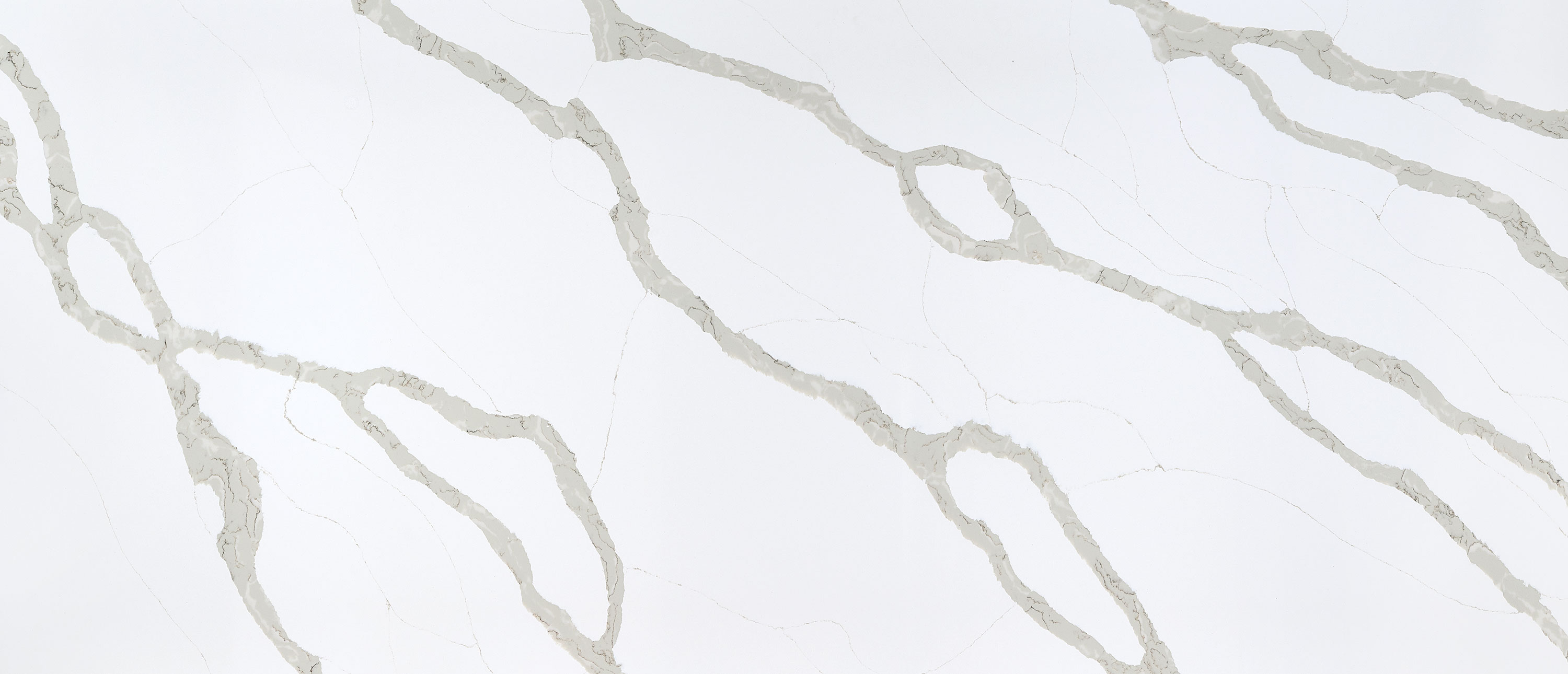

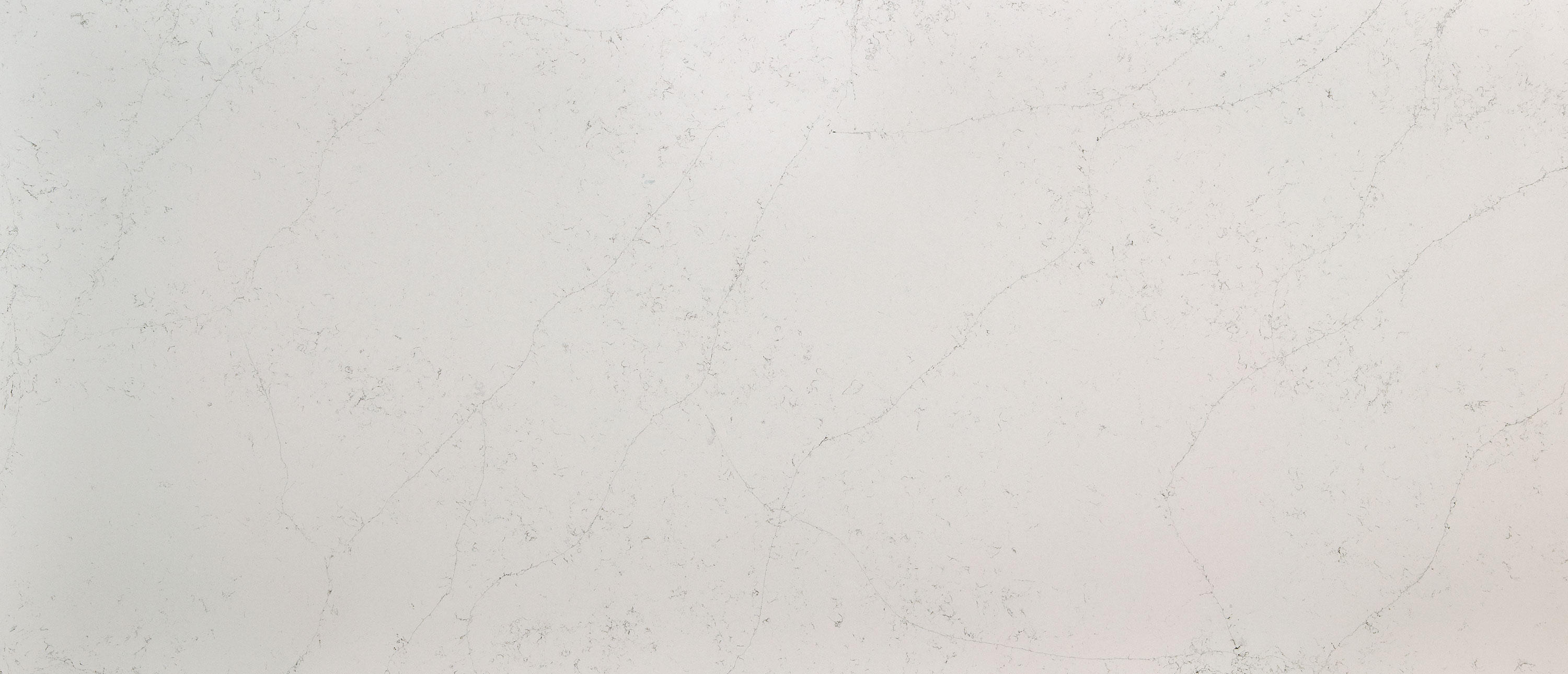
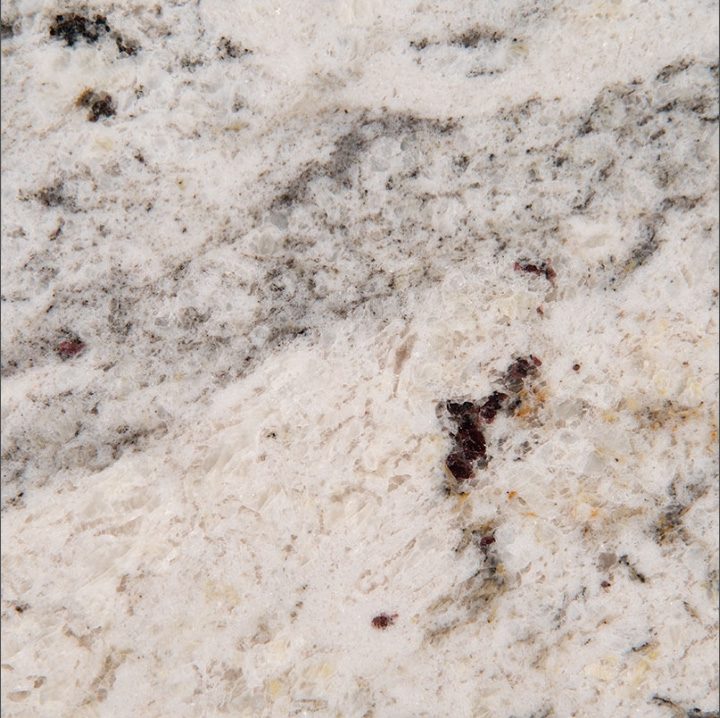
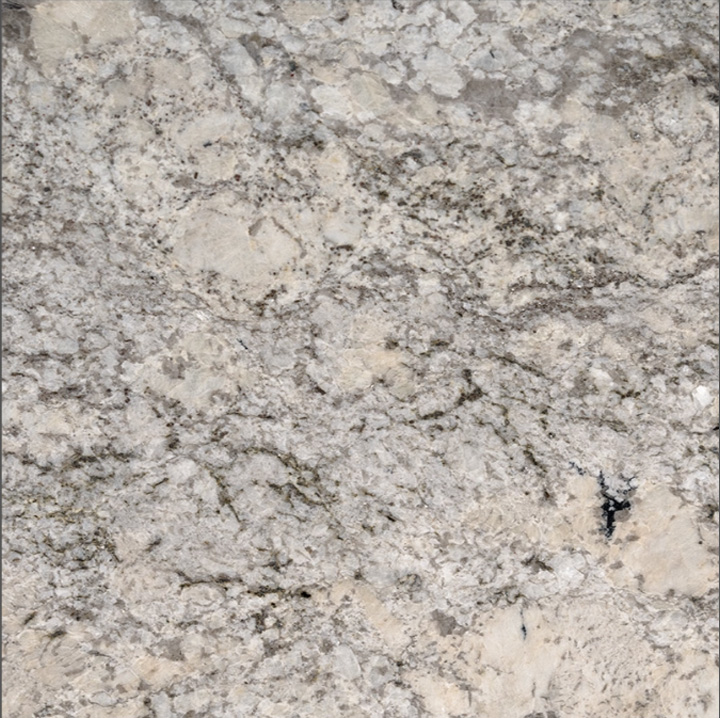
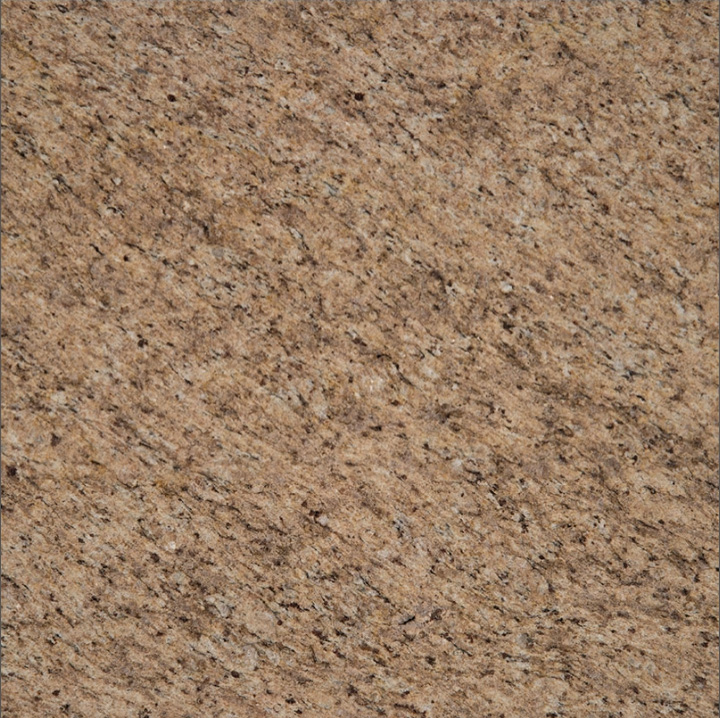
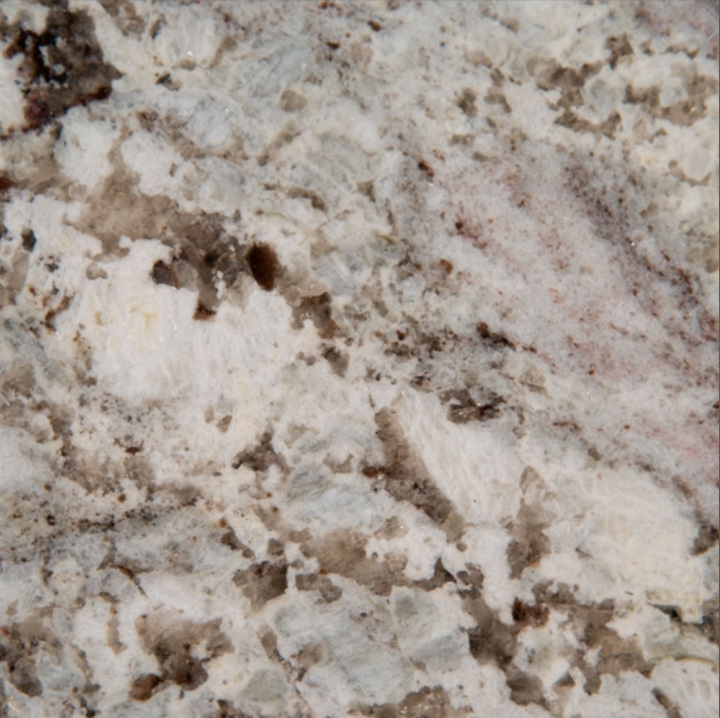
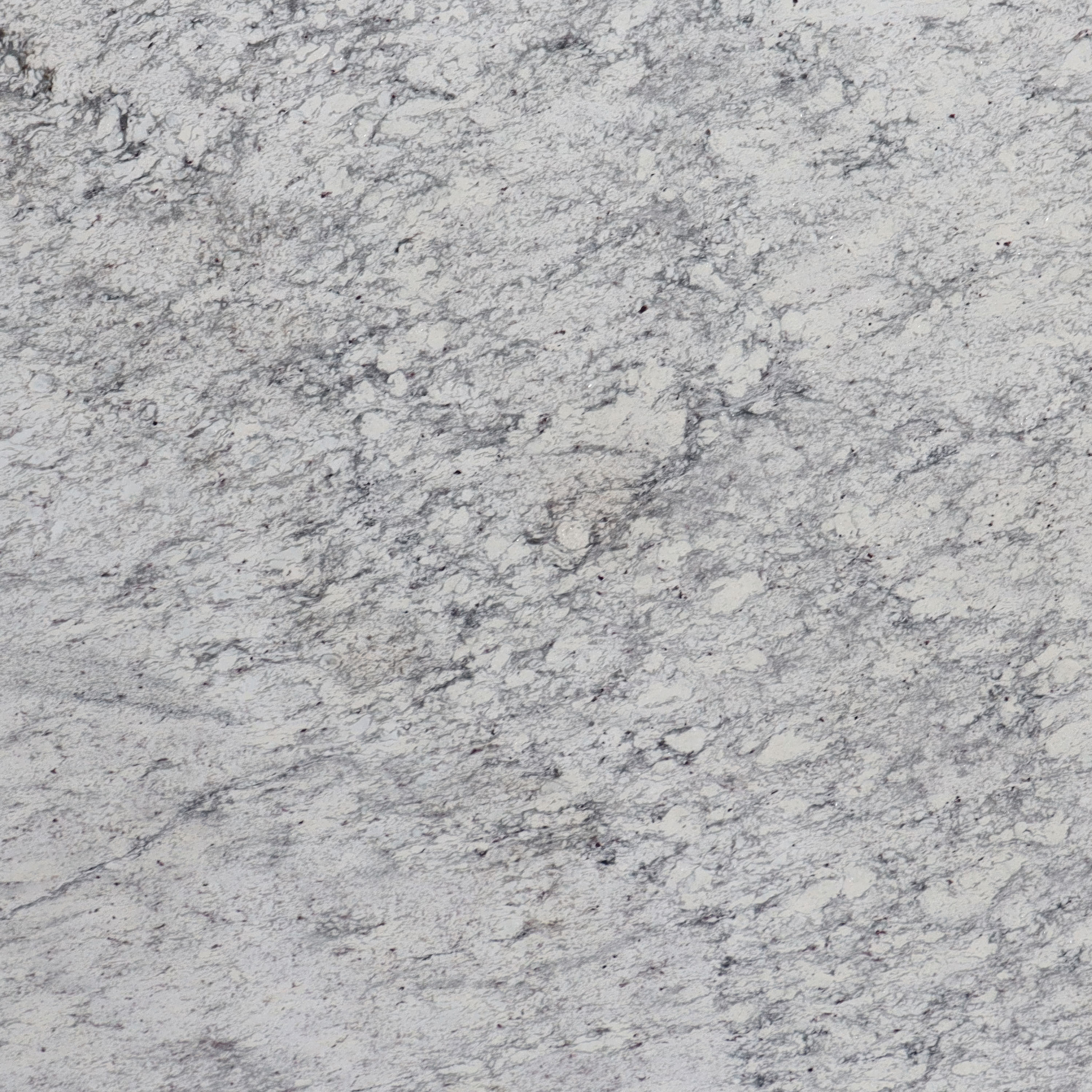
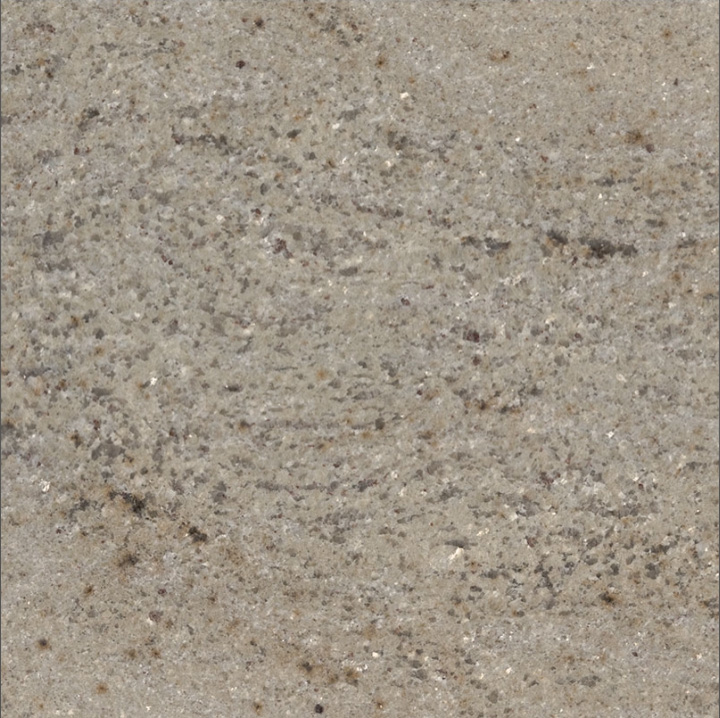
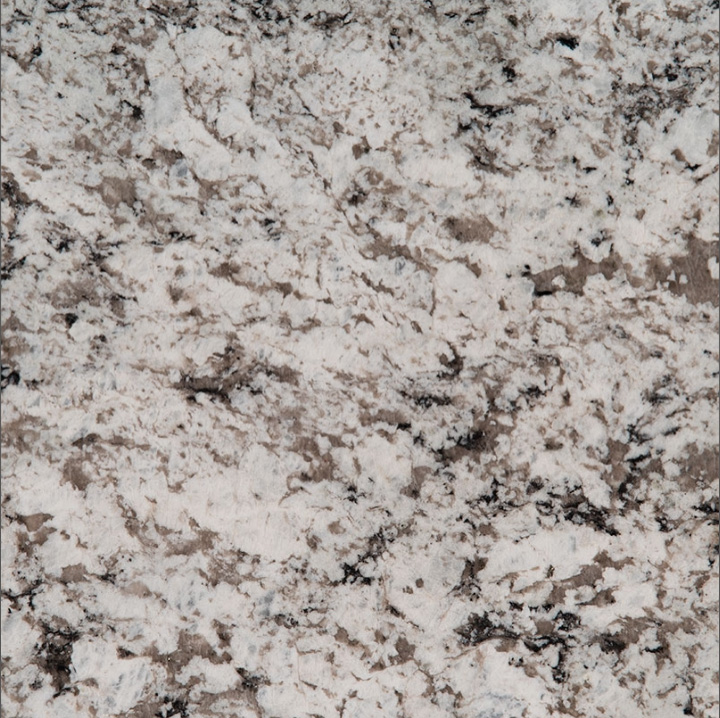
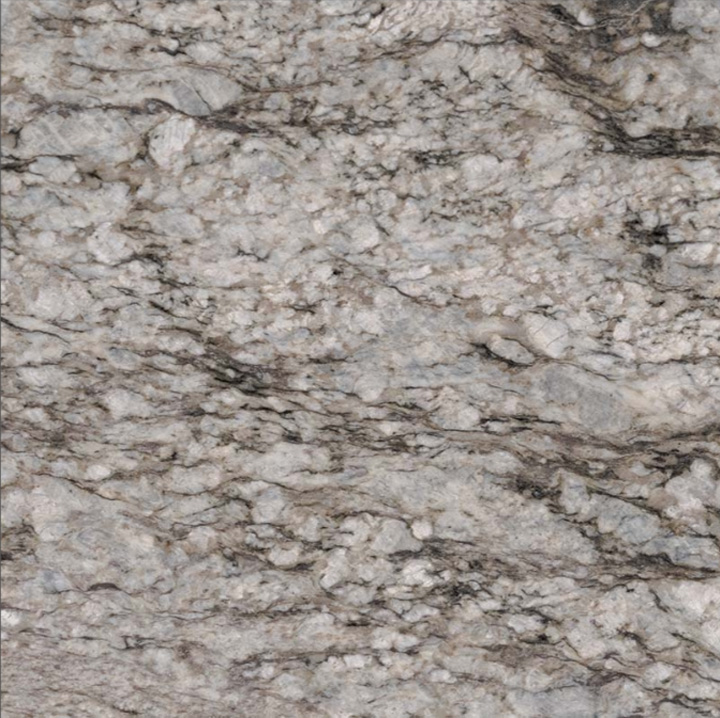
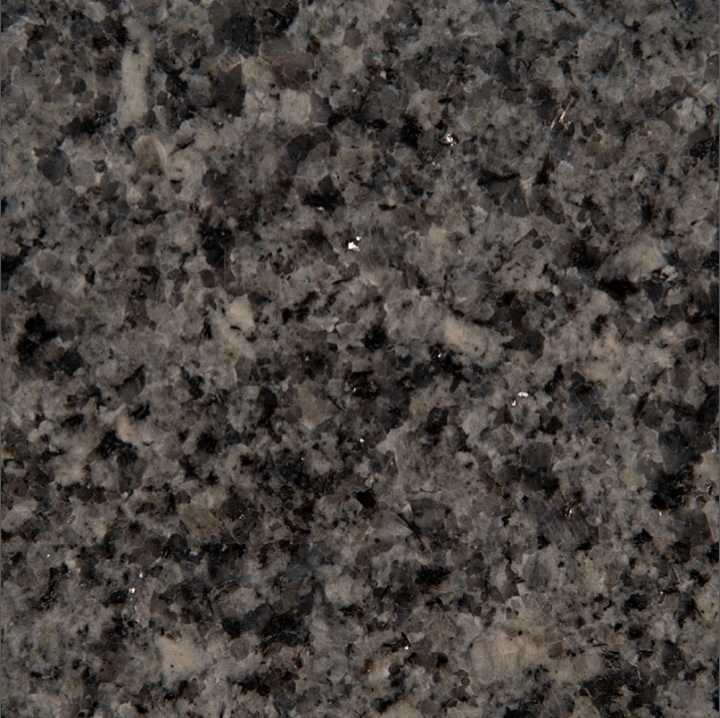
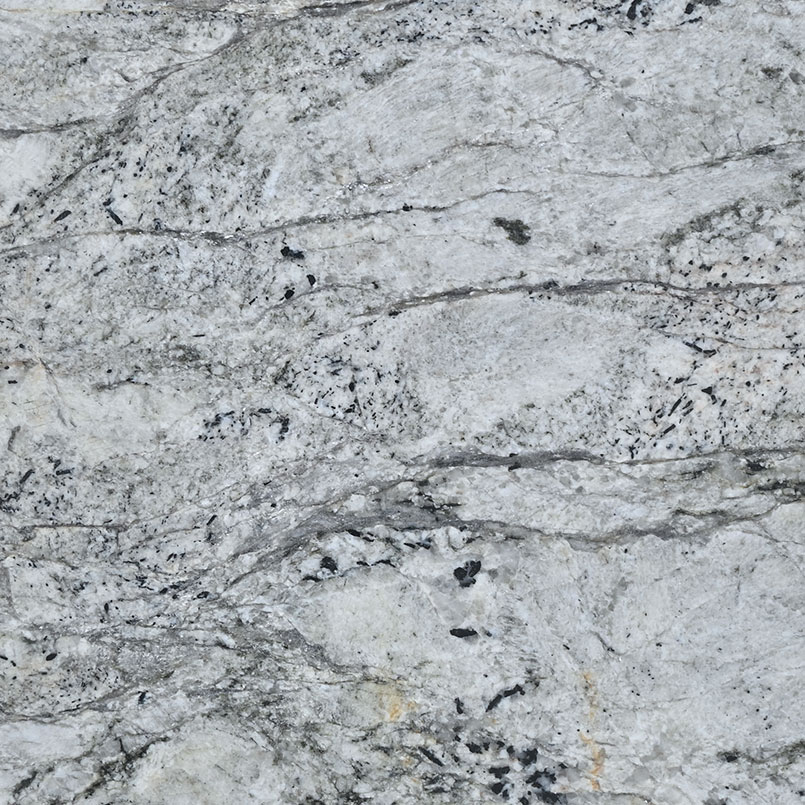
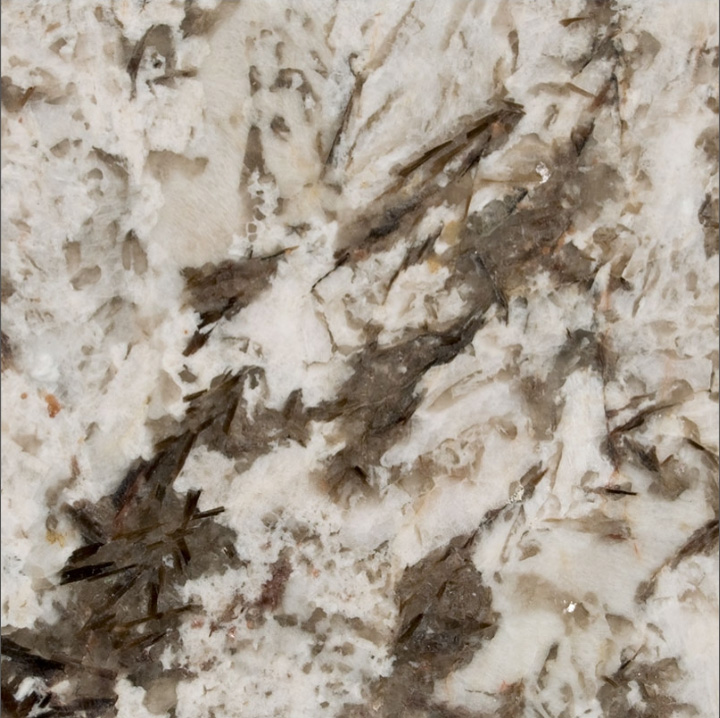
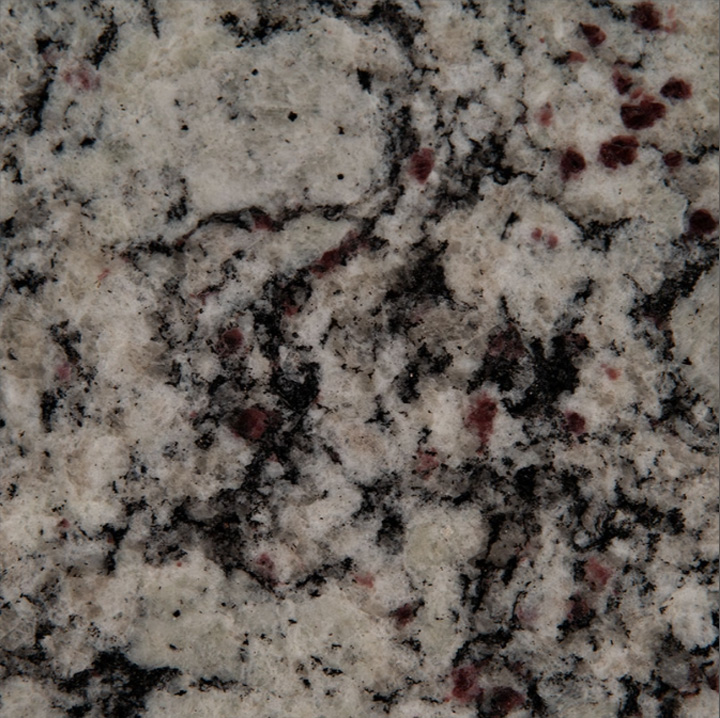
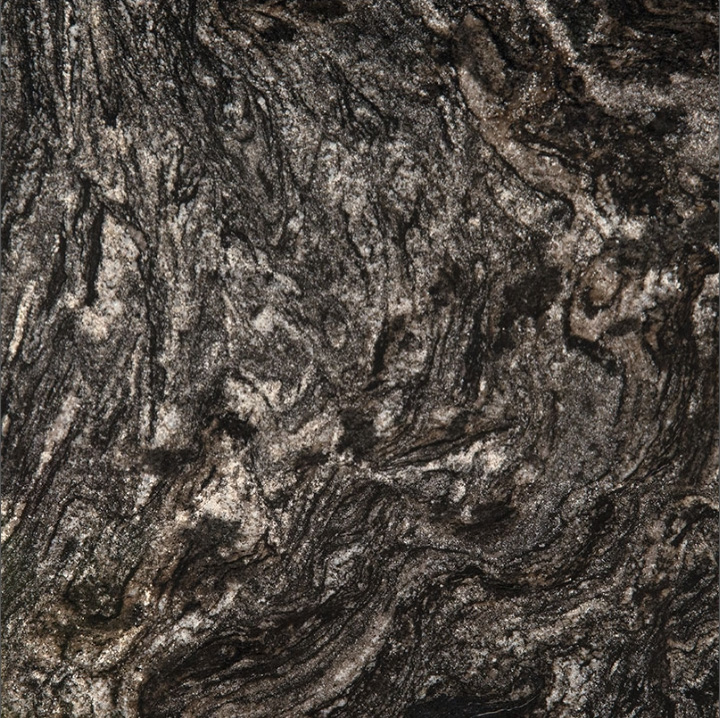

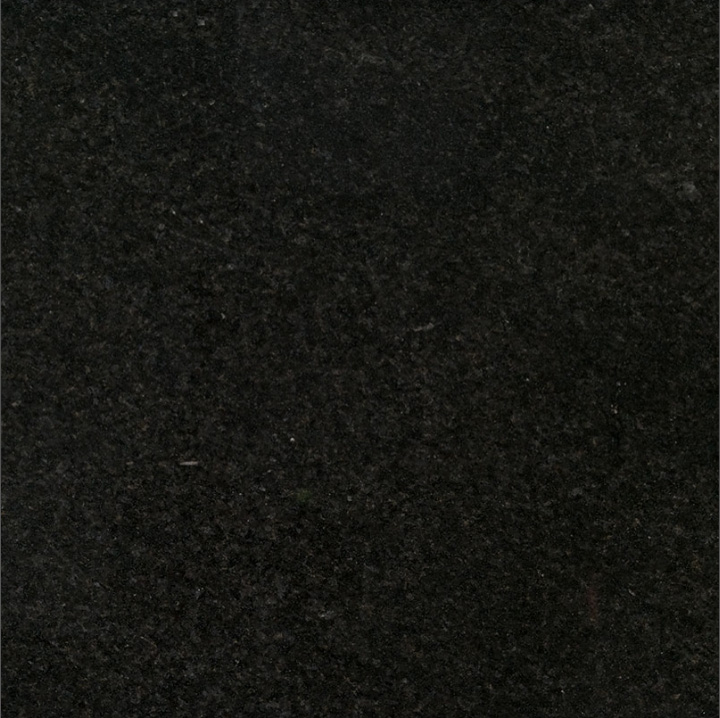
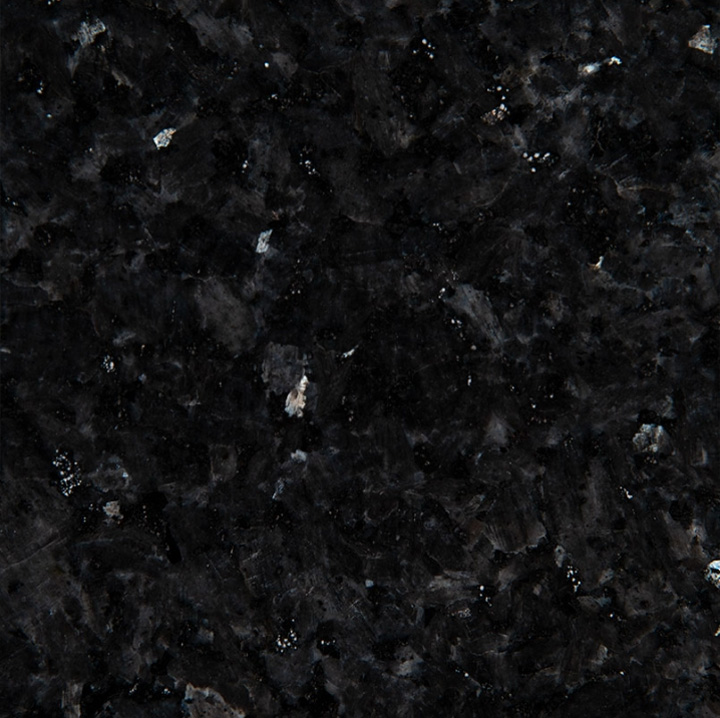
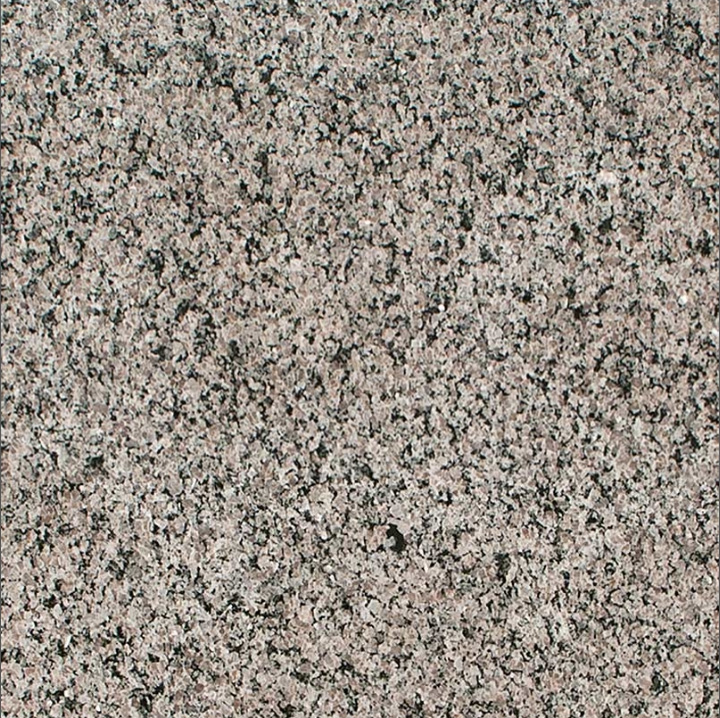
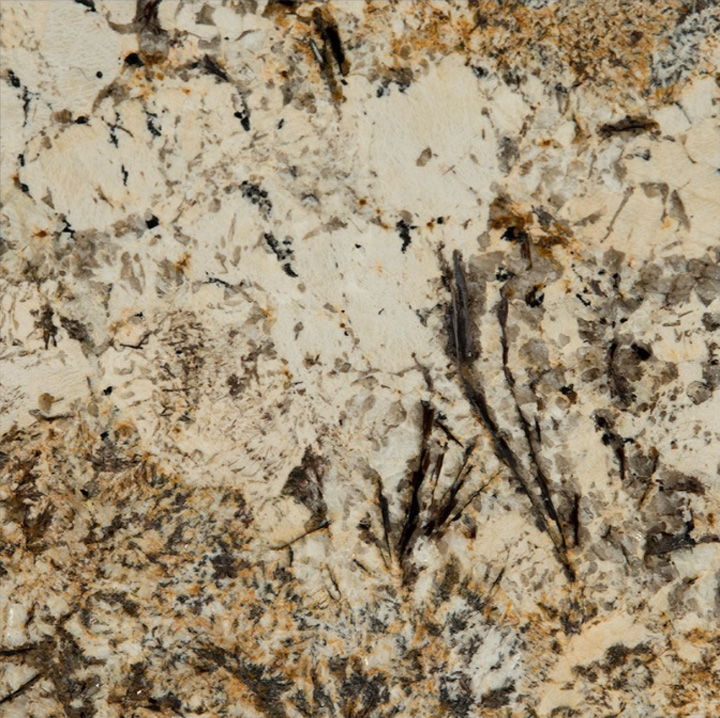
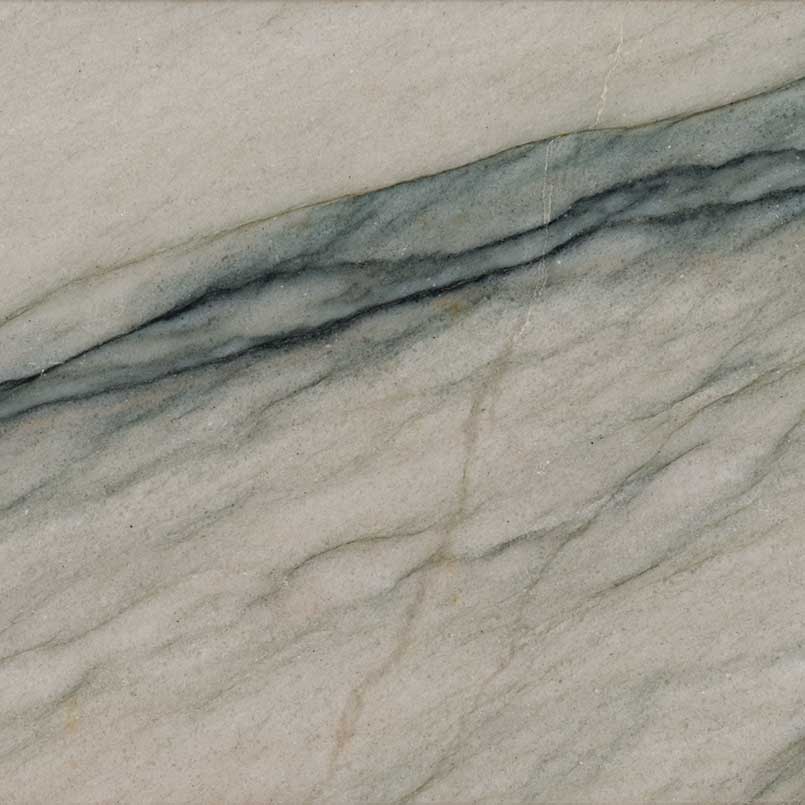
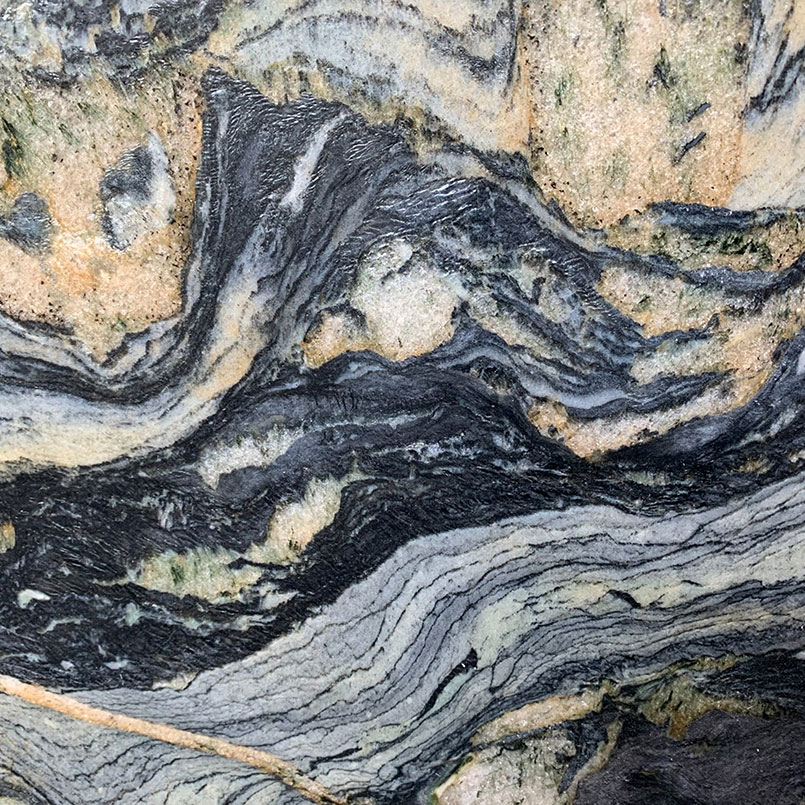
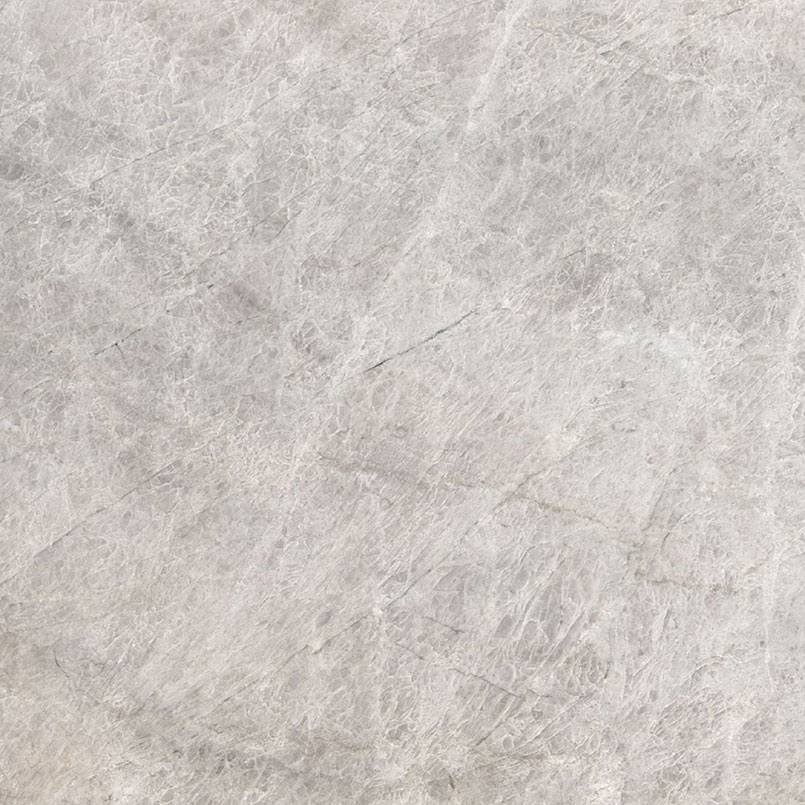

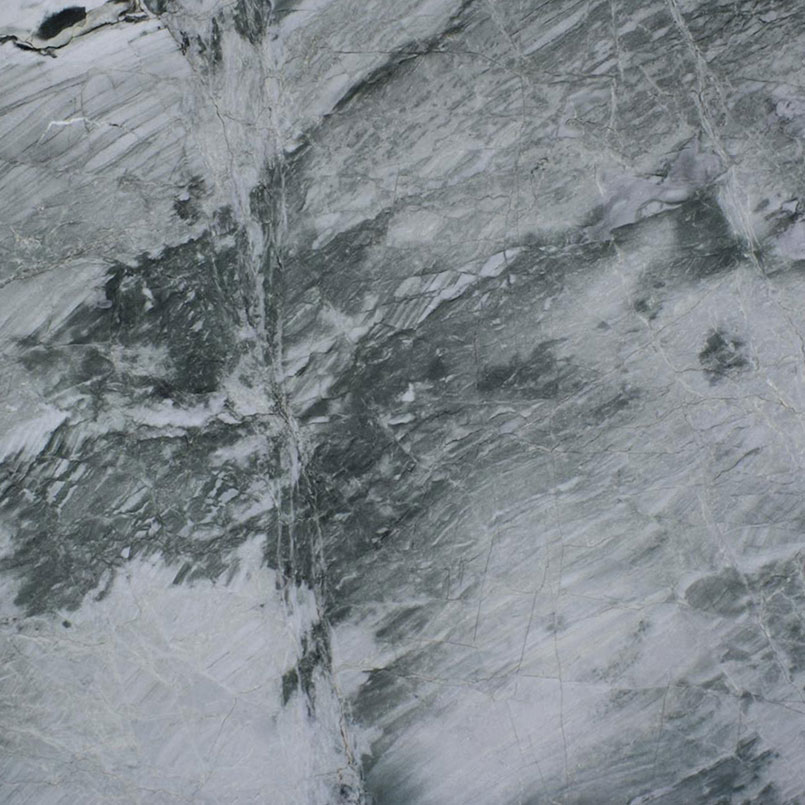
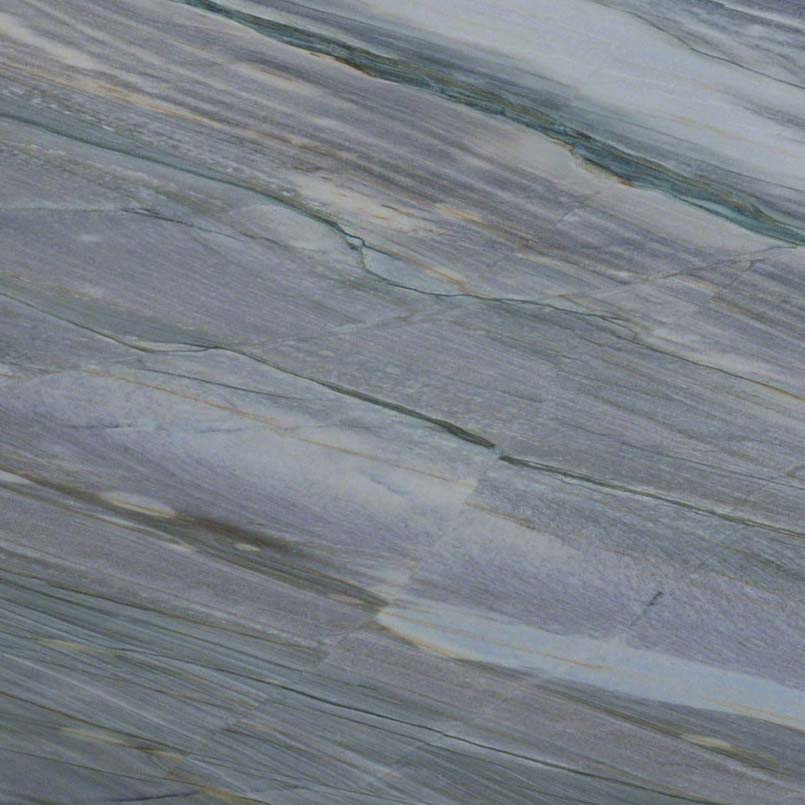
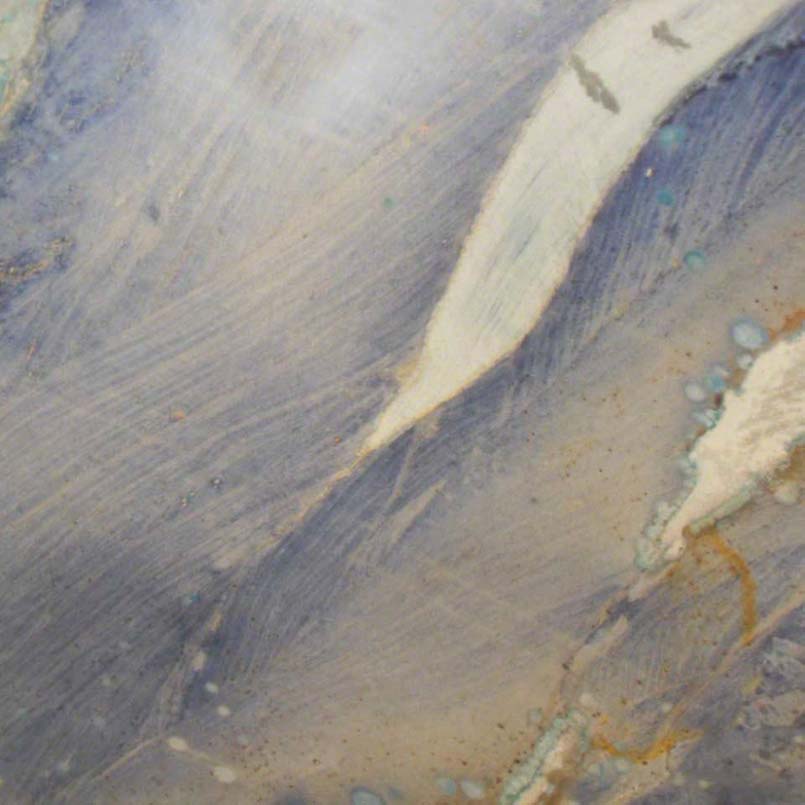
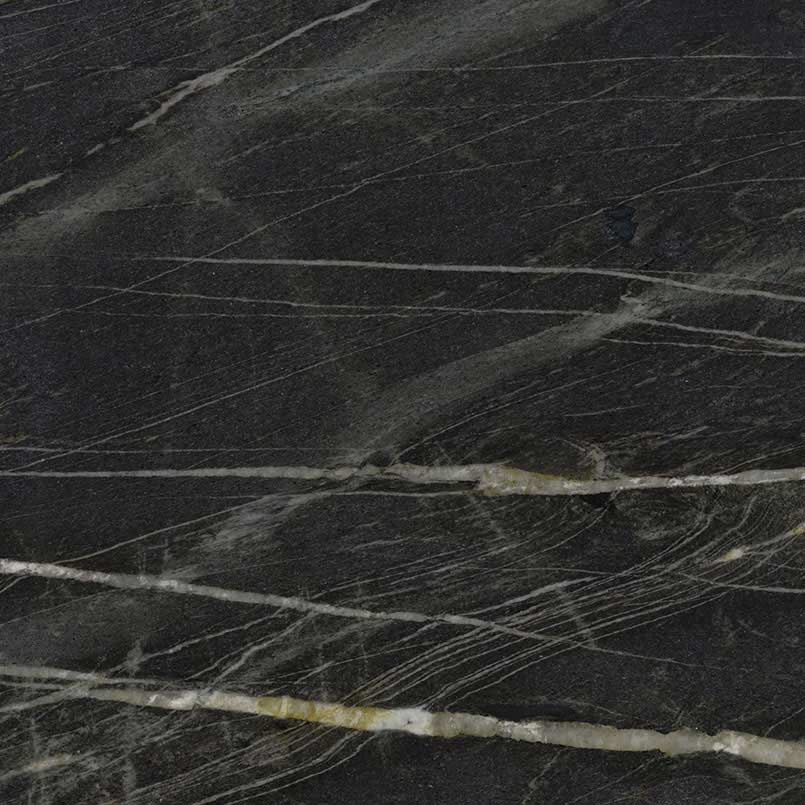
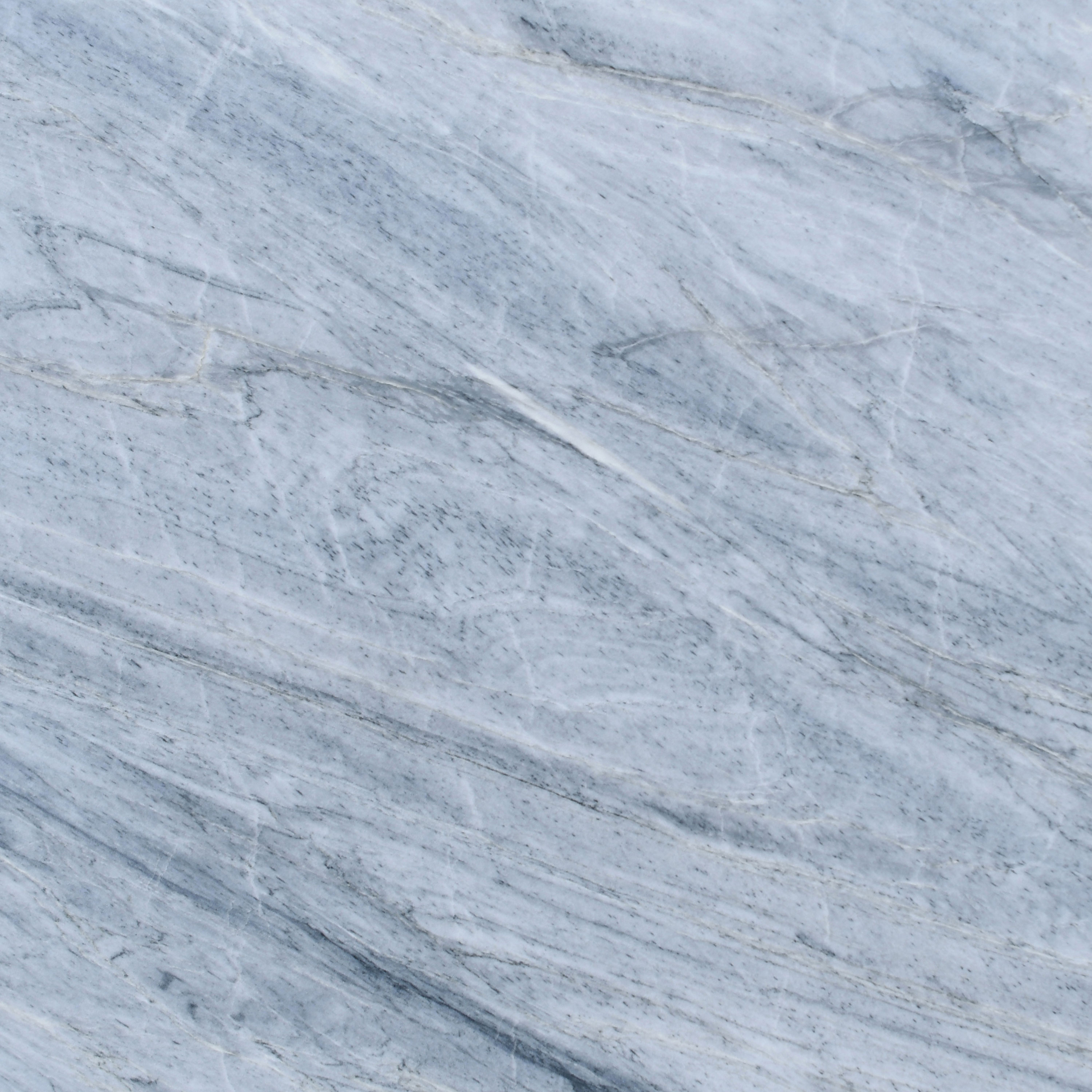
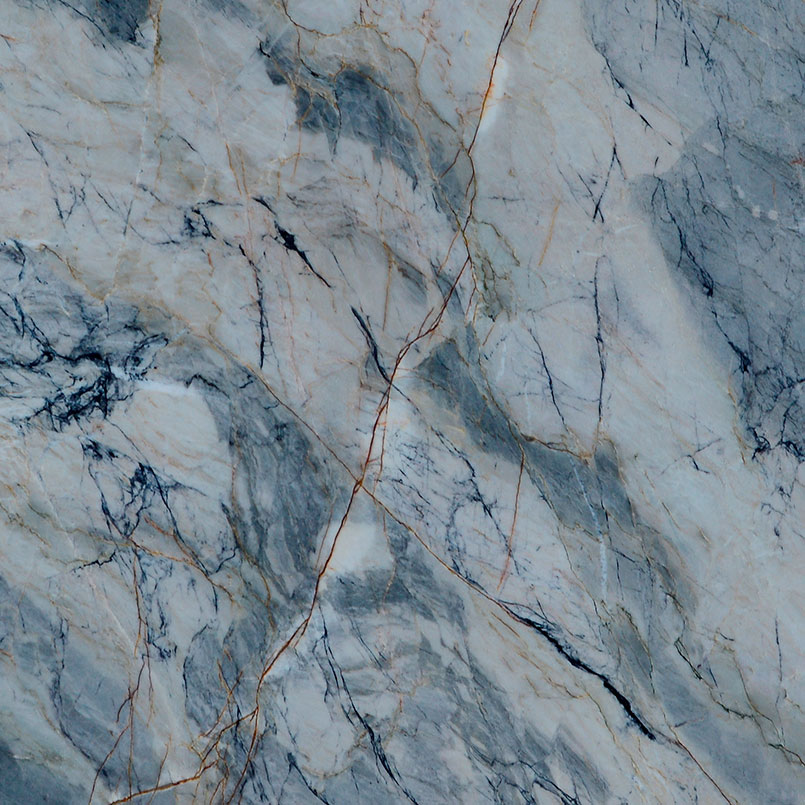
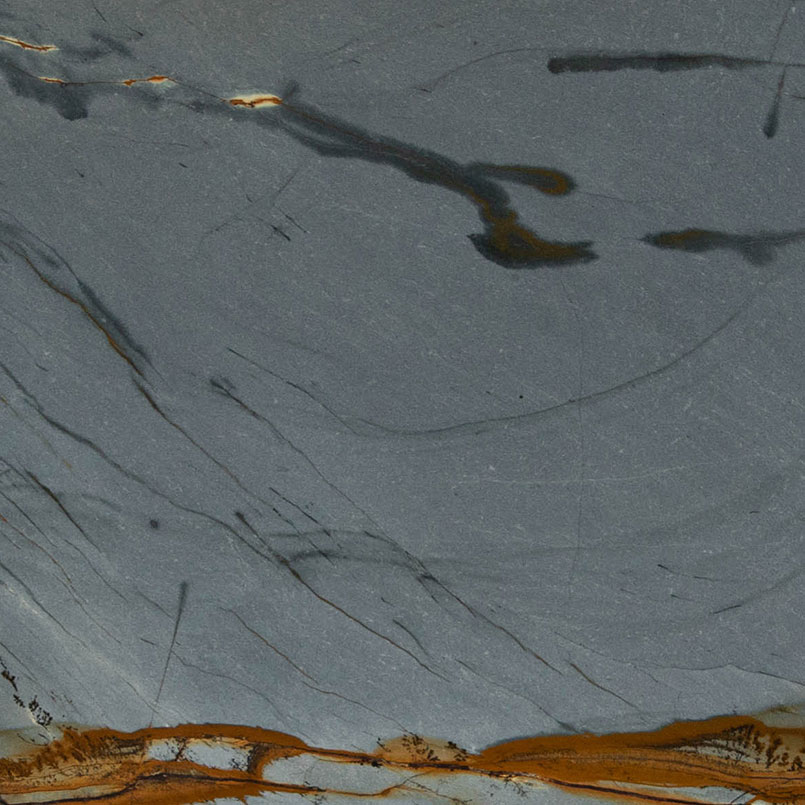
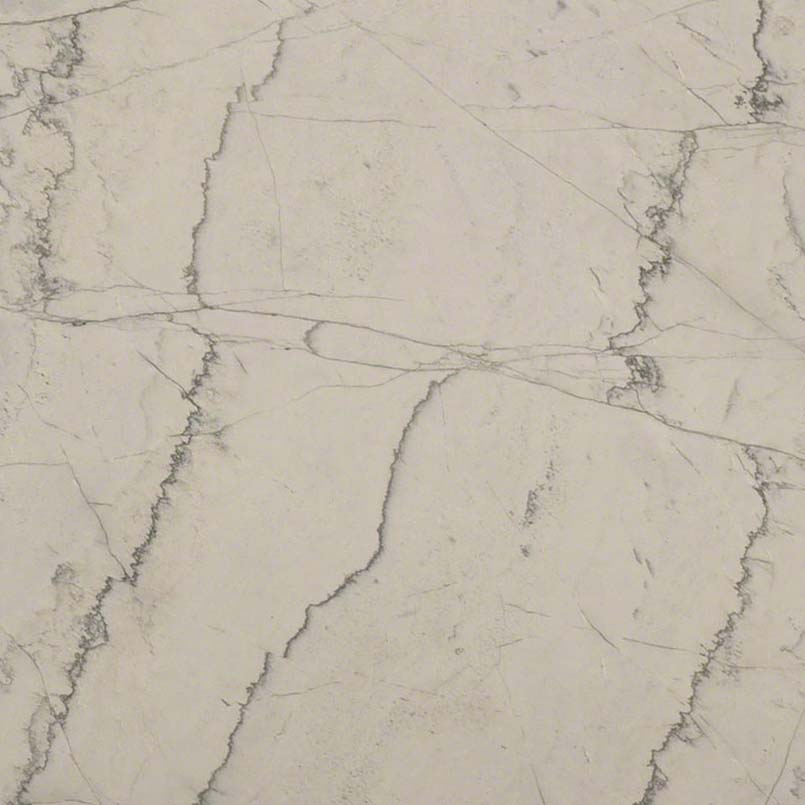
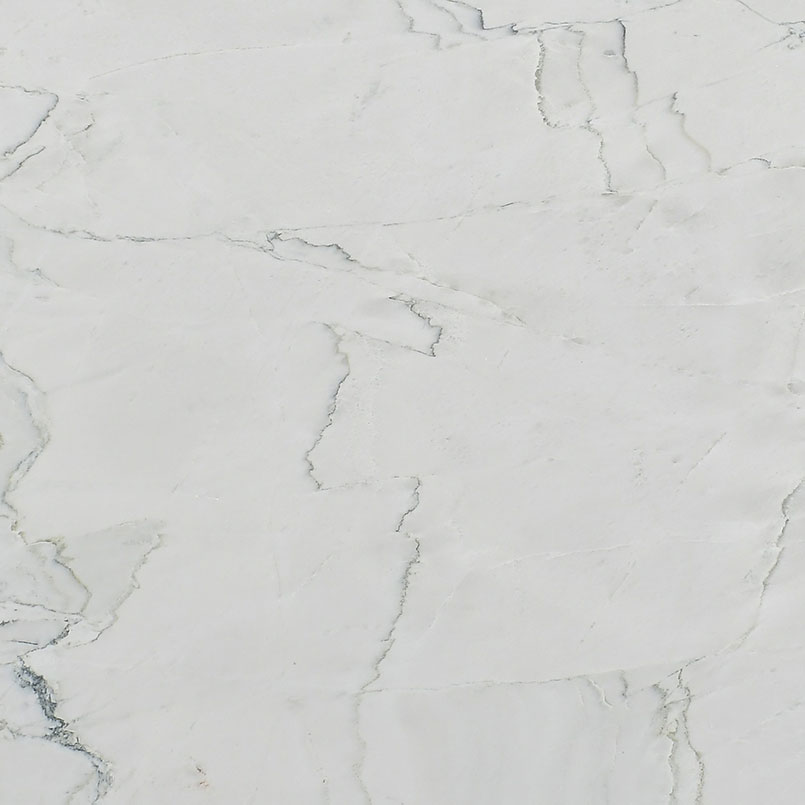
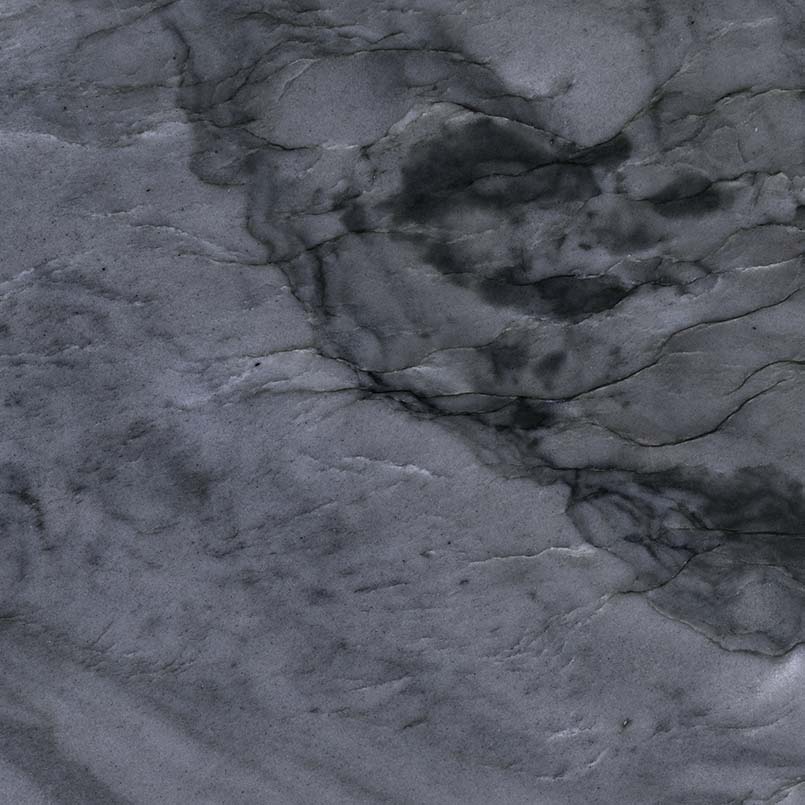

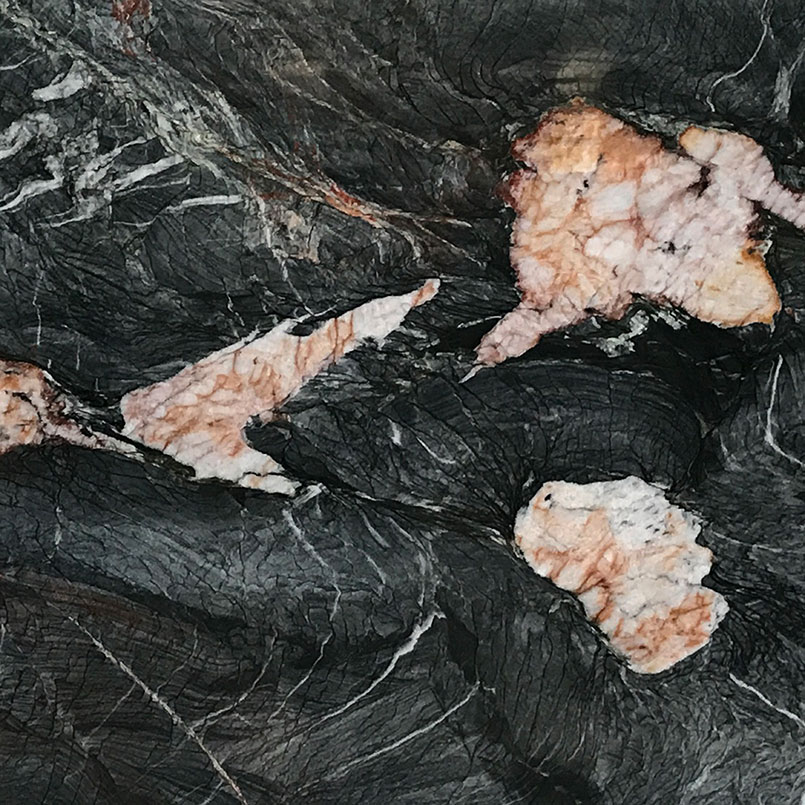
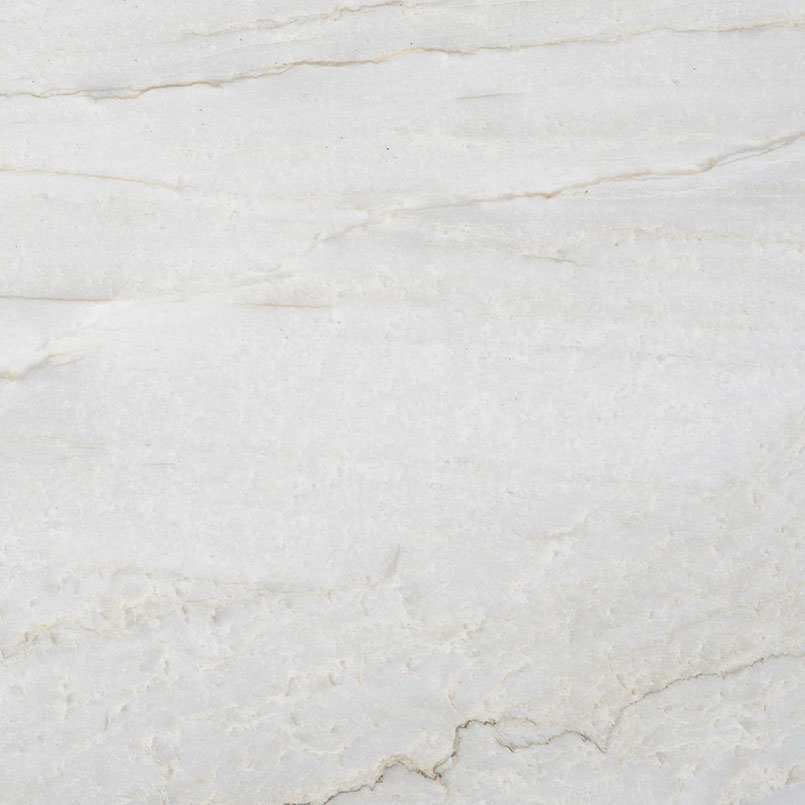
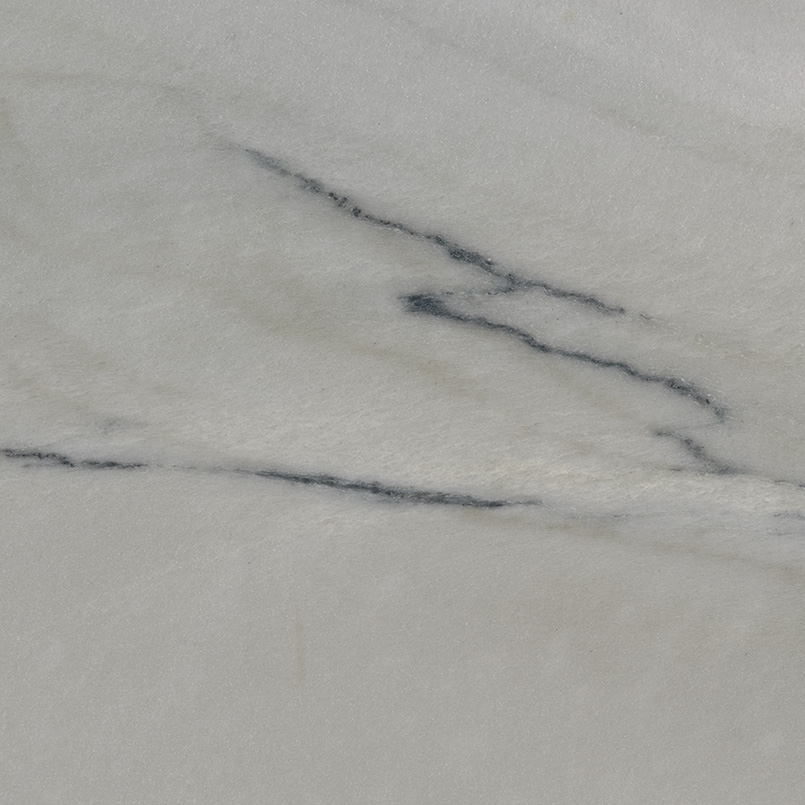
Our Calacatta Countertop Collection in Chicagoland
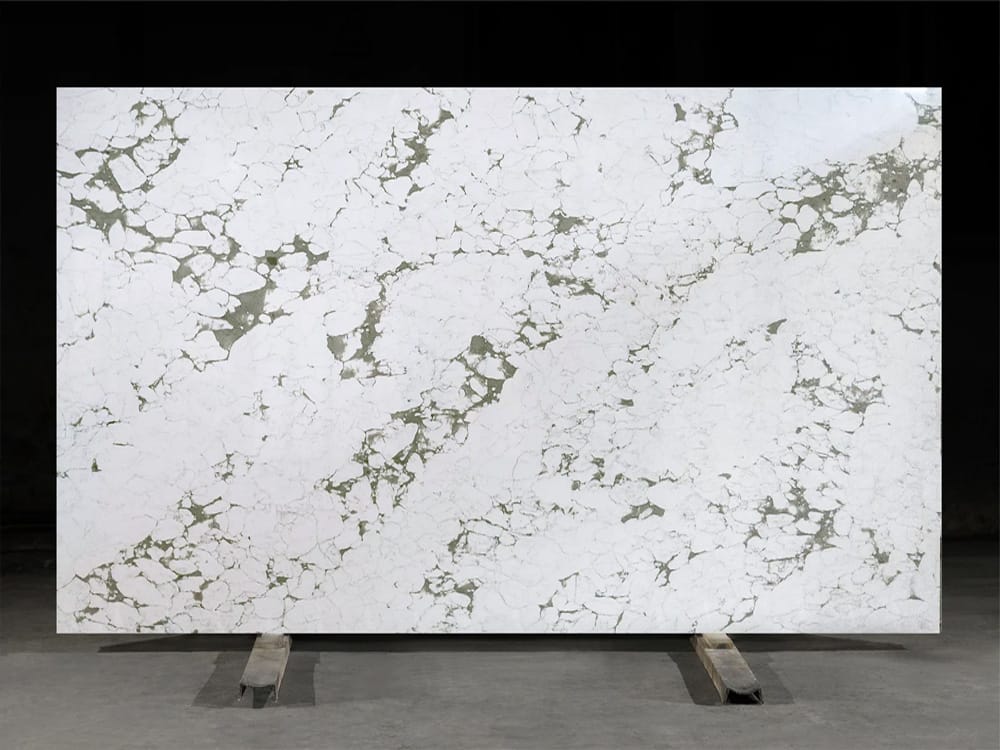
We stock twelve Calacatta patterns, each with its own veining, undertone, and personality. Most are engineered quartz. Two, Calacatta Macaubas and Calacatta Montreal, are natural quartzite, harder than granite and cut from the earth rather than manufactured.
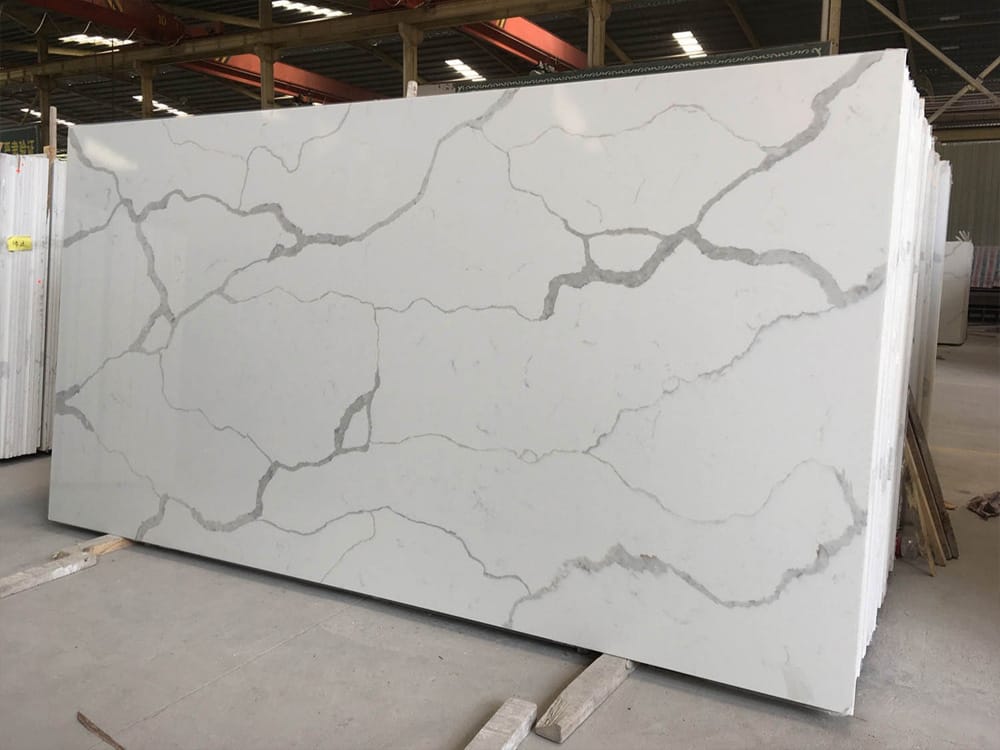
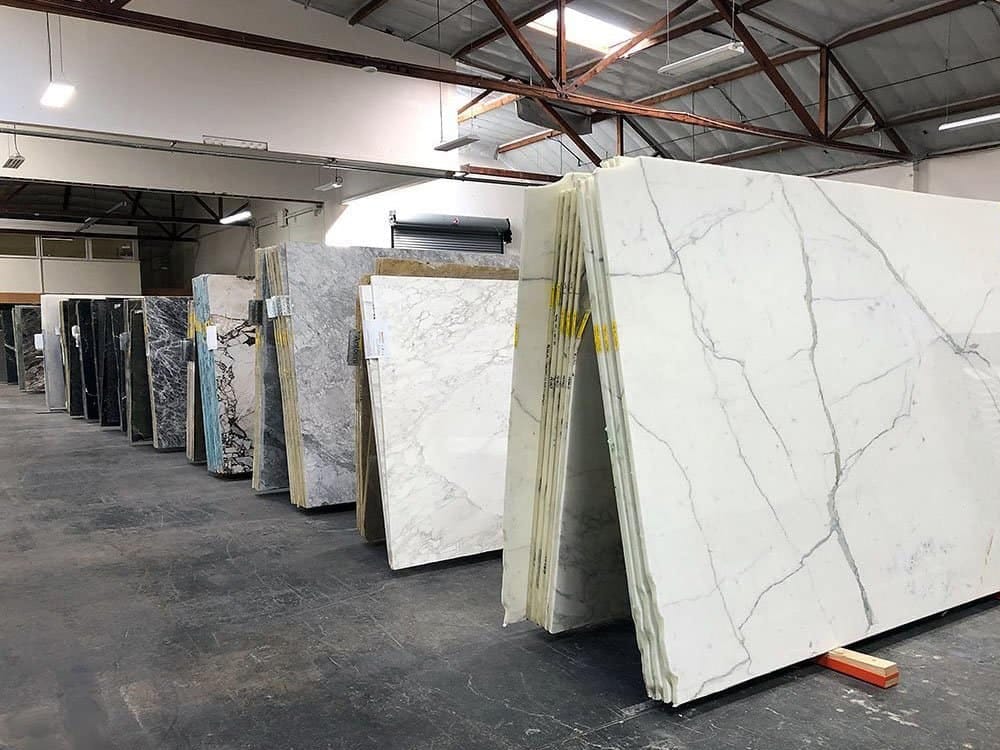
Calacatta Quartz & Granite We Carry
Calacatta Alto – A clean, bright white with balanced grey veining. A safe, popular starting point that suits almost any cabinet color.
Calacatta Abezzo — Soft, flowing veins on a warm white field. Reads calmer and less busy, good for smaller kitchens.
Calacatta Adonia — Crisp white with defined grey movement. A middle ground between subtle and dramatic.
Calacatta Aidana — Gentle veining with a warm undertone. Pairs well with wood and cream cabinetry.
Calacatta Anava — White field with structured, linear veining. A more modern, orderly look.
Calacatta Arno — Bolder grey veins with open white space between them. Strong presence on a large island.
Calacatta Azulean — Cooler toned white with grey veining and hints of blue grey movement. A contemporary pick.
Calacatta Bali — Warm white with soft, organic veining. Relaxed and easy to live with.
Calacatta Belaros — Bright white with pronounced veining and good contrast. A statement surface.
Calacatta Botanica — Flowing, natural looking veins with warmth in the field. Marble like movement in a durable quartz.
Calacatta Macaubas (Quartzite) — Natural quartzite with dramatic veining and real depth. Harder than granite, resistant to scratching and etching, for buyers who want natural stone.
Calacatta Montreal (Quartzite) — Natural quartzite with striking movement and a marble appearance. A durable natural alternative to Calacatta marble.
What makes Calacatta different
Bold, Well Spaced Veining
Thick grey and gold veins with open white between them. The pattern that made Calacatta the most requested look in Chicagoland kitchens.
A Bright White Field
The white background reflects light and opens up a room. It pairs with white shaker, deep navy, forest green, or warm wood without fighting any of them.
Never Needs Sealing
Calacatta quartz is nonporous. No annual sealing, no resealing after a spill, nothing soaks in. Real marble cannot say that.
Wine and Lemon Proof
It does not etch or stain the way marble does. Red wine, coffee, citrus, and tomato sit on it without leaving a mark behind.
What You See Is What You Get
The pattern runs consistently through the slab, so the sample matches your kitchen. On a long island that predictability is the whole argument.
Twelve Patterns In Stock
From the bold statement of Belaros to the calmer, softer Abezzo. Two are natural quartzite. Walk the Crestwood yard and see full slabs end to end.
Where Calacatta Countertops Work Best in Chicago Kitchens
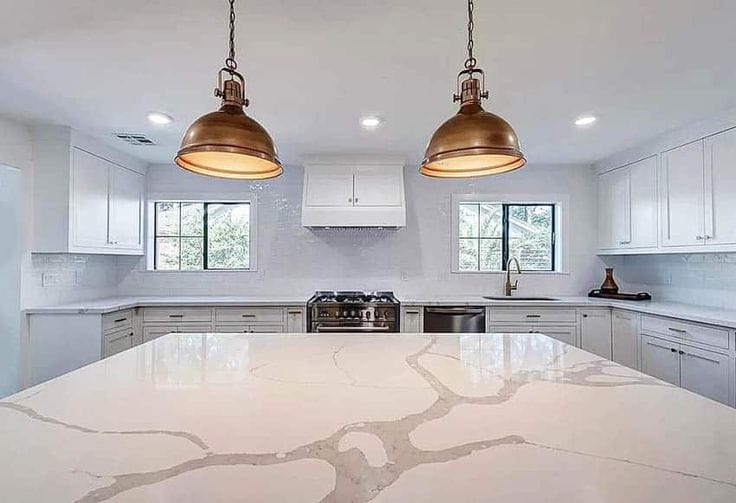
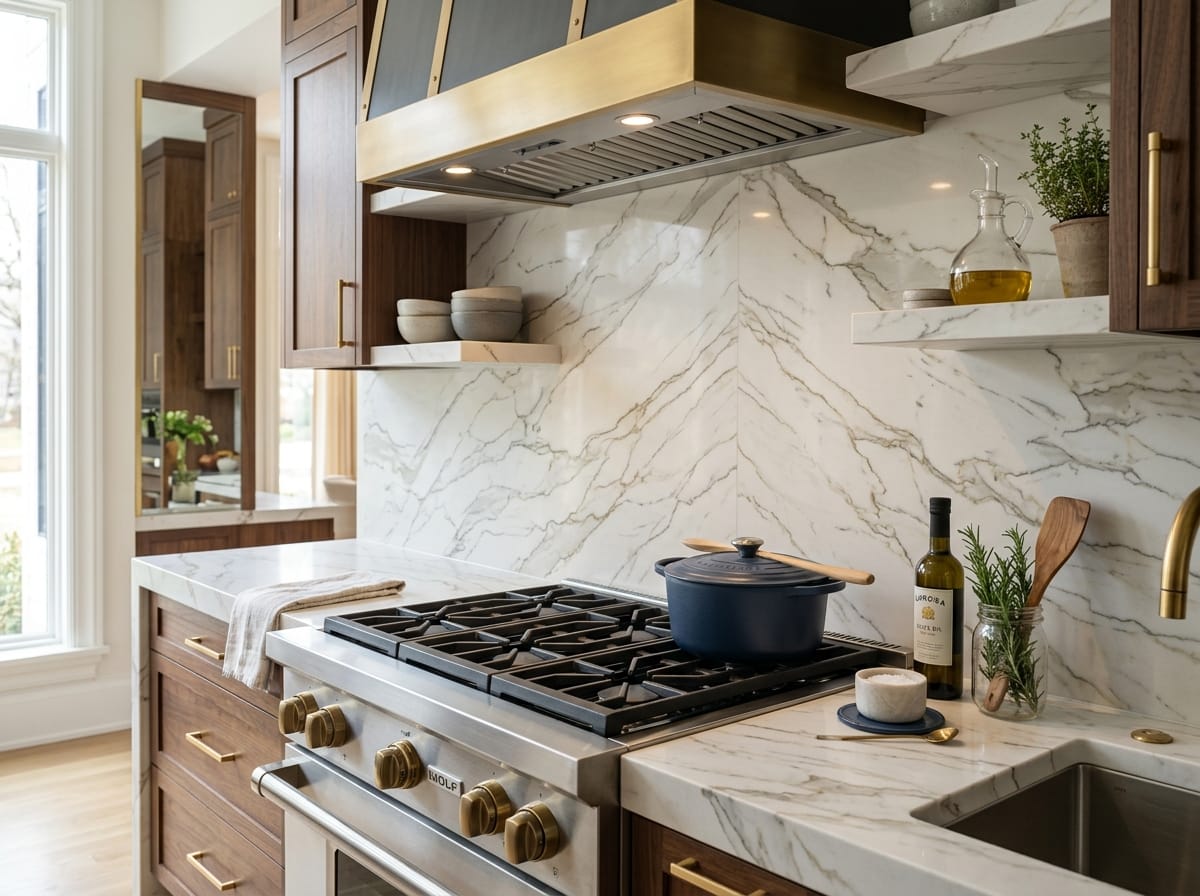
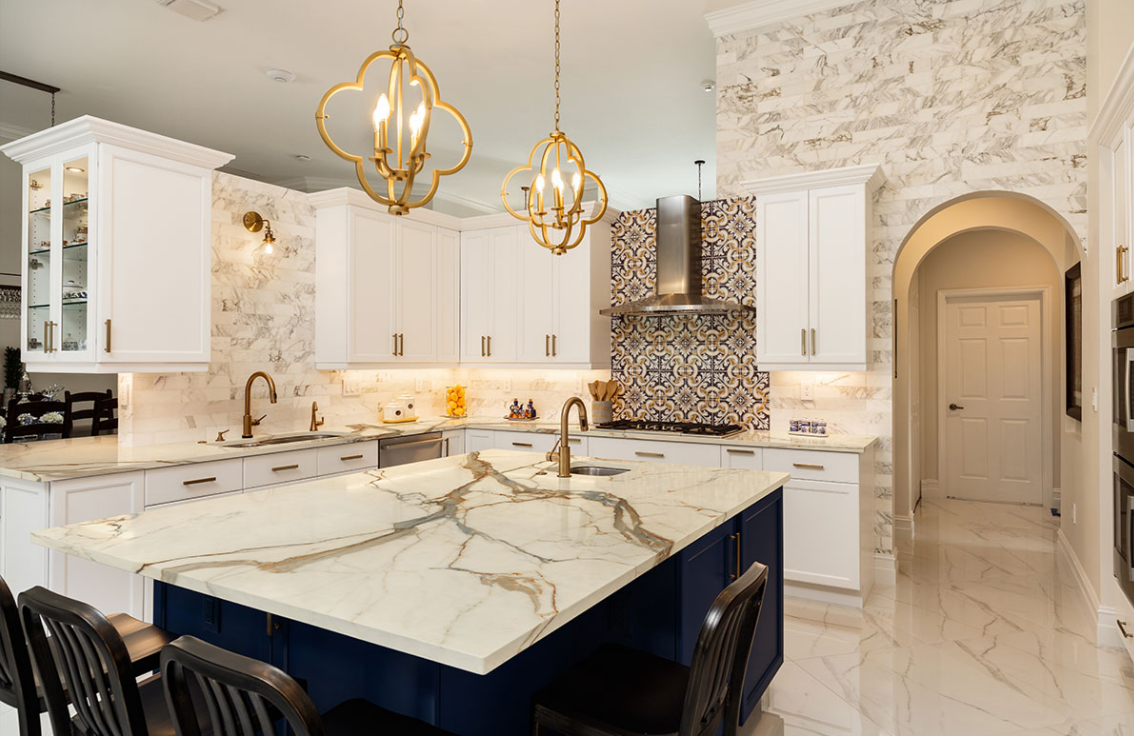
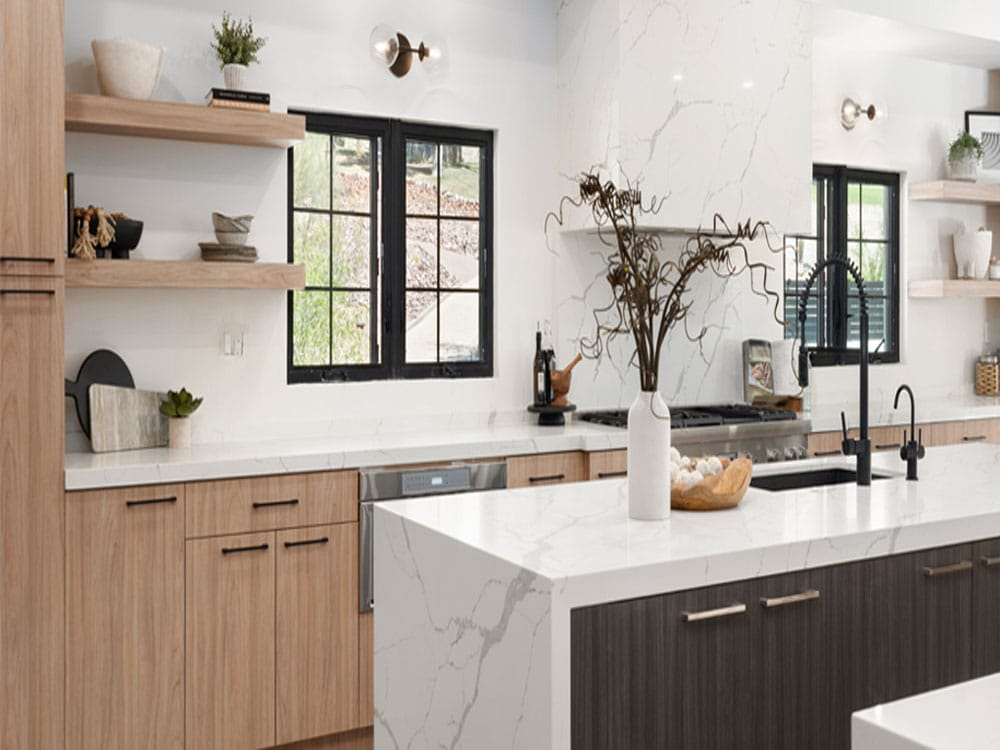
Calacatta earns its keep as a focal point. On a large kitchen island, the bold veining has room to breathe and becomes the centerpiece of the room. On a full height backsplash, it turns the wall behind the range into a slab feature. It also suits bathroom vanities, where the bright white opens up a small space, and commercial counters and reception desks where a clean, high end look matters.
Because the white field is so bright, Calacatta pairs cleanly with almost anything: white shaker cabinets for a light, airy kitchen, deep navy or forest green for contrast, or warm wood for balance. Bring your cabinet door and flooring samples to the showroom and hold them against the slab.
Calacatta Quartz vs Marble vs Quartzite
All three give you the Calacatta look. They behave very differently once they are in a working kitchen.
| Calacatta Quartz | Calacatta Marble | Calacatta Quartzite | |
|---|---|---|---|
| What it is | Engineered stone, manufactured | Natural stone, quarried in Italy | Natural stone, quarried |
| Sealing | Never needed | Regular sealing required | Periodic sealing |
| Etching from acids | Does not etch | Etches from lemon, wine, vinegar | Highly resistant |
| Heat tolerance | Use a trivet, resin can scorch | Good | Excellent |
| Scratch resistance | Good | Softest of the three | Hardest, above granite |
| Pattern consistency | Consistent, sample matches slab | Every slab unique | Every slab unique |
| How it ages | Looks the same in ten years | Develops a patina, softens | Holds its finish |
| Relative cost | $$ | $$$ | $$$ |
| Best for | Busy family kitchens, large islands, anyone who does not want upkeep | Low traffic vanities, bakers, buyers who want genuine Italian marble | Serious cooks who want natural stone and the marble look |
Al Jory Marble fabricates all three. Most of our Calacatta lineup is quartz, with Calacatta Macaubas and Calacatta Montreal available in natural quartzite. Come see full slabs side by side at our Crestwood showroom.
Calacatta Countertop Fabrication and Installation Across Chicago and the Suburbs
Visit Our Crestwood Showroom to See Calacatta in Person
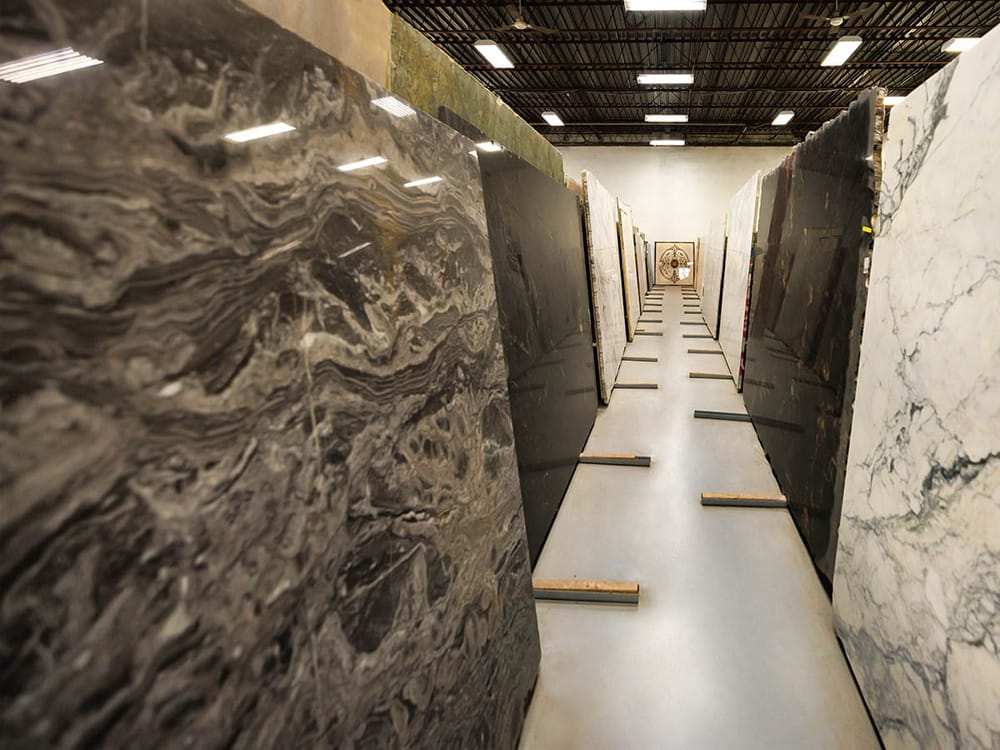
A two inch sample cannot show you how Calacatta veining moves across a full slab, and the pattern is the whole point. Visit our showroom and slab yard at 4711 135th St in Crestwood to see full Calacatta slabs end to end before you commit. Someone will walk the yard with you, talk through which pattern suits your kitchen, and schedule a free measurement.

Calacatta Countertop Questions
What is Calacatta quartz and how is it different from Carrara?
Calacatta quartz is engineered stone made to imitate Calacatta marble, a prized Italian marble known for a bright white background and bold veining. Carrara is a different Italian marble with softer, feathery grey lines on a cooler white. Calacatta runs bolder, with thicker veins, more open white space between them, and often a warm gold or taupe undertone. That contrast is why Calacatta reads as the more luxurious of the two, especially on a large island where the pattern has room to show.
Is Calacatta quartz better than Calacatta marble?
For most kitchens, yes. Calacatta quartz is nonporous, never needs sealing, and does not etch when lemon juice, wine, or vinegar sits on it. Calacatta marble is natural stone that etches, stains, and needs regular sealing, though it develops a patina over time that many people genuinely want. For a busy family kitchen, quartz is almost always the better call. For a low traffic vanity or a buyer set on real Italian marble, marble still has its place.
Do you fabricate Calacatta countertops yourselves or subcontract it out?
We fabricate everything ourselves. Your slab is cut, edged, and polished in our own shop in Crestwood, and our own crew installs it. Nothing is subcontracted, which means the person who measured your kitchen is the same person who knows what happened at the saw.
How do you match the Calacatta veining across an island and backsplash?
We plan the slab layout before anything is cut. Each piece of your kitchen gets positioned on the slab so the veining flows across the island and perimeter runs instead of stopping abruptly at a seam. On a full height backsplash we cut from the same slab so the pattern carries up the wall. If you want the veining mirrored across a seam, that is called book matching and it requires selecting the slabs together at the start.
Do you offer free estimates, and what does the estimate include?
Yes, the estimate is free and there is no obligation. It is written, and it separates material from labor so you can see what is driving the number. It covers the slab, fabrication, edge profile, sink and cooktop cutouts, installation, and removal and disposal of your old countertops.
Do you come to my home to measure?
Yes. We come to your home or office, measure your kitchen, and leave you with a written estimate in the same visit. We can bring samples with us if you have not been out to the showroom yet.
Can I see the actual Calacatta slab before I buy it?
Yes, and we recommend it. A two inch sample cannot show you how Calacatta veining moves across a full slab, and the pattern is the whole point. Visit our showroom and slab yard at 4711 135th St in Crestwood to see full slabs end to end. Someone will walk the yard with you and talk through which pattern suits your kitchen.
How long does the whole process take, from estimate to installed countertops?
Templating takes about an hour and happens once your cabinets are set and level. Fabrication typically runs about a week depending on the material and what else is in the shop. Installation on a standard kitchen is a single day, including removal of the old tops.
Do you remove my old countertops before installing the new ones?
Yes. Removal and disposal are part of the job on most residential installations. We protect the floors, contain the dust, and the debris leaves with us.
What does Calacatta quartz cost in Chicagoland?
Cost depends on the pattern you choose, the square footage, the edge profile, and how many cutouts the job needs. Calacatta quartz generally sits above a basic quartz and below natural Calacatta marble. Call us at (708) 362-7674 with your rough dimensions and we can give you a range on the phone, then a written number after we measure.
How do I care for and clean Calacatta quartz countertops?
Warm water and a mild dish soap handle almost everything. Use a pH neutral cleaner rather than anything acidic or abrasive, and skip bleach and oven cleaner. Quartz never needs sealing. The one thing to be careful about is heat, since quartz contains resin, so use a trivet rather than setting a hot pan straight from the burner onto the counter.
Do you install Calacatta countertops throughout Chicago and the suburbs?
Yes. We work out of Crestwood and install across Chicago and the surrounding suburbs, including Orland Park, Tinley Park, Oak Lawn, Naperville, Downers Grove, Bolingbrook, Joliet, Aurora, and Schaumburg.