Written by the Al Jory Marble team, countertop fabricators and installers in Crestwood, Illinois. Updated October 16, 2026.
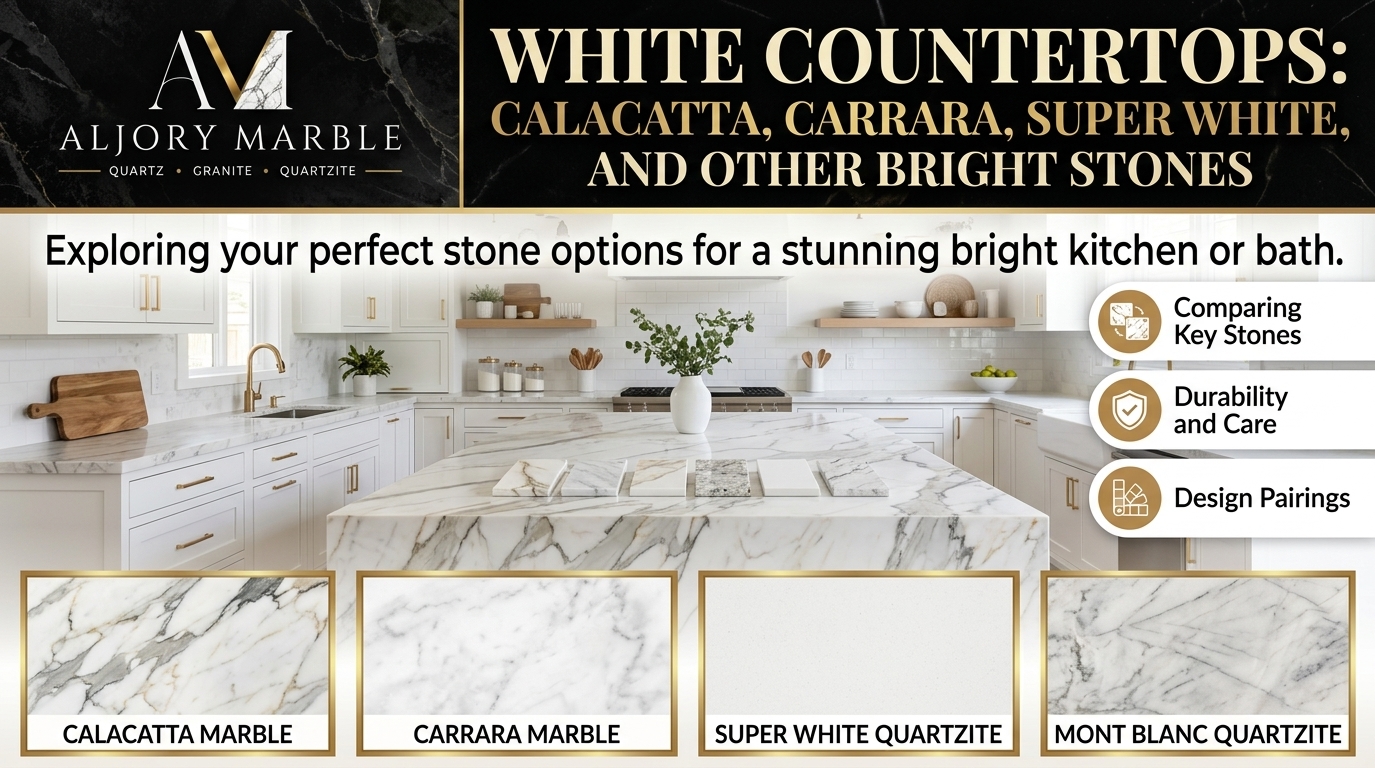
White countertops come in several different stones, and the name on the slab does not always tell you how it will hold up. Calacatta and Carrara are marble. Super White is usually a dolomite, not a true quartzite. Bright white quartzites and white quartz are tougher, but they look and feel different up close.
This guide compares the main white options side by side: what each one looks like, what it costs installed, how much care it needs, and where it works best. If you already have a stone in mind, the comparison table near the end gives you the short version.
The Four Types of White Countertops
Most white stone falls into one of four groups. The group matters more than the color name, because it decides how the surface reacts to lemon juice, wine, and everyday wear.
- Marble. Made mostly of calcite. Soft (about 3 to 4 on the Mohs hardness scale) and reacts to acid. Calacatta, Carrara, Statuario, and Danby are all marble. See our marble countertops page for more.
- Dolomite. Close to marble, but with magnesium in the mix. It etches more slowly than marble but still etches. Super White is the best known example.
- Quartzite. Sandstone that was fused under heat and pressure. Very hard (about 7 on the Mohs scale) and does not etch from kitchen acids. White Macaubas, Cristallo, and Mont Blanc are common white quartzites. See our quartzite countertops page.
- Quartz. An engineered slab made from crushed quartz, resin, and pigment. Non-porous, never needs sealing, and has the most even look. See our quartz countertops page.
Two simple tests before you buy
Trade names are not standardized, so the same stone can be sold as marble at one yard and quartzite at the next. Ask for a sample from the actual slab and try these at home:
- Acid test. Put a few drops of lemon juice or vinegar on the sample for 10 to 15 minutes, then wipe it off. A dull spot means the stone etches. True quartzite and quartz will not change.
- Glass test. Drag the edge of a glass bottle across the sample. Marble and dolomite will scratch. True quartzite will scratch the glass instead.
Calacatta: Bright White With Bold Veins
Calacatta is the stone most people picture when they ask for a white marble kitchen. It comes from the Carrara area of Tuscany, Italy, but from fewer and deeper quarries than Carrara marble.
- Bright white background
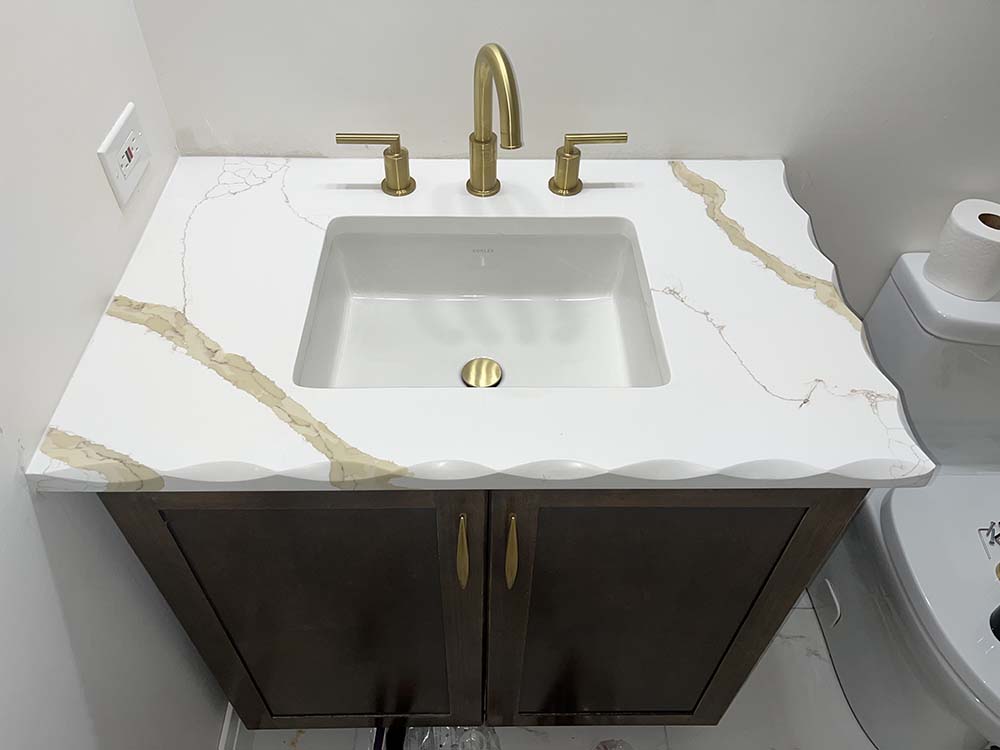
- Thick, dramatic veins in gray, and in some slabs gold or taupe
- Rarer than Carrara, so it costs more
- Etches and needs sealing like any marble
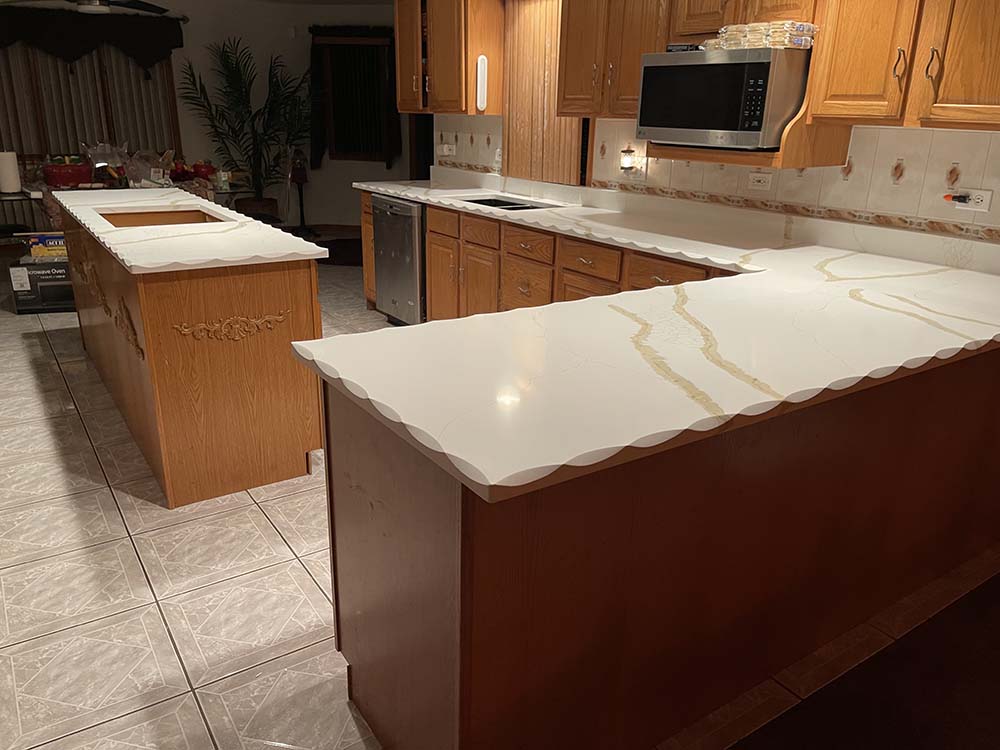
Calacatta works best on an island or a full-height backsplash, where the veins can be the main feature. Because the veins are bold, seam placement and vein matching matter more than with a quiet stone. Many homeowners now choose Calacatta-look quartz instead to get the pattern without the upkeep. Our Calacatta countertops page covers both versions.
Carrara: Soft Gray Veins and a Lower Price
Carrara marble comes from the same region of Italy and has been quarried there since Roman times. It is the most common and most affordable Italian white marble.
- White to light gray background
- Fine, feathery gray veining spread across the slab
- Calmer look than Calacatta
- Same etching and sealing needs as other marble
Carrara suits people who want real marble on a budget and do not mind a lived-in look. Its busy, soft pattern also hides light etching better than a bright, high-contrast slab. A honed finish makes etch marks even harder to see.
Super White: Read the Label Carefully
Super White is one of the most popular white stones, and one of the most misunderstood. It is often sold as a quartzite. In most cases it is a dolomite, or dolomitic marble.
- White and light gray with soft, cloudy gray movement
- Harder than regular marble, softer than true quartzite
- Etches more slowly than marble, but it does etch
- Needs sealing
Super White can be a good kitchen stone if you know what you are buying. Treat it like a tougher marble, not like granite. Test a sample with lemon juice before you commit. Lots from different quarries can behave differently, even under the same name.
White Quartzite: The Marble Look That Holds Up
If you want natural stone that looks like marble but handles a busy kitchen, true white quartzite is the strongest choice. It is hard, handles heat well, and does not etch from kitchen acids.
Common white quartzites include:
- White Macaubas: bright white with charcoal gray veins, from Brazil
- Cristallo: cool white with gray veins and small orange flecks
- Mont Blanc: white to soft gray with gentle linear veining
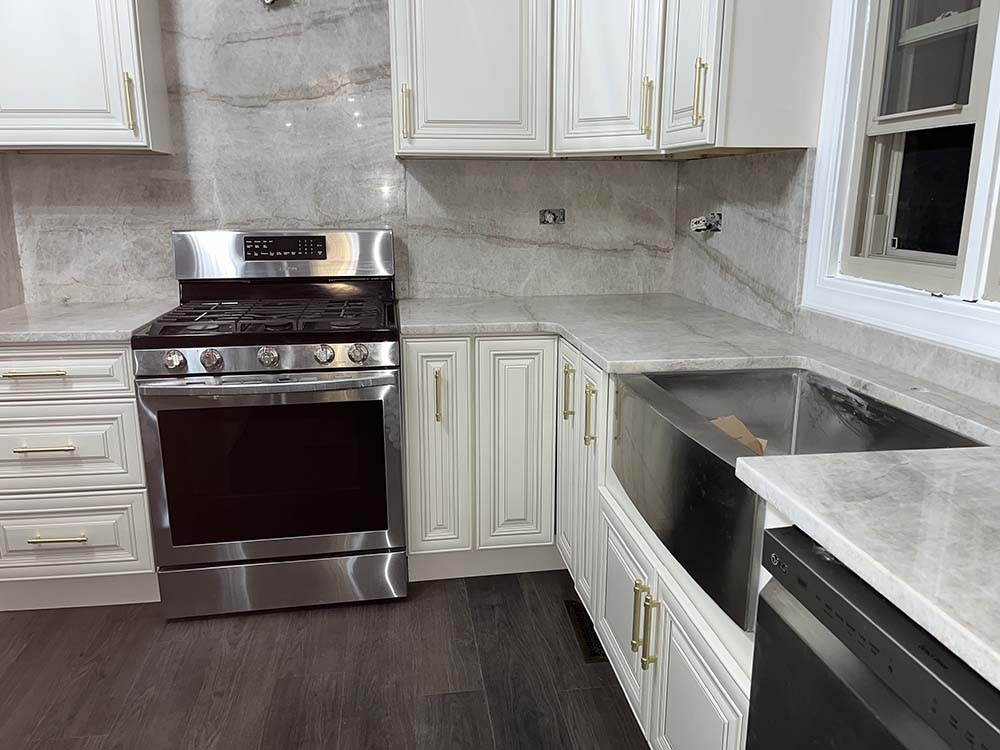
- Taj Mahal: cream to soft white with warm gold veins (see our Taj Mahal quartzite guide)
Quartzite is porous, so it still needs sealing. It is also harder to cut, which can add to fabrication cost and limit some detailed edge profiles.
White Quartz: The Low-Maintenance Option
White quartz gives you the most control over the final look. You can get pure solid white, a soft speckle, or a Calacatta-style vein that repeats from slab to slab.
- Non-porous, no sealing needed
- Most even color and pattern
- Less heat resistant than natural stone, so always use a trivet
- Strong direct sunlight can yellow some white quartz over time
One thing to know in 2026: worker safety rules around quartz are changing. Engineered quartz contains much more crystalline silica than natural stone, and cutting it creates dust that can cause a serious lung disease in fabrication workers. Australia banned engineered stone in 2024. In September 2026, California regulators released a draft rule to stop shops from fabricating quartz with more than 1% crystalline silica. The risk is to the workers who cut and grind the slabs, not to people using a finished countertop. Several brands now sell low-silica options if that matters to you.
Other Bright White Stones
- Statuario marble: bright white with bold, defined gray veins. One of the rarest and most expensive Italian marbles.
- Danby marble: quarried underground in Vermont. Cool white and a bit denser than many Italian marbles, but it still etches.
- Thassos marble: a Greek marble that is close to pure white with very little veining. Best for vanities and low-use surfaces.
Side-by-Side Comparison
| Stone | Type | Look | Etches from acid? | Needs sealing? | Upkeep |
|---|---|---|---|---|---|
| Calacatta | Marble | Bright white, bold gray or gold veins | Yes | Yes | High |
| Carrara | Marble | White to light gray, soft feathery veins | Yes | Yes | High |
| Statuario | Marble | Bright white, defined gray veins | Yes | Yes | High |
| Super White | Usually dolomite | Cool white and gray, cloudy movement | Yes, more slowly | Yes | Medium to high |
| White Macaubas, Cristallo, Mont Blanc | Quartzite | White with gray or charcoal veins | No | Yes | Low to medium |
| Taj Mahal | Quartzite | Cream with warm gold veins | No | Yes | Low to medium |
| White quartz | Engineered | Solid white, speckled, or Calacatta-look | No | No | Low |
How Much Do White Countertops Cost?
White countertops cost about the same as other colors in the same material. The material, the slab grade, and the layout drive the price, not the color. Here are the installed planning ranges from our countertop cost guide:
| Material | Installed cost per square foot |
|---|---|
| Quartz | About $60 to $150+ |
| Marble | About $75 to $200+ |
| Quartzite | About $80 to $200+ |
Within each group, the specific stone moves the number:
- Carrara sits at the low end of marble, because so much of it is quarried.
- Calacatta and Statuario sit at the high end. Rare slabs can reach $250 per square foot or more.
- Super White usually prices in the middle, below the premium marbles.
- Solid white and simple quartz colors sit at the low end of quartz. Calacatta-look quartz with long, realistic veins costs more.
Veined slabs can also raise the total in another way. Matching the veins across seams or down a waterfall edge often takes more material. Our guide on what drives a countertop quote up explains where the money goes. These are planning ranges, not a quote.
How to Care for White Stone
White stone shows spills faster than dark stone, so a few habits go a long way.
For all white countertops:
- Wipe up coffee, wine, oil, turmeric, and tomato sauce right away
- Clean with warm water and a pH-neutral stone cleaner or mild dish soap
- Skip bleach, vinegar, and abrasive powders
- Use a cutting board and trivets
For marble, dolomite, and quartzite:
- Seal when the water test says it is time. Leave a few drops of water on the surface for 15 minutes. If the stone darkens, reseal it. For many kitchens that means about once a year.
- On marble and dolomite, use coasters under glasses and wipe acidic spills fast. Sealing helps with stains but does not stop etching.
- A honed finish hides etching better than a polished one. See our guide to polished, honed, and leathered finishes.
For white quartz:
- Never set hot pans directly on it. Our heat resistance guide explains why.
- Avoid strong solvents and oven cleaner.
Chicago tap water is hard, and the mineral spots it leaves show up on white stone. Our post on hard water and countertops covers what removes them safely. For a full routine by material, see our countertop care guide.
Which White Stone Is Right for Your Kitchen?
Start with how you use the kitchen, then pick the look.
- You cook every day and want low upkeep: white quartz, or a true white quartzite if you want natural stone.
- You want real marble and accept some wear: Carrara, ideally honed. It ages into a soft, lived-in look.
- You want a showpiece island: Calacatta or Statuario, with careful vein matching. See vein matching and bookmatching explained.
- You like warm tones over bright white: Taj Mahal quartzite.
- You love Super White: go ahead, but test a sample first and treat it like a tougher marble.
- You are on a tighter budget: solid white or simple veined quartz, or a Carrara remnant for a vanity.
White stone also changes with light. A slab that looks pure white in a bright showroom can look gray or cream in a north-facing kitchen. Look at samples in your own kitchen at different times of day, next to your cabinet and floor samples. Our countertop colors and cabinets guide can help with pairings. If you want more color, see our guides to black countertops and blue countertops.
Frequently Asked Questions
What is the most durable white countertop?
True white quartzite and white quartz are the most durable. Quartzite is harder and handles heat better. Quartz needs no sealing and resists stains better.
Is Super White quartzite or marble?
In most cases Super White is a dolomite, which is a type of marble. It is often sold as quartzite. It etches more slowly than regular marble, but it does etch.
Calacatta or Carrara: which is better for a kitchen?
Carrara is usually more practical. Its softer gray pattern hides etching and wear better, and it costs less. Calacatta has a brighter, bolder look, but marks show more on its white background.
Do white countertops stain easily?
White stone shows stains faster than darker stone. Sealed natural stone and quartz both resist most stains if you wipe spills quickly. Turmeric, red wine, and oil are the most common problems.
Do white quartz countertops turn yellow?
Some white quartz can yellow over time from strong direct sunlight or heat damage. Use trivets, and choose natural stone for outdoor kitchens or very sunny spots.
Are white countertops more expensive than other colors?
Not by color alone. Price depends on the material and slab grade. Rare white marbles like Calacatta and Statuario cost more, but solid white quartz is one of the lower-cost options.
What white countertop looks most like marble with the least care?
Calacatta-look quartz needs the least care. If you want natural stone, a true white quartzite gives a marble look without etching.
See the Slabs in Person
Photos cannot show you how a white slab looks under your lights or next to your cabinets. Visit our showroom at 4711 135th St in Crestwood, Monday through Saturday, 9am to 6pm. Bring a cabinet door and a flooring sample, and compare marble, quartzite, and quartz side by side.
We template, fabricate, and install with our own team, so the people who help you pick the slab are the people who cut and set it. Call (708) 362-7674 or request a free quote to get started.

Serving Chicago & Surrounding Areas
Get Your Free Kitchen Countertop Estimate
Fill out the form and our team will get back to you in next 24 hours.