Taj Mahal Quartzite: The Complete Guide to This Popular Natural Stone
If you have been searching for countertop inspiration, you have probably run into a stone called Taj Mahal. It shows up in kitchen after kitchen: soft cream background, warm gold and taupe veins drifting across the surface, a look that sits somewhere between a marble and a granite. But before you fall in love with a photo, there is something every homeowner needs to understand: “Taj Mahal” is not one single material. It is a name used for two very different products, a natural quartzite and an engineered quartz, and the difference between them affects price, durability, and how the stone will hold up in your kitchen for the next twenty years.
This guide breaks down exactly what Taj Mahal quartzite is, how it forms, what it costs, how it compares to Taj Mahal quartz, and which finish and application make sense for your home. If you are in the Chicago area and ready to see slabs in person, Al Jory Marble keeps Taj Mahal quartzite in stock at our Crestwood showroom.
What Is Taj Mahal Quartzite
Taj Mahal quartzite is a natural stone quarried primarily in Brazil. Like all true quartzite, it starts out as sandstone. Over millions of years, extreme heat and pressure deep in the earth fuse the sand grains together, converting the softer sandstone into a dense, hard, crystalline stone. That geologic process is what separates quartzite from quartz, and it is also the single most confused point in the entire countertop industry.
Quartzite is mined in blocks, cut into slabs, and finished, the same way granite and marble are. Every slab is one of a kind. No two pieces of Taj Mahal quartzite look exactly alike, because each one carries its own pattern of veining, mineral inclusions, and background tone straight from the earth. That natural variation is part of the appeal for homeowners who want a countertop that looks like nothing else on the block, but it also means the two inch sample chip in a showroom display can look noticeably different from the full slab that ends up in your kitchen.
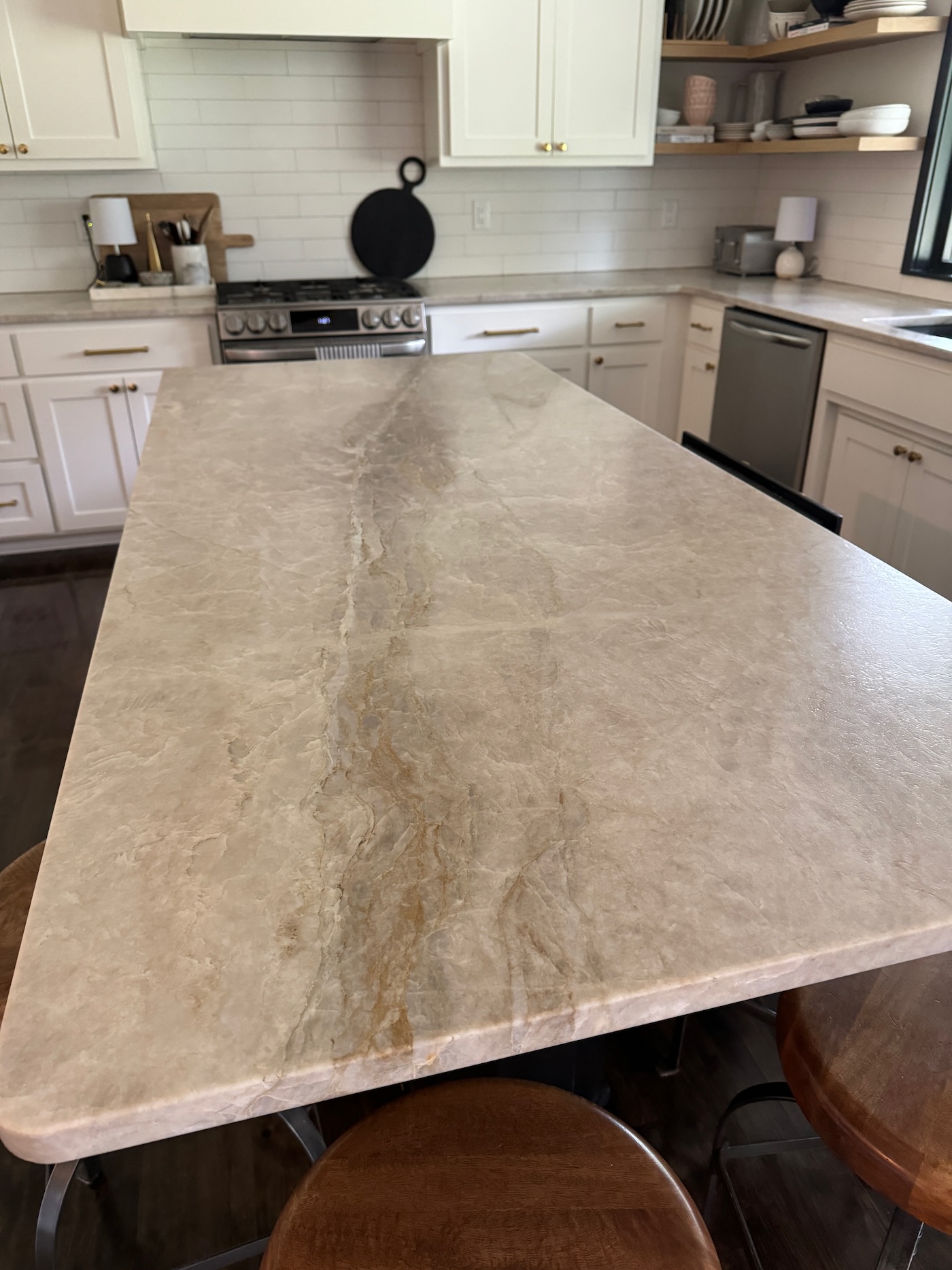
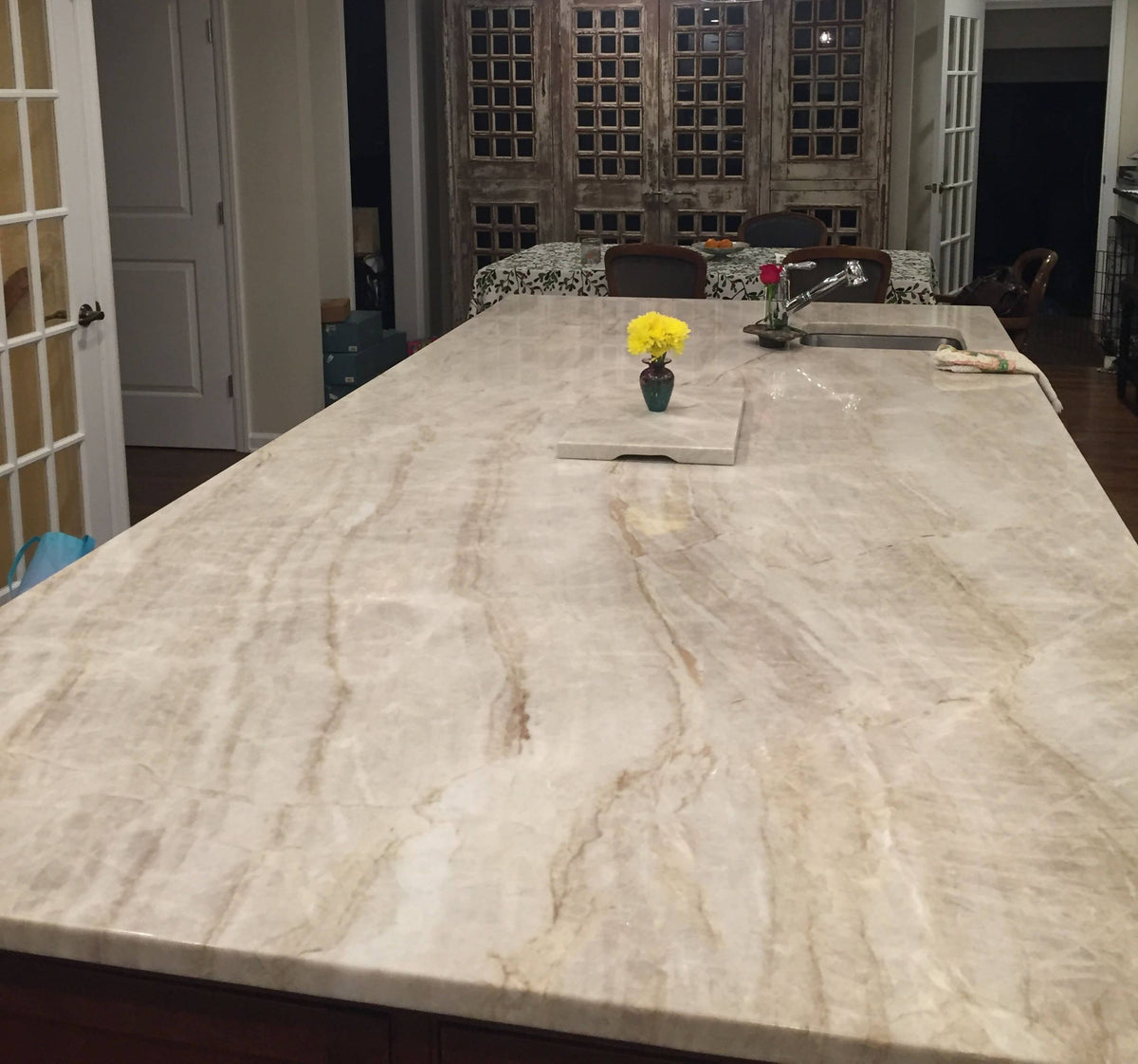
The stone’s background color runs from soft white to a warmer beige, with wispy gold, taupe, and sometimes gray veining that moves across the surface in soft, marble-like patterns. That movement, combined with the strength of quartzite, is exactly why the stone has become one of the most requested materials for kitchen islands, waterfalls, and full backsplashes over the last several years.
Taj Mahal Quartzite vs. Marble: Why the Comparison Exists
Most homeowners are drawn to Taj Mahal quartzite because it delivers a marble look. The soft background and flowing veins do resemble Carrara or Calacatta marble at a glance. The difference is durability. Marble is a softer stone, made of calcite, and it is vulnerable to etching from acidic foods like lemon juice, wine, and vinegar. A dropped tomato or a splash of citrus can leave a dull mark on a marble countertop permanently.
Quartzite, including Taj Mahal, is made primarily of fused quartz crystals, which puts its hardness close to that of granite, well above marble on the Mohs scale. That hardness makes Taj Mahal quartzite far more resistant to scratching and etching than true marble, while still delivering the soft, veined look homeowners want. It is why designers frequently describe quartzite as “the look of marble with the durability of granite.”
Taj Mahal Quartzite vs. Taj Mahal Quartz: The Real Difference
This is the point of confusion that trips up almost every homeowner researching this stone, so it is worth spelling out clearly.
Taj Mahal Quartzite is a natural stone. It is quarried from the ground, cut into slabs, and every slab is unique. Because it is a porous natural stone, it needs to be sealed periodically to stay stain resistant. It requires more careful fabrication, since natural veining and mineral pockets can create weak points that a skilled fabricator has to work around during cutting, edging, and polishing.
Taj Mahal Quartz is an engineered stone, manufactured to mimic the color and veining of the natural quartzite. It is made from ground quartz combined with resins and pigments, then formed into consistent slabs. Because it is engineered, quartz is non-porous, never needs sealing, and delivers a much more uniform, repeatable pattern from slab to slab.
The name overlap is a marketing choice, not a geological fact. Quartz manufacturers named their engineered product after the popular natural stone it was designed to resemble. The two materials are not chemically or geologically related beyond both containing quartz as a component.
Cost is the other major difference. Because it is a natural stone that must be quarried, shipped, and carefully fabricated around its own veining and mineral pockets, installed Taj Mahal quartzite typically runs in the neighborhood of $90 to $150 or more per square foot installed, with premium or bookmatched slabs pushing higher. Taj Mahal quartz, because it is manufactured in a controlled process with predictable material behavior, is generally easier and faster to fabricate, which keeps installed pricing lower for most homeowners. If budget is the deciding factor and you are comparing both, ask your fabricator for a side by side quote on the exact slabs or batches you are considering, since pricing shifts with availability and finish.
Maintenance is where quartz has a real edge. Natural quartzite, including Taj Mahal, is porous and needs periodic sealing to resist staining from oil, wine, and other kitchen spills. Quartz is non-porous straight out of the factory and never needs sealing. If you want the Taj Mahal look with zero sealing maintenance, engineered quartz is worth a look. If you want the one of a kind natural veining and the added heat and scratch resistance that comes with true quartzite, the natural stone is the better fit.

Finishes Available for Taj Mahal Quartzite
Taj Mahal quartzite is typically available in three finishes, and the finish you choose changes both the look and the day to day feel of the stone.
Polished is the most popular and most requested finish. It gives the stone a high gloss, reflective surface that makes the gold and taupe veining pop against the cream background. Polished is the finish most homeowners picture when they think of a Taj Mahal countertop, and it is the easiest to keep looking bright since spills wipe cleanly off the smooth surface.
Honed delivers a smooth, matte finish with no shine. Honed Taj Mahal has a softer, more understated look that works well in modern and transitional kitchens. It also does a better job of hiding water spots and light surface marks between cleanings, which some homeowners with young kids or a busy kitchen prefer.
Brushed (sometimes called leathered in the wider quartzite market) adds a subtle texture to the surface while keeping a soft sheen. This finish adds depth to the stone and does an excellent job of hiding fingerprints, which makes it a strong choice for kitchen islands that get touched constantly.

Color and Pattern Variations
Because Taj Mahal quartzite is a natural stone, no two slabs are identical, but the material generally falls into a medium variation range. Expect a beige to soft white background as the base, with taupe and warm gold veins as the primary accent colors. Some slabs lean lighter and more uniform, while others carry heavier, more dramatic veining with more movement across the surface. This is also sold in the trade under other names, most commonly Perla Venata, so if a slab yard or supplier uses that name, they are describing the same stone.
Because the variation between slabs and even between lots can be significant, always see the actual full slab, not just a sample chip, before you commit. This is standard advice across the stone industry and it applies just as much to Taj Mahal as any other natural quartzite.
Where to Use Taj Mahal Quartzite in Your Home
Taj Mahal quartzite is rated for both residential and commercial use, and it holds up in a wide range of applications:
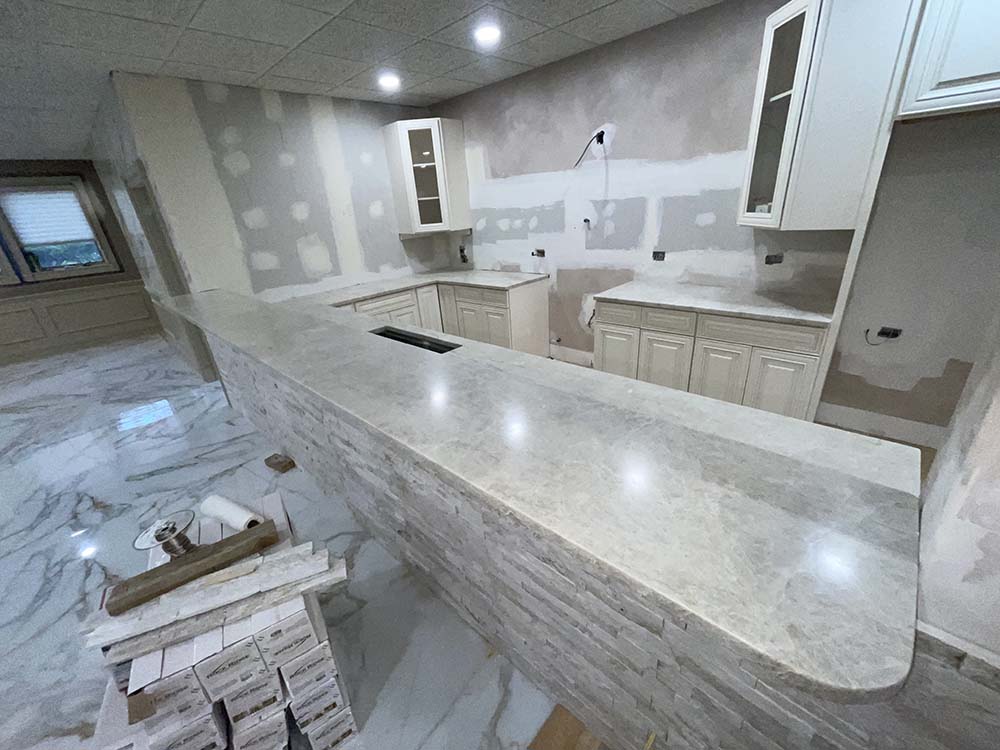
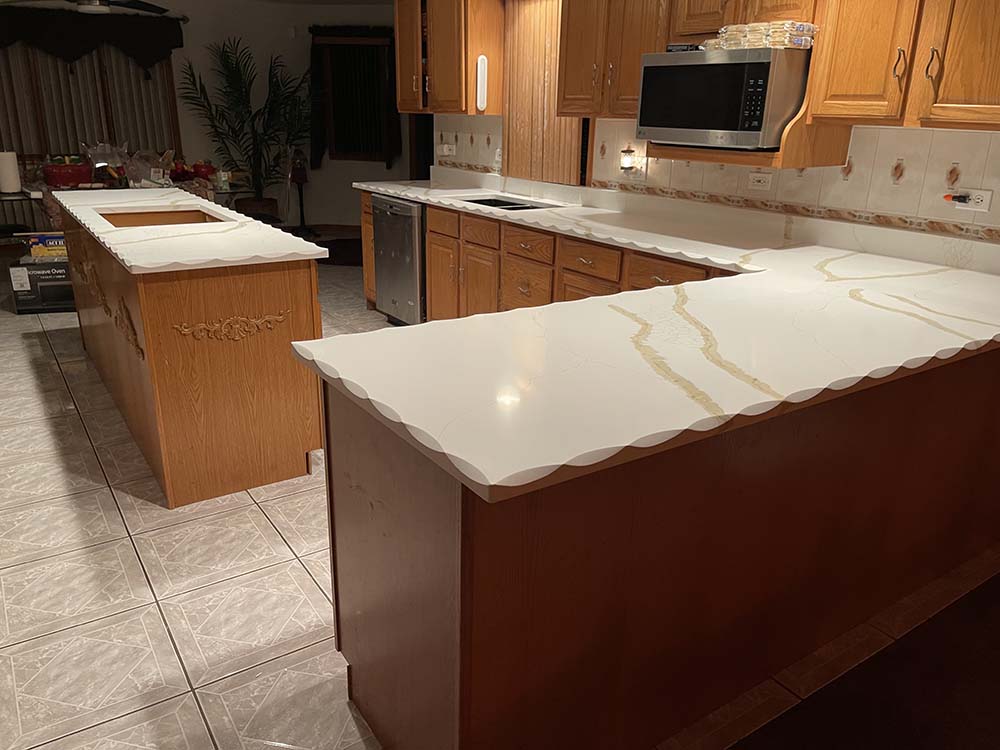
- Kitchen countertops and islands – the most common application, and where the veining and finish choice matter most for daily visibility
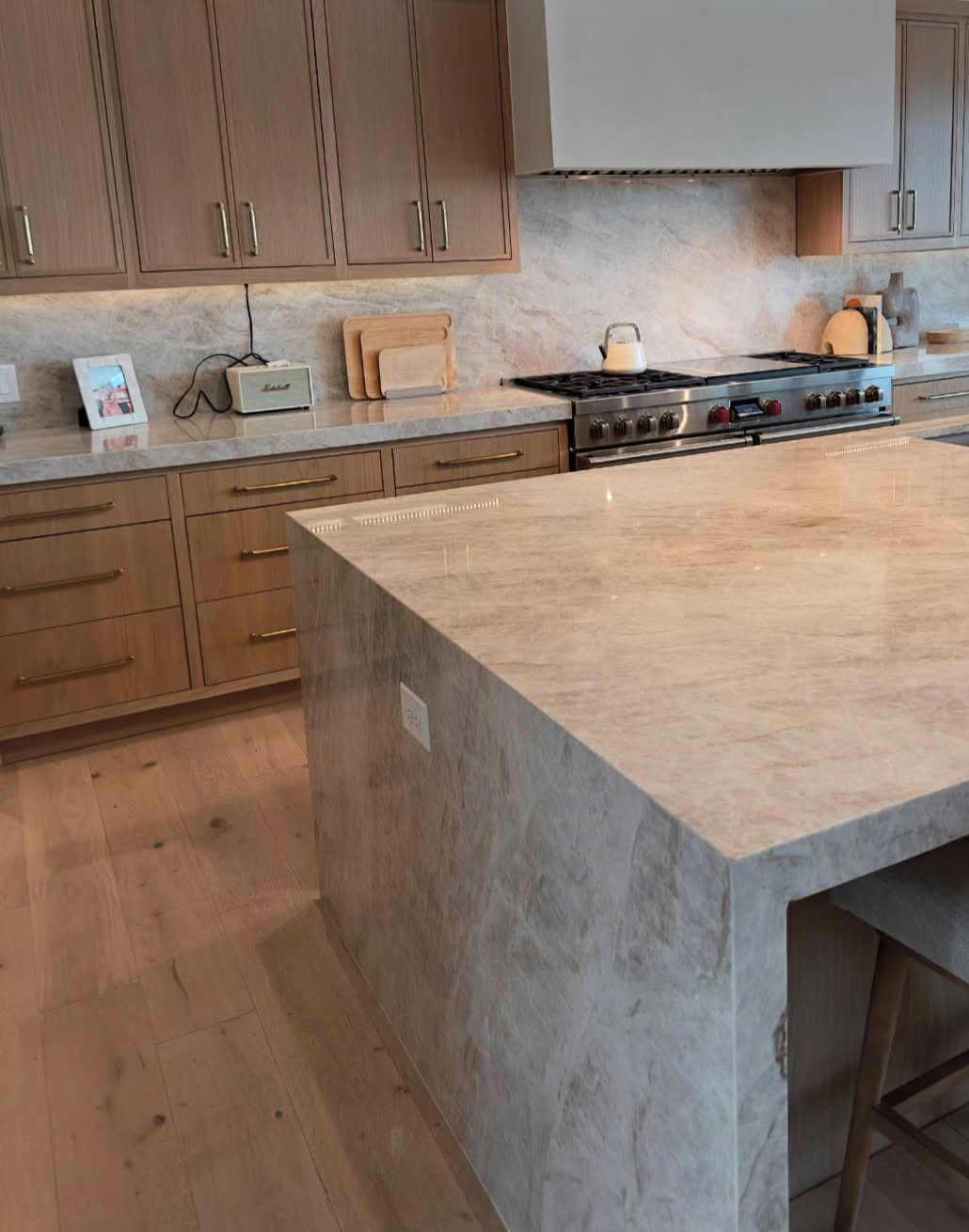
- Waterfall islands – the flowing veining pattern makes Taj Mahal a favorite for waterfall edges, where the pattern continues seamlessly down the side of the island
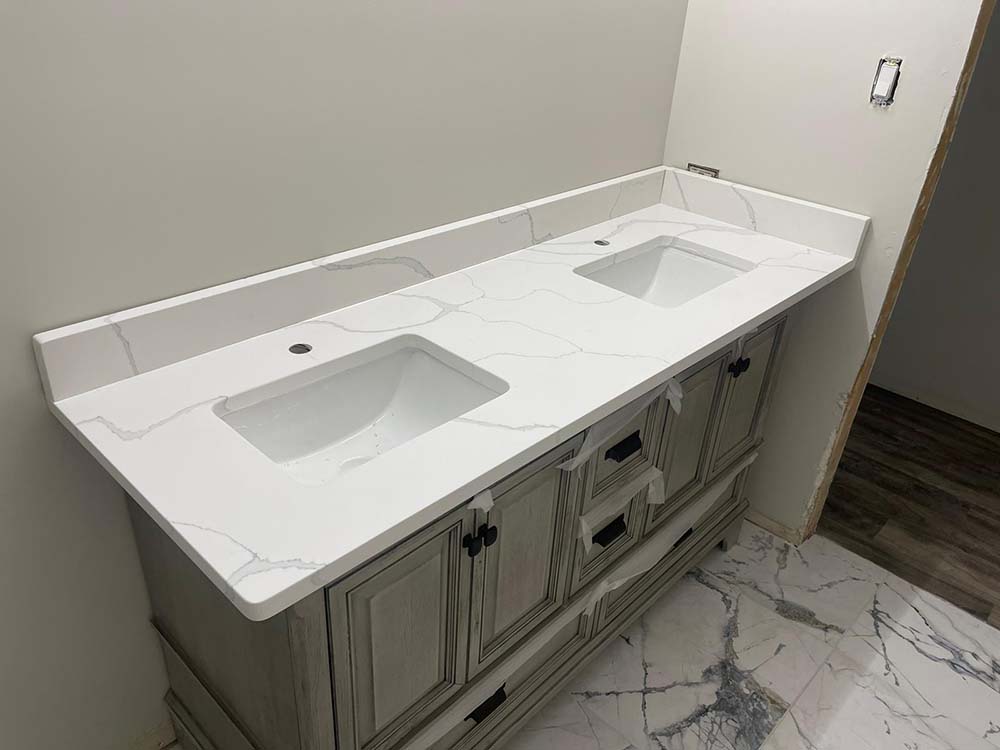
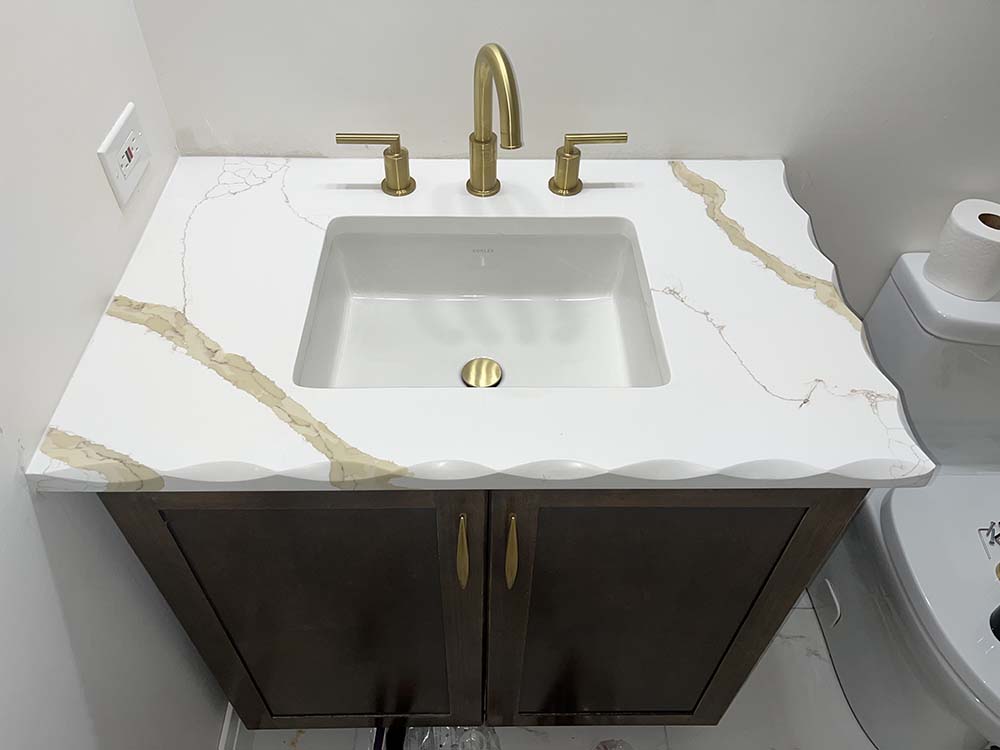
- Bathroom vanity tops – the soft, bright background works well in both primary bath and powder room vanities
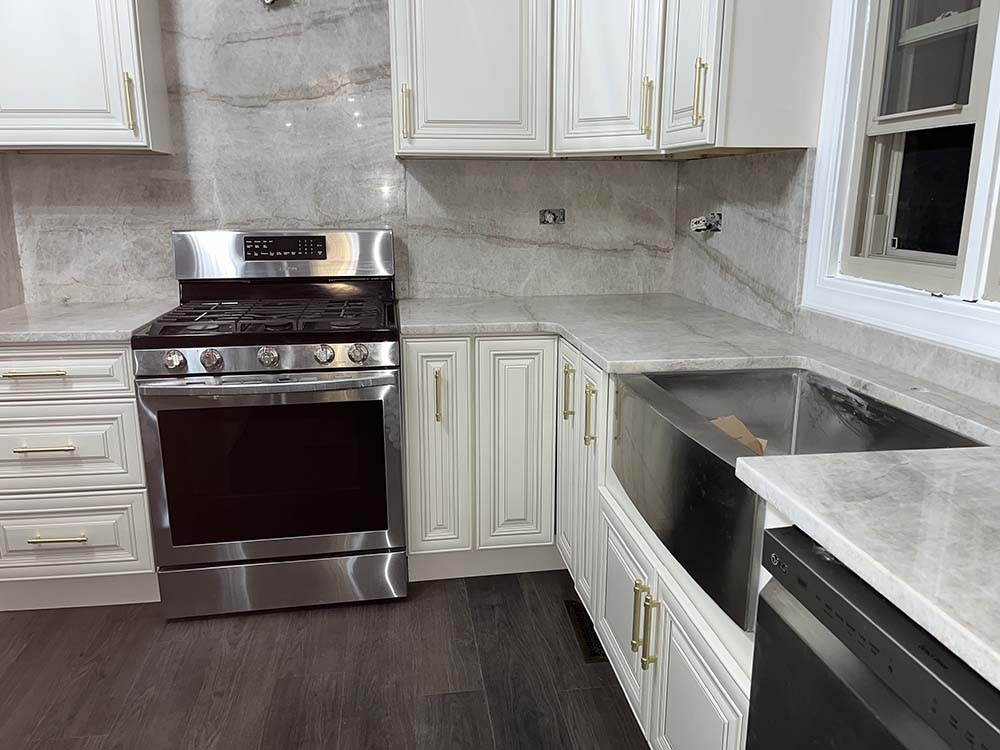
- Backsplashes and accent walls – full slab backsplashes let the natural veining read as a single continuous piece of art behind the range or sink
- Flooring – rated for both residential and commercial floor use
- Shower walls – suitable for wet wall applications
- Exterior and freezing climate use – Taj Mahal quartzite is rated for exterior applications and holds up in freezing climates, which matters for anyone considering it for an outdoor kitchen or patio surface here in Chicago
Is Taj Mahal Quartzite Right for Your Kitchen
Taj Mahal quartzite makes the most sense if you want the soft, marble-inspired look with real durability, you are comfortable with periodic sealing as part of routine maintenance, and you want a countertop where no two kitchens look exactly alike. It is a strong fit for busy family kitchens that still want a high end, designer look, since the added hardness over marble means less worry about everyday acidic spills.
If low maintenance and slab to slab consistency matter more to you than natural variation, Taj Mahal quartz is worth comparing side by side before you decide. Either way, the only real way to know which one is right for your space is to see full slabs in person, under your own kitchen lighting, next to your cabinet and flooring samples.
Frequently Asked Questions
Is Taj Mahal quartzite the same as Taj Mahal quartz? No. Taj Mahal quartzite is a natural stone quarried from the ground, and every slab is unique. Taj Mahal quartz is an engineered stone made from ground quartz, resins, and pigments, manufactured to copy the look of the natural quartzite. They share a name because the engineered product was designed to mimic the natural one, not because they are the same material.
Does Taj Mahal quartzite need to be sealed? Yes. As a natural, porous stone, Taj Mahal quartzite should be sealed periodically, generally every twelve to eighteen months depending on use, to maintain stain resistance. Taj Mahal quartz, being non-porous, never needs sealing.
Is Taj Mahal quartzite harder than granite? Taj Mahal quartzite is generally considered at least as hard as granite, and many quartzites test harder. That added hardness makes it more resistant to scratching than granite in most cases, while still offering a softer, more marble-like look.
Can Taj Mahal quartzite be used outdoors? Yes. Taj Mahal quartzite is rated for exterior use and holds up in freezing climates, which makes it a workable option for outdoor kitchens and patios in the Chicago area.
What is the difference between polished, honed, and brushed Taj Mahal quartzite? Polished gives a high gloss, reflective surface that makes the veining stand out the most. Honed is a smooth matte finish with a softer, more understated look. Brushed adds light texture and a soft sheen, which helps hide fingerprints on high traffic surfaces like kitchen islands.
See Taj Mahal Quartzite in Person at Al Jory Marble
Photos and sample chips only tell part of the story with a natural stone like Taj Mahal quartzite. The veining, the background tone, and the way the gold accents catch the light all shift from slab to slab, which is why we keep full slabs in stock at our Crestwood showroom for you to walk up to and inspect before you commit to anything.
Al Jory Marble fabricates and installs kitchen countertops for homeowners across Chicago and the surrounding suburbs, including Naperville, Schaumburg, Orland Park, Tinley Park, and Joliet. One team handles your templating, fabrication, and installation from start to finish, so nothing gets handed off to a subcontractor along the way. Bring your cabinet door and flooring samples to our showroom at 4711 135th St in Crestwood and hold them up against the actual Taj Mahal slab going into your kitchen, or call us and we will bring samples to you for a free in home estimate.
Call (708) 362-7674 or request a free quote online to schedule your free consultation and get a written estimate on Taj Mahal quartzite countertops for your kitchen.

Serving Chicago & Surrounding Areas
Get Your Free Kitchen Countertop Estimate
Fill out the form and our team will get back to you in next 24 hours.