
Marble Countertops in Chicago: The Complete Guide
Updated September 2026 · By Al Jory Marble — a Crestwood-based countertop fabricator & installer, 10+ years and 54 five-star reviews serving Chicagoland.
Quick answer: Marble is a natural stone prized for its bright, luminous look and unique veining — the classic choice for a high-end kitchen or bath. It’s softer and more porous than granite or quartzite, so it can etch and stain and needs sealing and mindful care, but many homeowners love the way it ages and patinas. Popular types include Carrara, Calacatta, and Statuario. Al Jory Marble fabricates and installs marble countertops across Chicagoland from our Crestwood showroom — call (708) 362-7674 for a free estimate.
Marble countertops at a glance
- What it is: natural metamorphic stone, quarried in slabs — timeless, luminous, one-of-a-kind veining
- Look: bright white to soft grey with grey/gold veining (Carrara, Calacatta, Statuario)
- Durability: softer & more porous than granite/quartzite — can etch & stain
- Upkeep: periodic sealing + prompt spill cleanup; develops a patina over time
- Best for: baking/pastry, statement islands, baths, low-traffic luxury kitchens
- Cost: mid-to-high; varies by type & slab — [insert range] · see cost guide
There’s a reason marble has anchored the world’s most beautiful kitchens for centuries: nothing else glows quite like it. Each slab is a unique piece of natural stone, and the soft, flowing veining gives a kitchen a sense of quiet luxury that engineered surfaces imitate but never fully match. This guide covers everything a Chicagoland homeowner needs to decide whether marble is right for your kitchen — the types, the honest pros and cons, how it compares to quartz and quartzite, what it costs, and how to care for it — from a fabricator who cuts and installs it every week.
Types of marble for countertops
| Marble | Look | Notes |
|---|---|---|
| Carrara | Soft white-grey with fine, feathery grey veining | The most common and affordable; understated, classic |
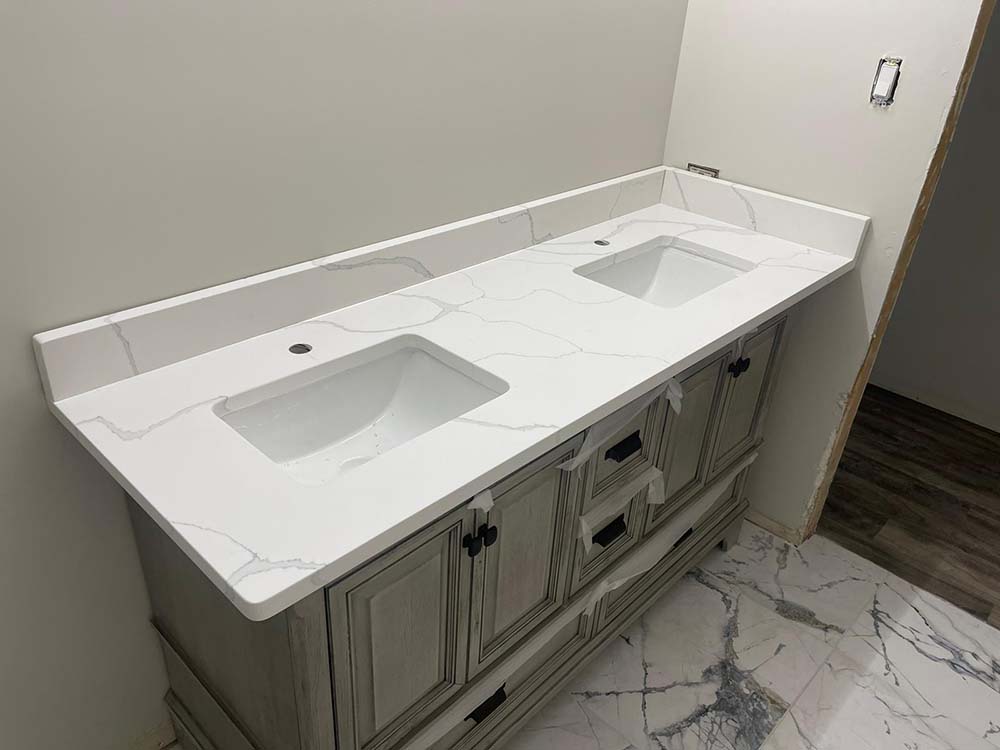
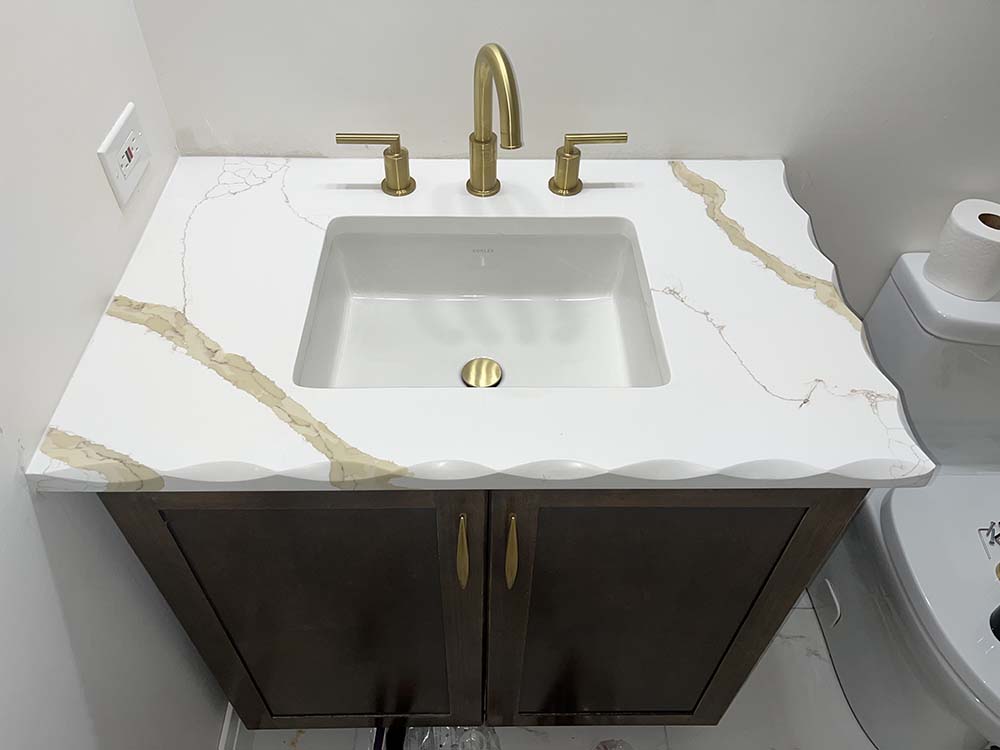
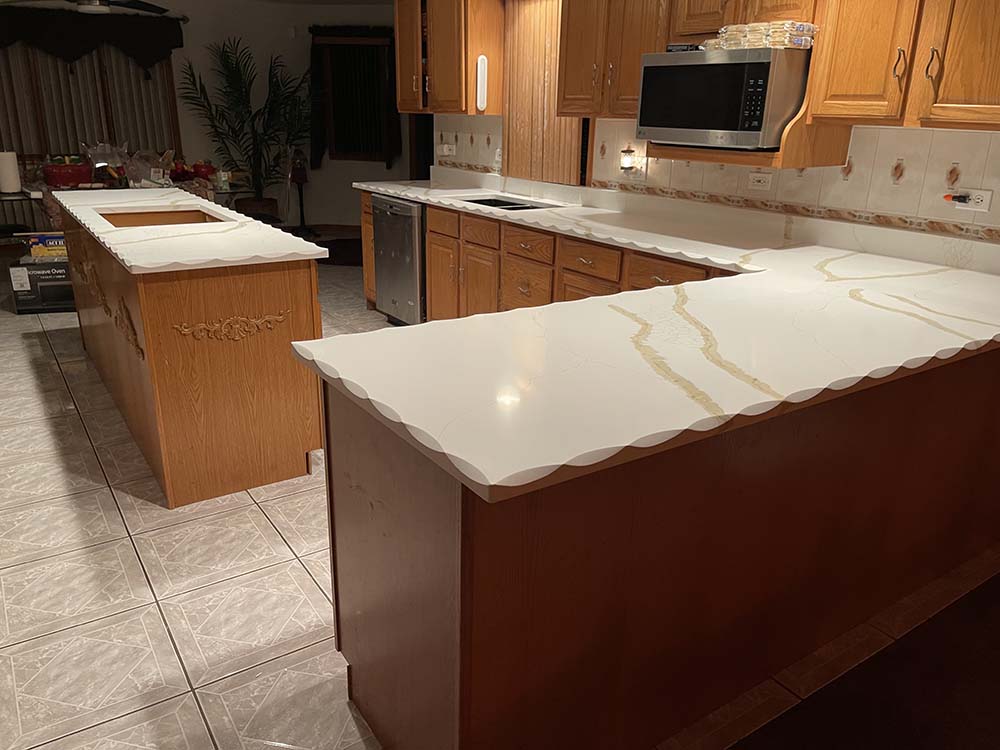
| Calacatta | Bright white with bold, dramatic grey/gold veining | Rarer and more premium; the showpiece look |
| Statuario | Bright white with striking grey veining | Luxurious, high contrast; prized and limited |
| Danby / others | Warm whites, subtle movement | American marble, good balance of look and durability |
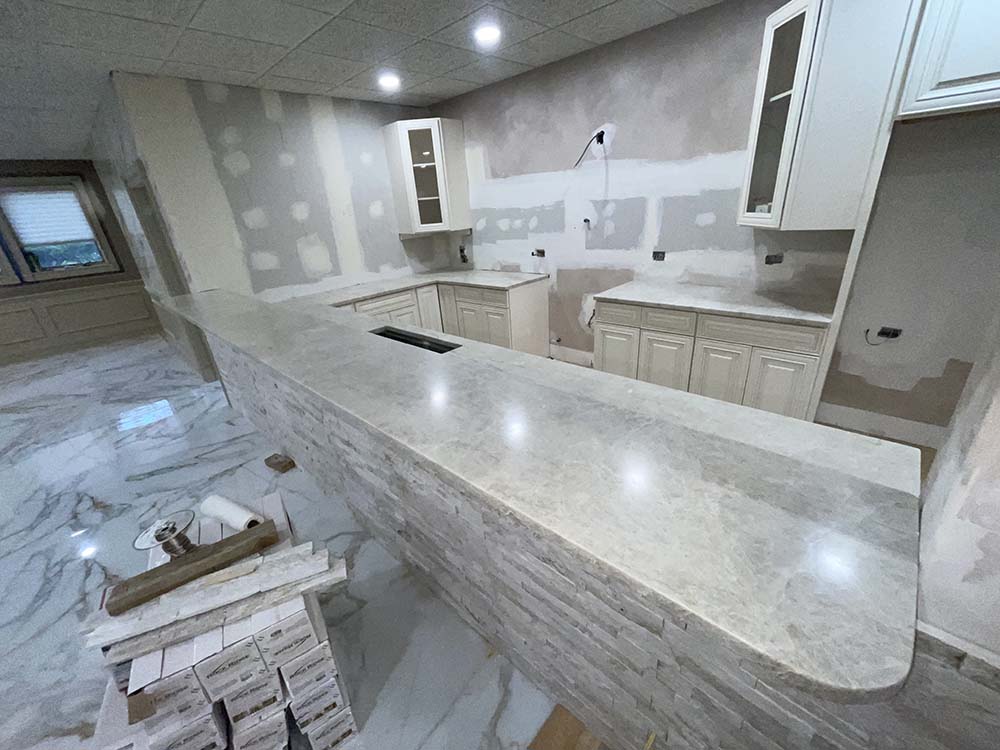
Because natural marble varies slab to slab, the same “Calacatta” can look very different from one piece to the next. That’s exactly why we want you standing in front of the actual slab going into your kitchen — see our Calacatta countertops and the full range in the Crestwood showroom.
Pros and cons of marble countertops
The pros:
- Unmatched beauty — a luminous, timeless look with veining unique to your slab.
- Naturally cool — ideal for baking and pastry work; it stays cooler than other surfaces.
- Adds value & prestige — genuine marble signals a high-end kitchen to buyers.
- Ages gracefully — many owners love the lived-in patina it develops over years.
The trade-offs (be honest with yourself here):
- Etching — acidic foods (lemon, wine, vinegar) can dull the finish; this is the #1 thing to understand about marble.
- Staining — it’s porous, so spills should be wiped promptly and the stone sealed periodically.
- Softer — it can scratch or chip more easily than granite or quartzite.
None of this means marble is a bad choice — it means marble is a choice for someone who values the look and accepts a little patina as part of its character. If you want the marble aesthetic with more toughness, keep reading.
Marble vs. quartz vs. quartzite
| Marble | Quartz | Quartzite | |
|---|---|---|---|
| Type | Natural stone | Engineered | Natural stone |
| Look | Luminous, unique veining | Consistent; can mimic marble | Marble-like, natural |
| Hardness | Softer | Hard | Hardest of the three |
| Etch/stain | Etches & stains | Resists both | Resists etching; seal for stains |
| Sealing | Yes, periodic | Never | Periodic |
| Best for | Look-first, baking, low-traffic | Busy kitchens, low upkeep | Marble look + durability |
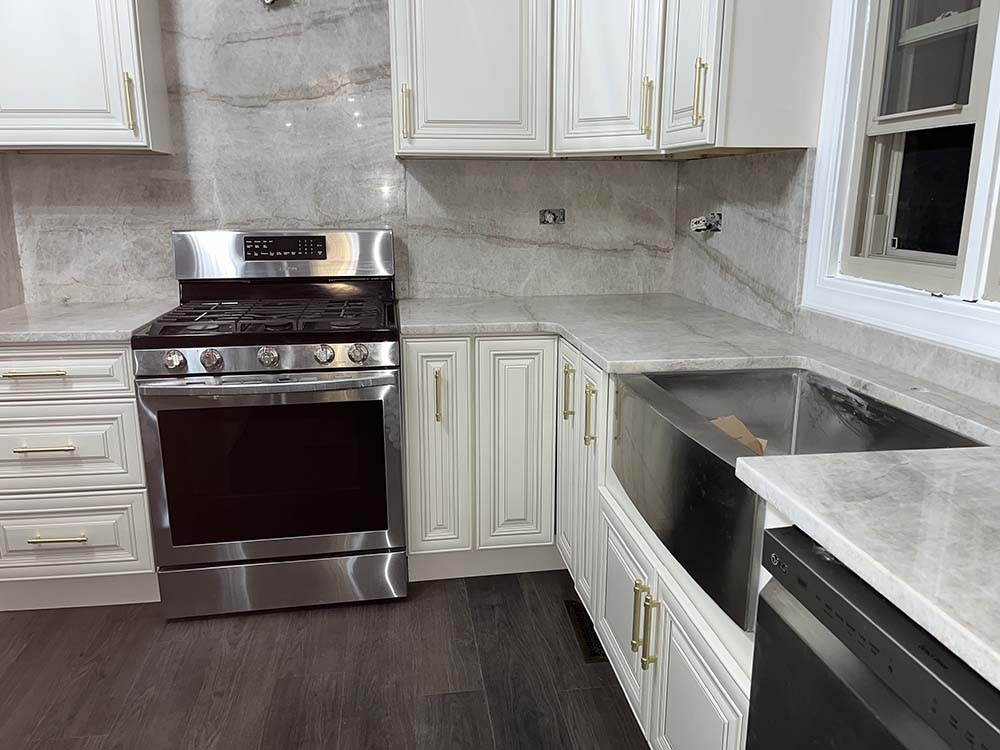
Want the marble look without the worry? Many Chicagoland homeowners choose quartzite (a natural stone that reads like marble but is harder than granite) or a marble-look quartz (nonporous, no sealing). Compare all three in our quartz vs. granite vs. quartzite guide.
How much do marble countertops cost in Chicago?
Marble sits in the mid-to-high range, and the price depends on the type (Carrara is the most affordable; Calacatta and Statuario cost more), the slab, the square footage, edge profile, and cutouts. Because we fabricate in our own Crestwood shop and aren’t a middleman, our pricing is competitive for premium stone. For a full breakdown, see our countertop cost guide, or call for a free measurement and written estimate on your exact kitchen.
How to care for marble countertops
Marble is easier to live with than its reputation suggests — you just work with the stone, not against it:
- Seal it — we seal on install, and you reseal periodically (a simple water-bead test tells you when).
- Wipe spills promptly — especially anything acidic (citrus, wine, tomato, vinegar).
- Use cutting boards and trivets — protect against scratches and thermal shock.
- Clean gently — mild dish soap and water or a stone-safe cleaner; never vinegar or abrasive cleaners.
- Embrace the patina — honed (matte) marble hides etching better than polished if you want a more forgiving finish.
Polished vs. honed marble
Polished marble is glossy and reflective, showing veining at its most vivid — but etch marks are more visible on a shiny surface. Honed marble has a soft matte finish that hides etching and everyday wear far better, which is why many kitchens choose it. Both are available; we’ll show you samples of each so you can see the difference in your light.
Is marble right for your kitchen?
Choose marble if the look is the priority, you bake, and you’re comfortable with a surface that patinas. Choose quartzite if you want the marble look with more durability, or marble-look quartz if you want zero maintenance. There’s no wrong answer — only the right stone for how you actually use your kitchen. The best way to decide is to see full slabs in person; bring your cabinet door and flooring samples to hold against the stone.
Why choose Al Jory Marble
Al Jory Marble is a local, family-run fabricator and installer based at 4711 135th St in Crestwood, serving all of Chicagoland for 10+ years — with 54 five-star Google reviews. We’re not a middleman: one team templates your space, cuts and finishes the slab in our own shop, and sets it in your home. We keep a large marble, quartz, granite, and quartzite inventory in stock, so most projects start without waiting on a supplier. See marble countertops, browse the full countertop selection, or explore kitchen countertops in Chicago.
Book your free marble consultation
Visit the Crestwood showroom to see full marble slabs in person, or we’ll bring samples to your home and measure on site — the consultation and written estimate are free. Call (708) 362-7674 or get a free quote.
Marble Countertops FAQ
Are marble countertops a good idea for a kitchen?
Yes, if you value the look and accept some upkeep. Marble is beautiful and stays cool for baking, but it’s softer and more porous than granite or quartzite, so it can etch and stain and needs sealing. Honed marble and prompt cleanup make it very livable.
Do marble countertops stain and etch?
Marble can stain if spills aren’t wiped promptly, and etch (dull spots) from acidic foods like lemon and wine. Sealing helps with staining; a honed finish hides etching better than polished.
How much do marble countertops cost in Chicago?
Marble is mid-to-high range, depending on the type (Carrara is most affordable; Calacatta and Statuario cost more), slab, square footage, edges, and cutouts. See our countertop cost guide or request a free estimate.
What’s the difference between Carrara and Calacatta marble?
Carrara is soft grey-white with fine, feathery veining and is more affordable; Calacatta is bright white with bold, dramatic grey/gold veining and is rarer and more premium.
Is marble or quartz better for a kitchen?
Marble wins on natural beauty and coolness for baking; quartz wins on durability and zero maintenance (no sealing, resists stains and etching). Marble-look quartz gives you the aesthetic with less upkeep.
How often do you need to seal marble?
We seal on installation, and you reseal periodically — often once or twice a year depending on use. A quick water-bead test shows when it’s time.
Should I choose polished or honed marble?
Polished is glossy and shows veining vividly but reveals etching more; honed is matte and hides etching and wear better, which many kitchens prefer.
Does Al Jory Marble fabricate and install marble countertops?
Yes — we template, fabricate in our own Crestwood shop, and install throughout Chicagoland, with free measurement and a free written estimate.
Explore more countertop guides
See the Countertop Cost Guide, the Kitchen Countertop Buying Guide, the Quartz vs. Granite vs. Quartzite comparison, the Granite Guide, and the Quartz Guide.
4711 135th St, Crestwood, IL 60418 — visit our showroom →
Phone: (708) 362-7674 · Mon–Sat 9am–6pm · Free estimates & in-home visits · Serving all Chicagoland

Serving Chicago & Surrounding Areas
Get Your Free Kitchen Countertop Estimate
Fill out the form and our team will get back to you in next 24 hours.