
Written by the Al Jory Marble team, fabricators and installers based in Crestwood, Illinois.
A homeowner comes into the yard holding a phone with a photo from a website. The stone is called something specific and the photo shows exactly what they want. We walk them to the slabs of that stone and their face changes, because what is standing in front of them does not look much like the photo.
This happens weekly. It is not a bait and switch and nobody did anything wrong. It is simply what natural stone is.
The name is a category, not a specification
When a natural stone is given a commercial name, that name refers to material from a particular quarry or region with a broadly recognizable character. It does not describe a fixed appearance the way a paint color does.
The stone in a quarry formed over an enormous span of time under conditions that changed continuously. Mineral composition shifted. Pressure and temperature varied. Different sections of the same deposit cooled and crystallized differently. When blocks are cut from different parts of that deposit, or from the same deposit years apart, the results differ.
So two slabs sold under the same name can differ in background color, in the size and distribution of crystals, in the intensity of veining, and in overall darkness. Sometimes the difference is subtle. Sometimes two slabs with the same name genuinely do not look related.
Variation within a single slab
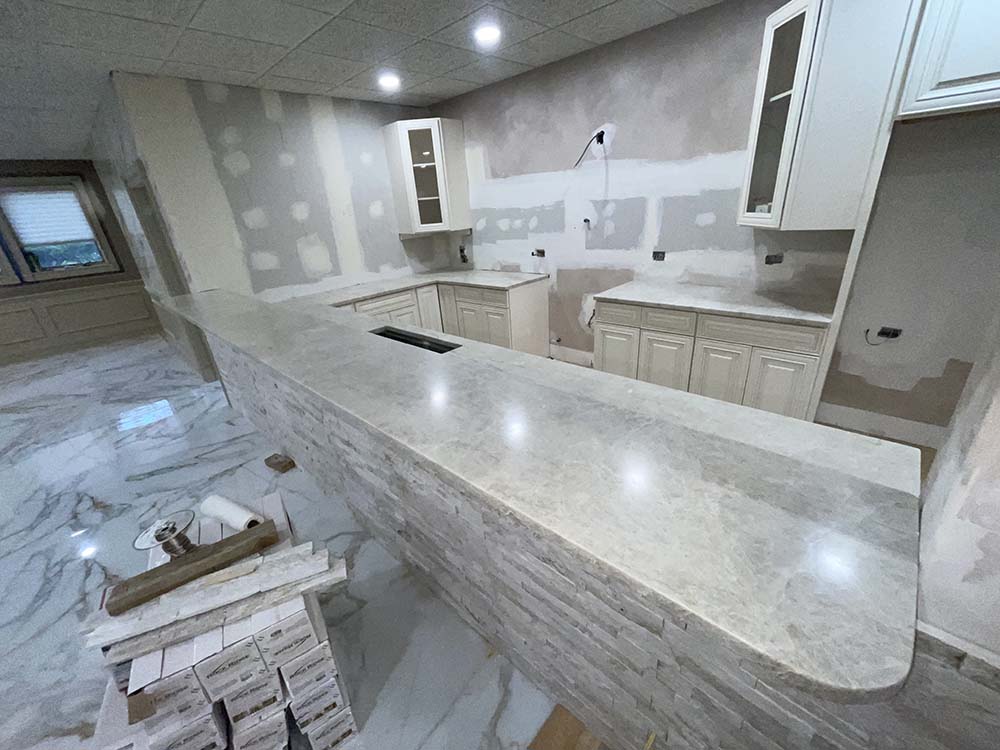
Here is the part that surprises people more. A single slab is not uniform across its own surface. Veining wanders. A concentration of one mineral may run heavily through one end and thin out at the other. A dramatic swirl might occupy two feet of a nine foot slab and appear nowhere else on it.
This is why we care so much about layout, and why a photograph of a slab is not enough to plan a kitchen from. Where your island comes from on the slab determines what your island looks like. The same slab can produce an island that is calm and even or an island with a dramatic feature running through it, depending entirely on which section gets used.
We lay pieces out digitally over a photo of your actual slab so those decisions get made deliberately. That process is covered in more detail in what happens to your slab in our shop.
Why the internet photo misleads
Online images of stone come from somewhere specific. Usually the most photogenic slab a supplier had, shot under controlled lighting, often color corrected, and sometimes cropped to the most interesting section.
None of that is dishonest. It is the same thing every industry does with product photography. But it means the image represents one slab at one moment, and the slab in our yard is a different slab.
Lighting compounds this. Stone looks different under showroom lighting, under the fluorescent lights in a warehouse, in daylight, and under the warm LEDs in your kitchen. A gray that looks cool and neutral in one setting can read distinctly warm in another. This is why we encourage people to look at slabs in more than one light and to take a sample home rather than deciding in one visit.
Which materials vary the most
Granite
Highly variable, and that is the appeal for most people who choose it. Granite can range from a fine even speckle to enormous swirling patterns with movement running the length of the slab. Two slabs sold under one name can differ substantially. If you want granite, you should select your specific slab.
Quartzite
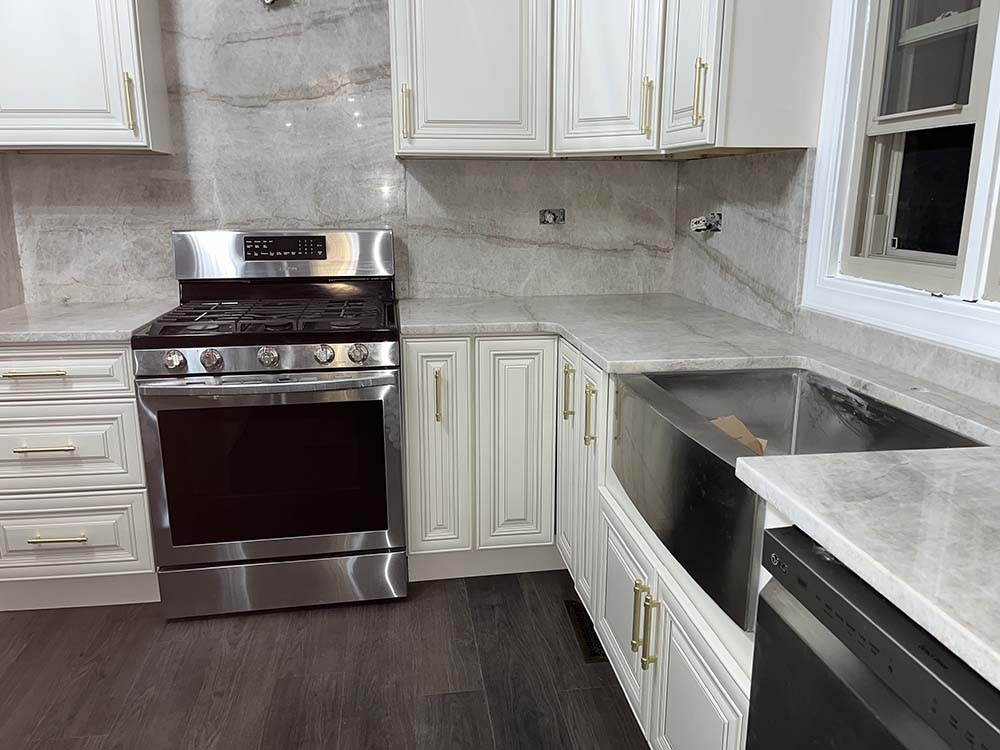
Quartzite varies considerably in veining and background tone. Because it is often chosen for a marble look, and because the veining is the point, slab selection matters even more here than with granite. Two slabs of the same quartzite can differ in how warm or cool the white background reads, which changes how it sits with your cabinets.
Marble
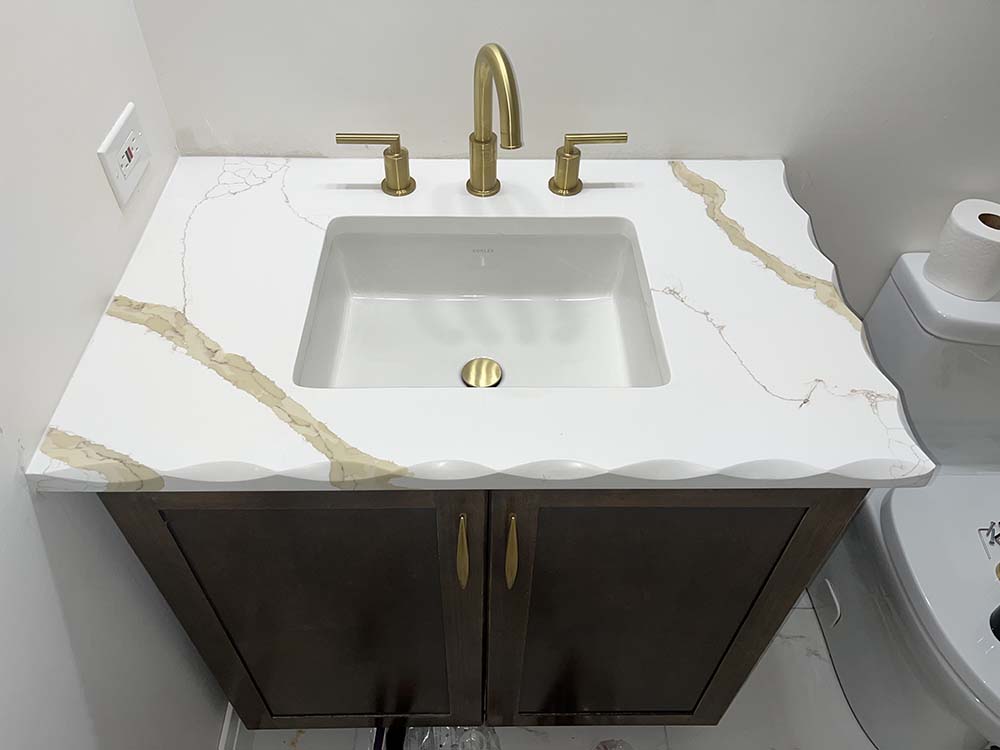
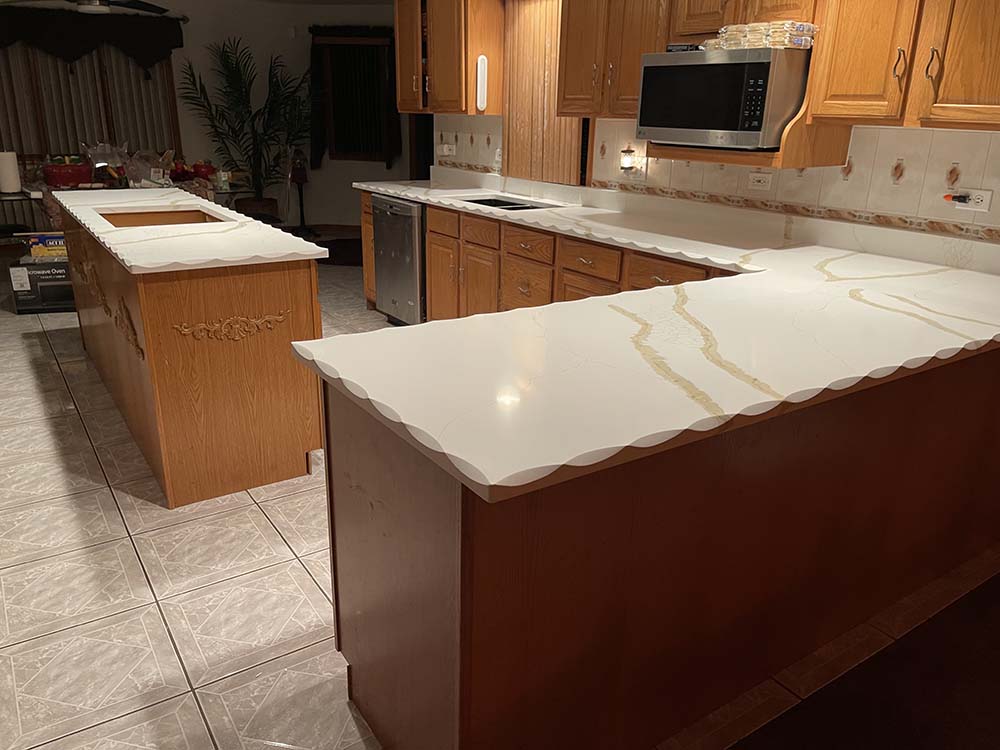
Marble varies both between and within slabs, and dramatic marbles like Calacatta are prized specifically for the character of the veining. Two Calacatta slabs can have completely different vein structures, one with bold sweeping strokes and another with fine dispersed lines. Neither is wrong and they produce very different kitchens.
Quartz
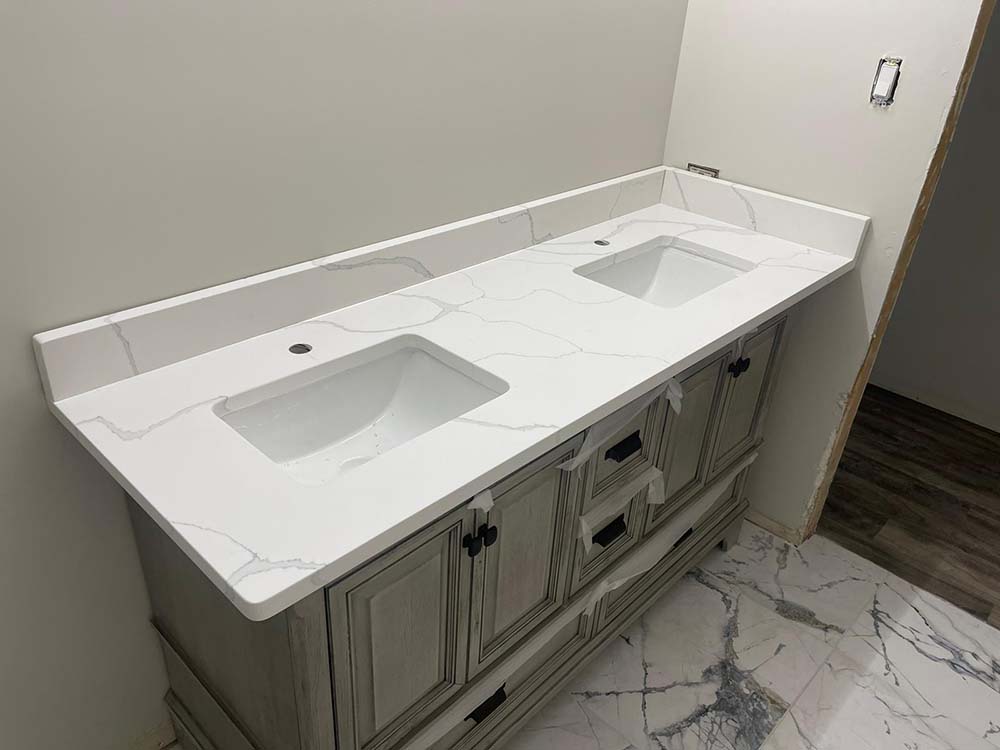
This is the exception. Quartz is manufactured, which means what you see in the sample is what arrives. Batch to batch variation exists but it is small and controlled. If predictability is what you want, and on a very large island or a kitchen with multiple runs it often is, quartz is the material designed to give it to you.
What this means when you are shopping
- Treat online photos as a direction, not a specification. They tell you what family of stone you like.
- See full slabs before you commit. A small sample cannot show you veining that runs across nine feet.
- Look at the slab in more than one light. Take a sample home and put it on your cabinets in daylight and at night.
- If your kitchen needs more than one slab, select them together and confirm they came from the same lot.
- Ask where on the slab your island will be cut from, and ask to see the layout before cutting.
Why the sample chip cannot tell you enough
Suppliers hand out small samples, usually a four inch square or a strip. They are useful for one thing: checking undertone against your cabinets and floors in your own lighting. They are close to useless for everything else.
A four inch square cannot show you a vein that sweeps across six feet of slab. It cannot show you how the pattern changes from one end of the piece to the other. It cannot show you scale, which matters enormously, because a granite that looks finely speckled in a small sample can read as busy and active across a large island.
Scale is the thing people misjudge most often. A pattern that seems subtle in your hand can dominate a room when it covers thirty square feet. The opposite happens too: a bold sample can disappear into calmness across a big surface. The only way to judge it is to stand in front of the full slab and step back.
Take the sample home by all means. Then come look at the slab before you commit.
The multiple slab problem
If your kitchen is large enough to need two slabs, this stops being a preference and becomes a requirement. Buying one slab now and a second one later, even under the same name, is a real risk. The second slab may come from a different block or a different shipment, and it may not match.
On larger projects, particularly the big island kitchens common in Naperville and newer Downers Grove construction, we recommend reserving both slabs at selection so the pieces stay together through the whole project.
Variation is the feature, not the flaw
It is worth reframing this. Nobody chooses natural stone because they want something uniform. If uniformity is the goal, engineered material does it better and costs less to plan around.
People choose granite, quartzite, and marble because the pattern is unrepeatable. The slab in your kitchen exists once. That is genuinely the appeal, and the practical cost of it is that you have to go look at slabs rather than ordering from a photograph.
We keep a working yard, not a sample library, precisely so people can walk through and see full pieces. If you are planning a kitchen countertop project anywhere from Bolingbrook to Joliet, come see the stone in person. Call (708) 362-7674 to arrange a visit.


Serving Chicago & Surrounding Areas
Get Your Free Kitchen Countertop Estimate
Fill out the form and our team will get back to you in next 24 hours.