
Written by the Al Jory Marble team. We fabricate and install in our own shop at 4711 135th St in Crestwood, IL, serving Chicago and the suburbs. See our site at aljorymarble.com.
A restaurant countertop has a completely different job than a residential one. It gets hit hundreds of times a day, cleaned with chemicals a homeowner would never use, inspected by someone with authority to shut you down, and it has to be installed on a schedule where every extra day costs you revenue.
We fabricate and install commercial countertops and restaurant and cafe countertops across Chicago and the suburbs, working with owners, general contractors, and designers. Here is what actually matters on these jobs, in the order it matters.
Food Contact Surfaces vs. Everything Else
This is the distinction that governs your material choice, and a surprising number of owners find out about it late.
Food service establishments in Chicago are inspected by the Chicago Department of Public Health, and Illinois food service sanitation rules follow the FDA Food Code framework. The general principle for surfaces that food touches directly is that they must be smooth, durable, nonabsorbent, and easily cleanable. Food equipment standards from NSF are commonly referenced in these evaluations.
What that means practically:
Direct food prep surfaces are the strictest category. Porous natural stone is generally not the right answer here, because a porous surface is not nonabsorbent no matter how well it is sealed. This is why most commercial prep areas use stainless steel, and where stone is used it is typically a nonporous engineered material. Some quartz products carry NSF certification specifically for this reason.
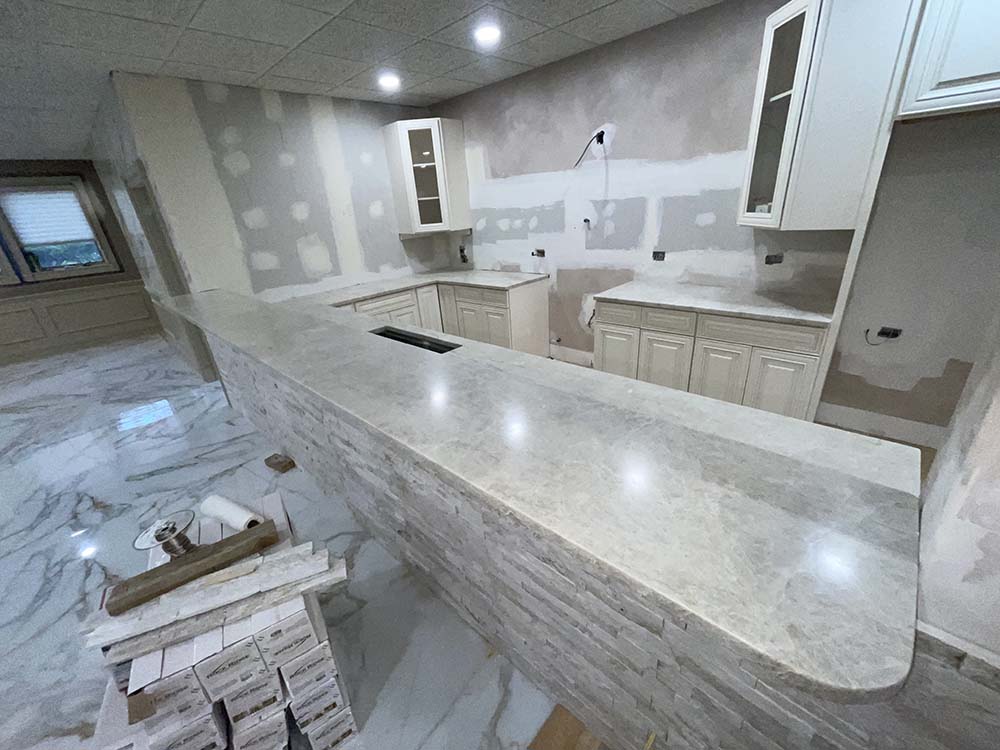
Non food contact surfaces have far more latitude. Bar tops where drinks are served on coasters or napkins, host stands, reception counters, table tops, service ledges, retail counters, and back bar surfaces are a different conversation, and this is where natural stone shines in a hospitality space.
We are fabricators, not your code authority. The rules are interpreted by your inspector and your architect, and specifics vary by use case and by what a plan reviewer decides for your particular layout. Confirm your intended surface with them before you commit to a material. What we can do is tell you honestly which materials tend to be accepted where, and fabricate to whatever spec your drawings call for.
Materials That Survive Commercial Use
Quartz is the workhorse of commercial hospitality. Engineered, nonporous, never needs sealing, and consistent slab to slab so a long bar run matches from end to end. It handles constant cleaning with commercial products better than most natural stone. Its limitation is heat: the resin binder means hot pans go on trivets, not on the counter. See quartz countertops.
Granite takes heat extremely well and shrugs off heavy physical use, which is why it has been a bar top standard for decades. It is porous and needs periodic sealing, and in a commercial setting that resealing schedule is more frequent than in a home. See granite countertops.
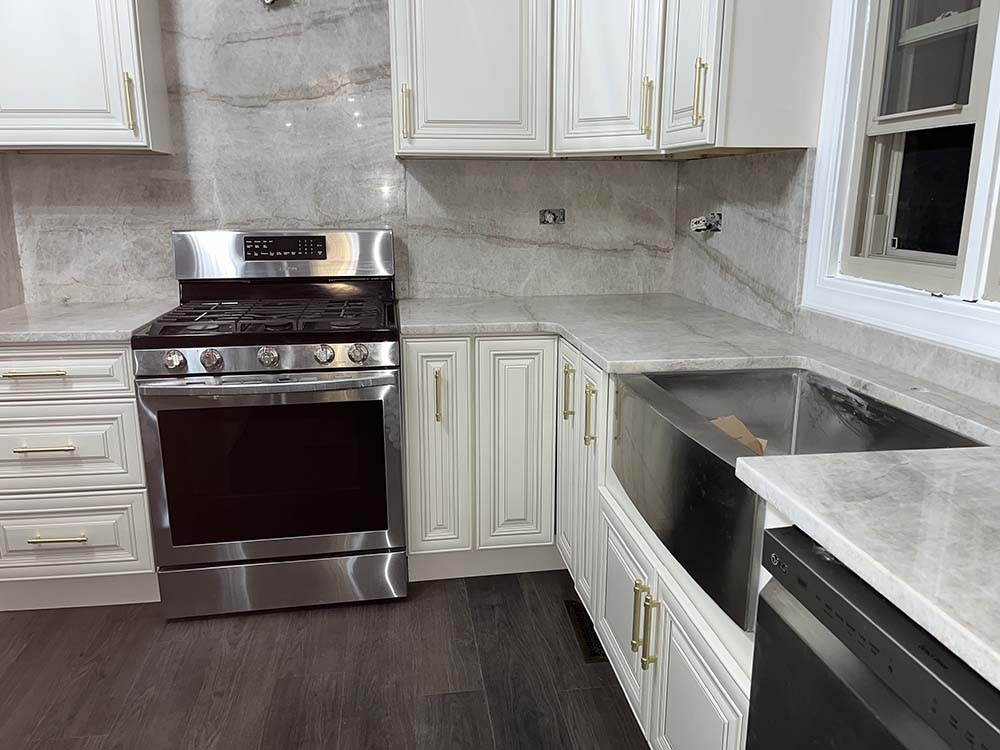
Quartzite gives you a high end natural look with more hardness than granite. Popular for statement bars and chef’s counters where the surface is part of the design. Still a natural stone, so sealing applies. See quartzite countertops.
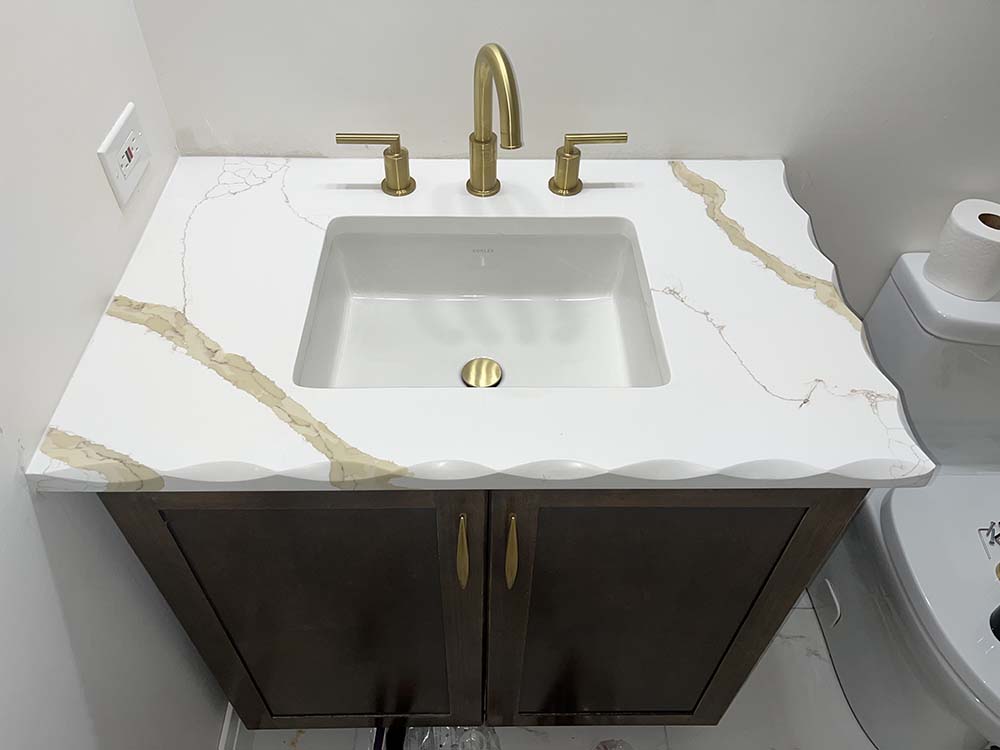
Marble belongs in hospitality, but in specific places: a host stand, a pastry display counter, a bathroom vanity, a fireplace surround, a wall panel. It etches on contact with acid, and a bar that serves citrus and wine will show that fast. Beautiful where it fits, punishing where it does not. We cover it honestly in our post on marble countertops in Chicago.
Our quartz vs granite vs quartzite comparison puts the three side by side.
Details That Matter More in Commercial Than Residential
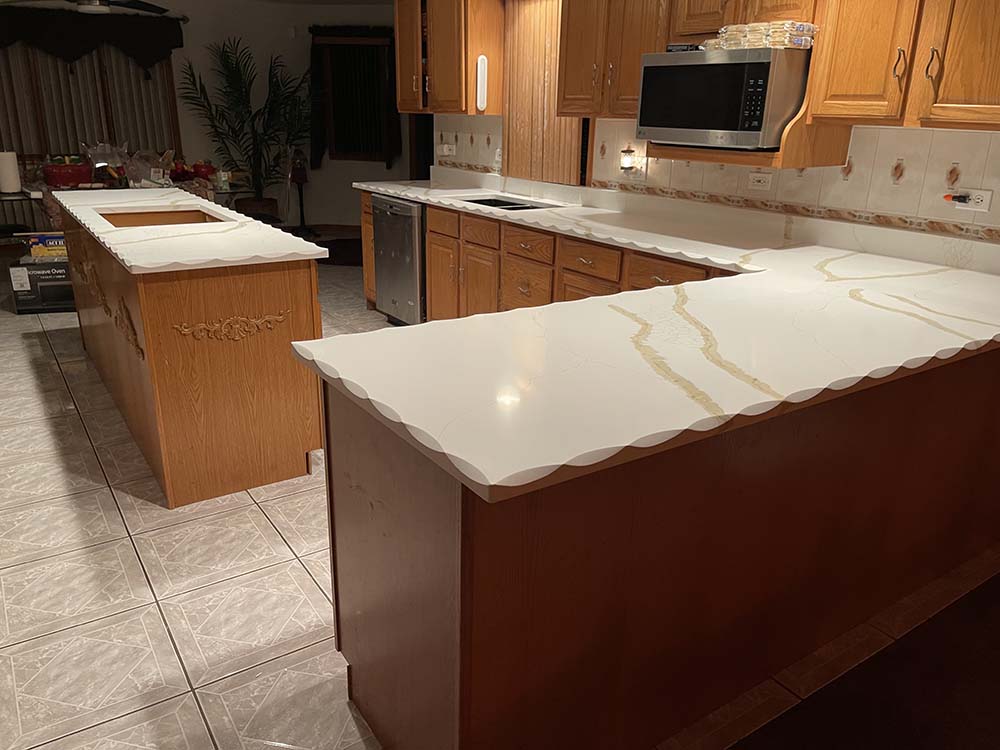
Edge profile. Delicate, highly detailed edges chip in a commercial environment. Every bus tub, every keg, every rolling cart eventually finds an edge. Eased, beveled, or bullnose profiles hold up far better than ornate ones, and a chipped ogee on a bar top is a repair conversation you do not want six weeks after opening.
Overhang support. Bar tops carry weight that residential counters never see. Patrons lean, sit, and put elbows and body weight on the front edge all night. Bar overhangs need proper steel or bracket support engineered for that load, not the residential rules of thumb. This is one of the most common specification failures we see on plans that were drawn without a fabricator in the room.
Thickness. Heavier material reads as more substantial in a hospitality space and holds up better. Mitered edges can make a standard thickness top look like a thick slab without the weight and cost of solid stock.
Corners. Sharp ninety degree corners on a service path get chipped and get bumped into. Radiused corners in high traffic lanes are worth specifying.
Seams. A long bar is going to have seams, because slabs are only so big. Where they land matters, and so does what is underneath them. See our post on countertop seam placement for how we plan them.
Cutouts and equipment. Undercounter refrigeration, POS terminals, wire pass throughs, sinks, speed rails, and drop in equipment all need to be coordinated before templating. We need real equipment specifications, and where possible the actual units on site, before we cut anything.
Cleaning chemicals. Tell us what your staff will actually be using. Commercial sanitizers, degreasers, and bleach solutions are far harsher than household cleaners, and material recommendations change based on the answer.
Turnaround: The Part That Costs You Money
Every day a space is not open is revenue you do not get back. Countertop scheduling in a restaurant buildout is a genuine business decision, not just a construction detail.
Two things we control that a middleman cannot.
We fabricate in our own shop. Your slab is cut, edged, and polished at our Crestwood facility, not sent out to a third party shop where it sits in someone else’s queue behind residential kitchens. When your GC needs a firm date, we can give one that we control.
We stock slabs. We keep marble, quartz, granite, and quartzite inventory at Crestwood, so most projects can start without waiting on a supplier order. On a buildout with a hard opening date, having material in the building is worth more than a slightly lower quote on something that has to be shipped in.
What we need from you to hold a schedule:
- Final drawings with equipment locations. Changes after templating mean re-templating.
- Millwork and base cabinetry installed and level before we template. We cannot template over cabinets that will move.
- Sinks and drop in equipment on site. We cut to the physical unit, not the spec sheet, because manufacturers change dimensions between production runs.
- A single point of contact. Owner, GC, or PM. Jobs run by committee lose days.
- Access and install window. Many Chicago spaces require off hours or weekend work, loading dock coordination, or building approvals. Tell us early and we plan around it.
Our post on how long countertop installation takes walks through each stage in more detail.
Who We Work With
Restaurant and cafe owners, coffee shops, bakeries, bars, hotels, offices, medical and dental practices, retail, and salons. On the trade side we work regularly with general contractors, builders, designers, and architects who need a fabricator that will template properly, hit a date, and not disappear after install.
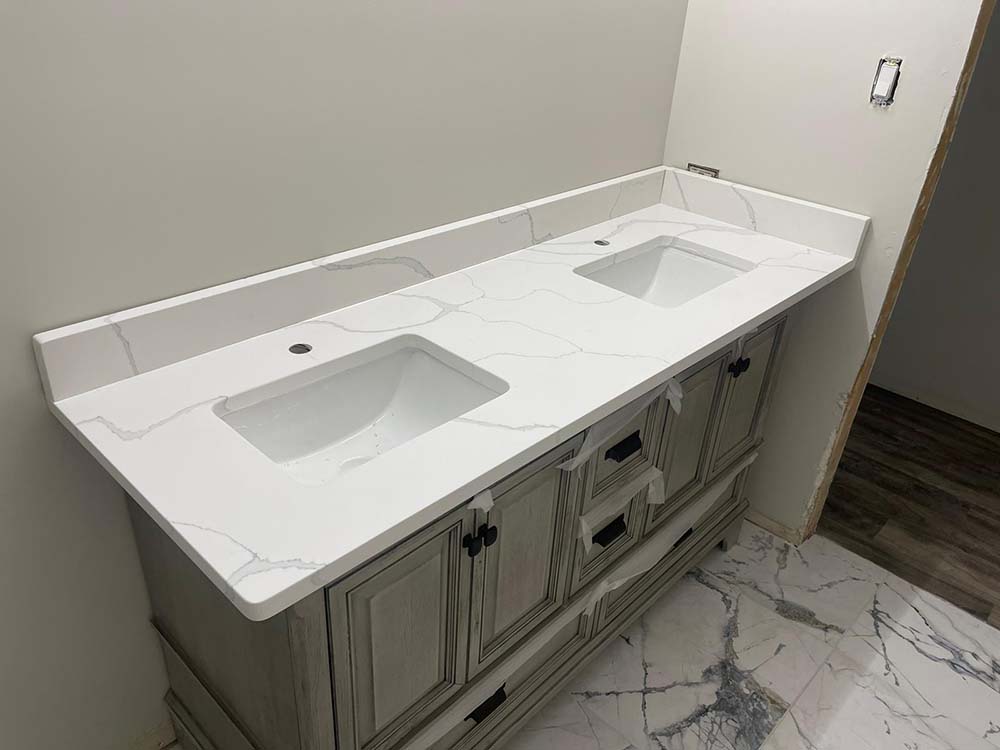
Reception desks, break room counters, conference room surfaces, and restroom vanities all come through the same shop and the same crew. Our commercial countertops page covers the full scope, and our custom fabrication page covers how the shop work runs.
We serve Chicago, Oak Lawn, Orland Park, Tinley Park, Naperville, Schaumburg, Aurora, Joliet, Bolingbrook, and Downers Grove. For work in city buildings with freight elevators and building rules, see our post on Chicago condo and high rise countertop replacement, which covers the same logistics.
Get a Commercial Quote
Send us your drawings and we will give you a written estimate, a material recommendation based on how the surface will actually be used, and a realistic date.
Visit the showroom and slab yard at 4711 135th St, Crestwood IL 60418, Monday through Saturday, 9:00 a.m. to 6:00 p.m. Call (708) 362-7674 or request a free estimate. Free consultation, free written estimate, no obligation.

Serving Chicago & Surrounding Areas
Get Your Free Kitchen Countertop Estimate
Fill out the form and our team will get back to you in next 24 hours.