
Written by Sam Ali
Published: September 26, 2026
Read Time: 12 minutes
Butler Pantry Countertops Chicago: Plan the Surface Around Storage, Serving and Cleanup
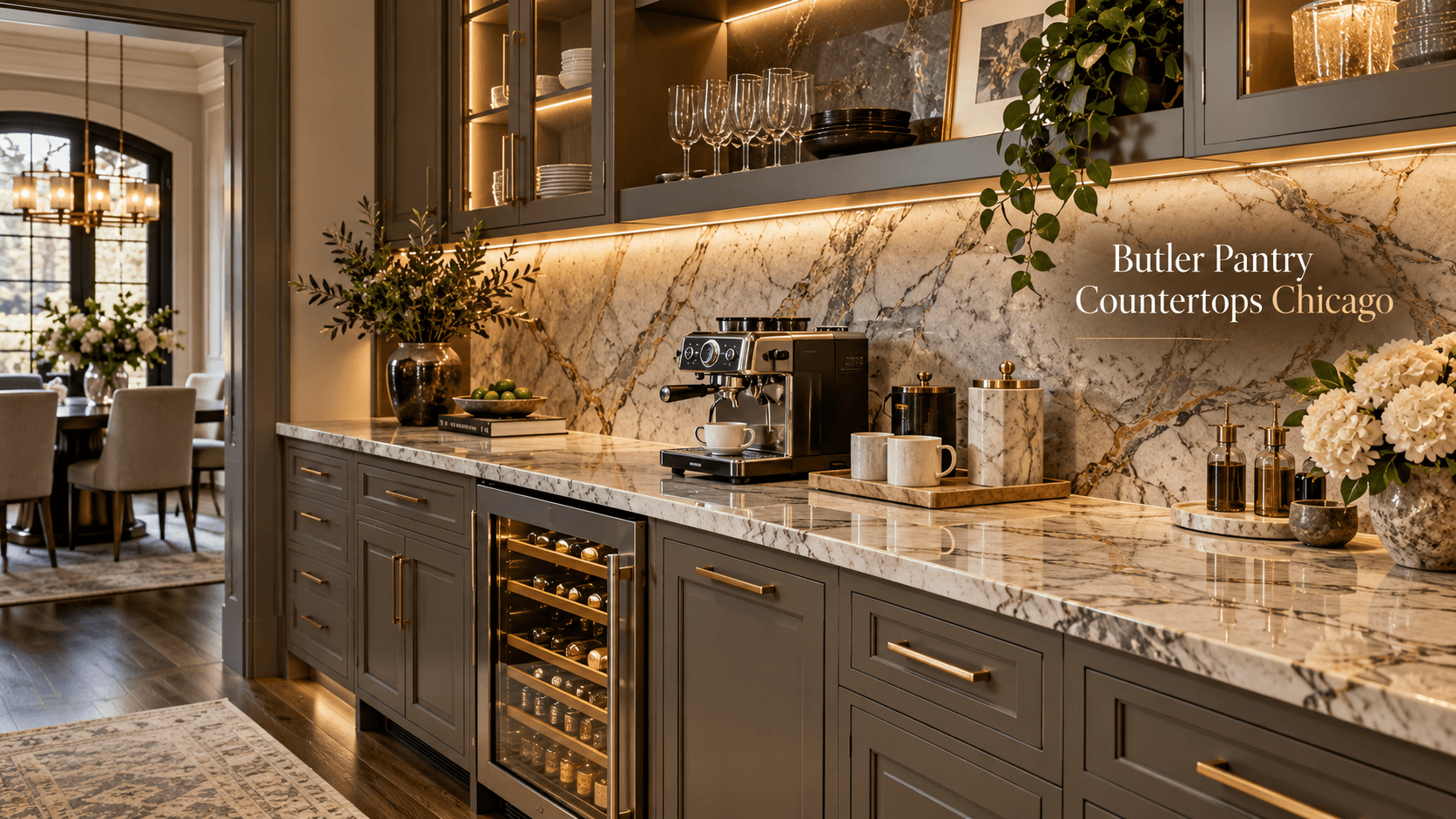
Butler pantry countertops Chicago homeowners choose should be planned around what the room will actually do. A butler pantry may function as a serving station, coffee bar, appliance zone, secondary prep area, dish-storage room or transition between the kitchen and dining space.
That makes the countertop decision different from simply choosing a smaller version of the main kitchen surface.
The room may need to handle coffee, wine, hot appliances, occasional food preparation, water around a sink and frequent serving while also acting as one of the most visible secondary spaces in the home.
Quick answer: A butler pantry countertop should match the way the space is used. Quartz is practical for coffee stations and frequent cleanup because it is nonporous and does not require sealing. Granite and quartzite work well when heat resistance and natural stone matter. Marble can be an excellent choice in a lower-traffic pantry where appearance is the priority and the homeowner accepts natural etching and patina. Smaller pantry counters may also be excellent candidates for premium stone remnants.
Call (708) 362-7674 or request a free countertop estimate to compare material options for a pantry, coffee station or secondary kitchen surface.
What Is a Butler Pantry Today?
Traditionally, a butler pantry sat between the kitchen and formal dining room and provided space for serving dishes, silverware and food staging.
Modern versions can do much more.
A butler pantry may include:
- Upper and lower cabinetry
- Countertop workspace
- Coffee machine
- Beverage refrigerator
- Wine storage
- Sink
- Dishwasher
- Microwave
- Small appliances
- Serving pieces
- Open shelving
- Full-height backsplash
Some are nearly secondary kitchens.
Others are narrow pass-through rooms with one countertop run.
That difference matters because countertop material should follow function rather than the room label.
A Butler Pantry Is Not Automatically a Wet Bar
The two spaces can overlap, but they are not identical.
A wet bar is usually designed primarily around drinks and entertaining. It may include a bar sink, wine refrigerator, bottles and cocktail equipment.
A butler pantry is often more multipurpose.
It may handle:
- Food staging
- Serving
- Dish storage
- Coffee
- Appliances
- Baking supplies
- Cleanup
- Overflow from the main kitchen
If the room will primarily function as a beverage station, Al Jory’s wet bar countertop guide covers wine, citrus, ice, bar sinks and beverage-equipment considerations in more detail.
For a true butler pantry, think more broadly about how the entire household will use the room.
Start With What Will Sit on the Counter
Before choosing quartz, marble or another surface, list the equipment that will live there.
That might include:
- Espresso machine
- Coffee grinder
- Toaster
- Blender
- Microwave
- Stand mixer
- Wine opener
- Electric kettle
- Warming tray
These items affect countertop depth, outlet locations and available workspace.
A beautiful pantry can become frustrating if the coffee machine consumes nearly all of the usable counter or if appliance cords stretch awkwardly across the backsplash.
Design the working surface first.
Then select the material.
Quartz Is Usually the Easiest Low-Maintenance Choice
For a heavily used pantry, quartz countertops are an easy material to consider.
Quartz is engineered and nonporous, so it does not require periodic sealing like many natural stones. Al Jory currently stocks and fabricates quartz in its Crestwood shop alongside its natural-stone selections.
That can work particularly well around:
- Coffee
- Milk
- Syrup
- Food spills
- Everyday cleanup
- Frequently used sinks
Quartz also offers predictable color and veining, which can make it easier to coordinate a smaller room with the main kitchen.
The main practical consideration is heat.
Use protection under very hot cookware and heat-producing appliances according to the surface manufacturer’s guidance.
Granite Makes Sense When Heat and Daily Use Matter
Granite countertops provide natural variation and strong heat performance.
That can be useful if the pantry will function as an active secondary prep zone rather than mainly decorative storage.
Granite may be a good fit around:
- Hot serving dishes
- Small cooking appliances
- Busy coffee stations
- Food-prep areas
- High-use family spaces
Because it is natural stone, each slab has its own mineral pattern.
That makes a pantry countertop an opportunity to introduce a distinctive material without committing the entire main kitchen to it.
Quartzite Can Turn the Pantry Into a Feature Space
Quartzite countertops can be especially attractive when homeowners want natural stone with dramatic movement.
A butler pantry is often visible through a doorway from the kitchen or dining room.
That creates an opportunity.
Instead of making the room disappear, the countertop can become a focal point framed by the opening.
Quartzite can work particularly well with:
- Painted cabinetry
- Natural wood cabinetry
- Brass hardware
- Open shelving
- Full-height stone backsplash
- Under-cabinet lighting
For dramatic natural stone, see the full slab before deciding.
Pattern movement that looks subtle in a small sample may become much more prominent across the finished countertop.
Marble Has a Strong Case in a Butler Pantry
Marble is not the easiest material for every working kitchen.
A butler pantry can be different.
Al Jory’s current marble countertop information specifically identifies butler pantries among the spaces where marble can work particularly well because they often receive less aggressive daily food exposure than a main prep counter.
That makes the room a good place to consider genuine marble if you love:
- Natural veining
- Softer movement
- Traditional interiors
- Historic-home character
- Honed finishes
- A surface that develops patina
Marble can etch when exposed to acids such as citrus, wine and vinegar.
If your pantry is really a cocktail station used every night, that matters.
If it is primarily used for serving, storage and occasional preparation, you may be more comfortable accepting marble’s natural aging.
The Pantry Does Not Have to Match the Main Kitchen
Many homeowners assume the secondary countertop must be identical to the kitchen.
It does not.
Matching can create continuity.
Contrasting can make the pantry more interesting.
For example:
A white quartz kitchen might use a warm quartzite pantry.
A granite kitchen might use marble in the butler pantry.
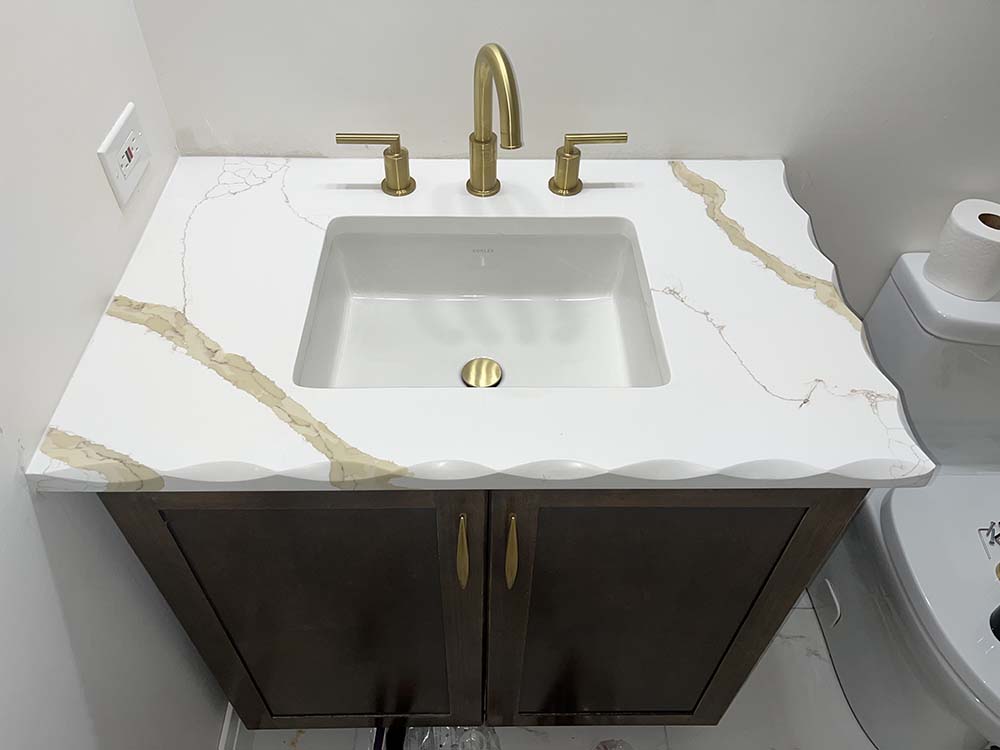
A quiet perimeter surface might lead into a more dramatic Calacatta-style pantry.
The spaces should relate to each other, but they do not need to be copies.
This is especially useful when you want to use a premium material in a smaller quantity.
Smaller Pantry Counters Can Be Excellent Remnant Projects
This is one of the strongest reasons to price the pantry separately.
A butler pantry may require significantly less material than a full kitchen.
That means it may fit on a remnant.
A countertop remnant is a usable section left from a larger slab after another project has been fabricated.
Al Jory keeps remnants at its Crestwood yard, and its countertop remnants guide specifically describes smaller counters, bar tops and similar projects as good remnant candidates.
A remnant can potentially let you use:
- Premium quartz
- Granite
- Quartzite
- Marble
- Dramatic patterned material
without buying material intended for a much larger kitchen.
The piece still needs to be large enough for the real countertop dimensions and any backsplash pieces.
“Almost fits” does not work in custom fabrication.
A Coffee Station Changes the Material Decision
Coffee stations look simple.
They are not always gentle on surfaces.
Think about:
- Coffee spills
- Milk
- Syrups
- Steam
- Water
- Repeated wiping
- Heavy machines
- Drip trays
If the coffee station will see heavy daily use, quartz can be attractive because of its low maintenance.
Granite and quartzite can also perform well.
Marble requires more realistic expectations because coffee and acidic ingredients can leave marks or affect the finish.
The right choice depends on whether you want the pantry to remain visually pristine or whether natural aging is part of the appeal.
Plan the Sink Before the Stone Is Fabricated
Some butler pantries include no plumbing.
Others have a full secondary sink.
If a sink is included, the exact model should be selected before final fabrication.
The countertop fabricator needs to know:
- Sink type
- Sink dimensions
- Faucet location
- Faucet-hole arrangement
- Soap dispenser
- Filtered-water faucet
- Other accessories
For an undermount sink, the countertop opening remains visible and needs a finished edge.
This is why the sink cannot be treated as an accessory chosen after the stone has already been cut.
Decide Whether You Need a Full-Height Stone Backsplash
A small pantry can become visually dramatic when the stone continues vertically up the wall.
A full-height stone backsplash can work especially well behind:
- Coffee stations
- Floating shelves
- Open shelving
- Beverage refrigerators
- Serving counters
It also removes much of the grout found in a conventional tile backsplash.
But it needs to be planned early.
Stone backsplash requires additional material, outlet cutouts and careful measurements. On heavily veined surfaces, the countertop and wall pieces may also need to be laid out together.
Do not decide on slab backsplash after the countertop material has already been allocated.
Open Shelving Makes the Countertop More Visible
A kitchen countertop may sit beneath upper cabinets.
Many butler pantries use floating shelves or glass-front cabinetry.
That puts more visual emphasis on the counter and backsplash.
If the stone will be exposed from countertop to ceiling, think about:
- Vein direction
- Wall color
- Cabinet color
- Shelf material
- Hardware finish
- Lighting temperature
The pantry may occupy only a small part of the house while becoming one of its most photographed details.
That makes slab selection disproportionately important.
Countertop Edge Profiles Can Change the Character of the Room
The edge on a pantry countertop is close to eye and hand level every time someone walks through the space.
A simple eased edge works well in contemporary and transitional rooms.
More decorative profiles may suit traditional cabinetry.
A mitered edge can create a thicker architectural appearance.
Al Jory’s countertop edge profiles guide explains eased, beveled, bullnose, ogee and mitered options in more detail.
Do not choose an ornate edge automatically because the pantry is supposed to look luxurious.
When the slab itself has dramatic movement, a simpler edge can allow the material to do the visual work.
Consider How the Pantry Counter Meets Tall Cabinets
Butler pantries often contain more cabinetry than an ordinary kitchen counter run.
You may have:
- Pantry towers
- Appliance garages
- Beverage refrigerators
- Built-in ovens
- Floor-to-ceiling cabinets
- Open shelves
That means the countertop may terminate against cabinetry rather than an open wall.
Those transitions need to be part of templating.
The goal is tight, deliberate fitting rather than leaving awkward filler strips or oversized gaps around millwork.
Lighting Changes How Stone Looks
A pantry frequently has less daylight than the main kitchen.
That matters.
A beautiful slab viewed under bright showroom lighting may appear darker or warmer in an enclosed pantry.
Before choosing the stone, consider:
- Natural light
- Under-cabinet lighting
- Pendant lighting
- Warm vs cool LEDs
- Cabinet color
- Wall color
Highly polished stone reflects more light.
Honed material reads softer.
Strong directional veining can become more prominent under wall-washing or under-cabinet lighting.
Bring cabinet or flooring samples when viewing stone if possible.
Butler Pantry Countertops Chicago Homes Can Use as a Transition
In many Chicagoland homes, the butler pantry is not a destination room.
It is a transition.
Someone moves through it from kitchen to dining room, mudroom or another living area.
That creates a different design opportunity.
The countertop can bridge materials between rooms.
For example, a darker dining-room finish might be introduced through the pantry while the main kitchen remains lighter.
Or the pantry may repeat the kitchen countertop while using different cabinetry.
The surface can help make the spaces feel connected without making them identical.
Do You Need a Seam?
Many pantry countertops are small enough to fabricate in one piece.
That can eliminate a visible seam entirely.
But longer counters, unusual layouts or backsplash pieces may still require multiple sections.
The final decision depends on:
- Counter length
- Slab dimensions
- Material
- Sink location
- Access
- Pattern
The advantage of a small space is that you may have more flexibility to position the countertop within one particularly attractive area of the slab.
Fabrication Matters Even on a Small Counter
Smaller does not mean simpler.
A butler pantry countertop may still require:
- Digital templating
- Sink cutout
- Faucet holes
- Appliance clearances
- Finished edges
- Backsplash fabrication
- Wall scribing
- Polishing
- Installation
Al Jory’s countertop fabrication service covers custom cutting, edge profiling, polishing and appliance/fixture cutouts from its Crestwood fabrication shop.
That is important when cabinetry has already been custom built around a very specific pantry layout.
The countertop has to fit the room as constructed.
New Pantry or Countertop Replacement?
Not every project begins with new cabinetry.
You may already have a functional pantry with:
- Laminate
- Tile
- Dated granite
- Damaged stone
- Builder-grade surfaces
If the cabinetry is solid, replacing only the countertop may make sense.
Al Jory’s countertop replacement service covers removal of existing surfaces and installation of new stone while keeping suitable existing cabinets.
Before replacement, the cabinets need to be checked for level, condition and structural suitability.
New stone should not be installed over failing cabinetry simply to avoid fixing the underlying problem.
Include the Pantry When Requesting the Kitchen Quote
If the pantry is part of a larger kitchen project, include it from the beginning.
Do not request a kitchen quote and add the pantry after the main slabs have already been calculated.
The pantry may affect:
- Slab quantity
- Remnant availability
- Pattern planning
- Backsplash material
- Installation scheduling
The countertop quote guide explains why the complete scope—including secondary counters, backsplashes, cutouts and specialty details—should be identified early.
Sometimes the pantry can be fabricated efficiently from material remaining after the main kitchen layout.
That possibility is much easier to identify before cutting.
See Completed Stone Work Before Choosing the Finish
If you are deciding between a quiet quartz pantry and a dramatic natural-stone feature, review finished installations rather than slabs alone.
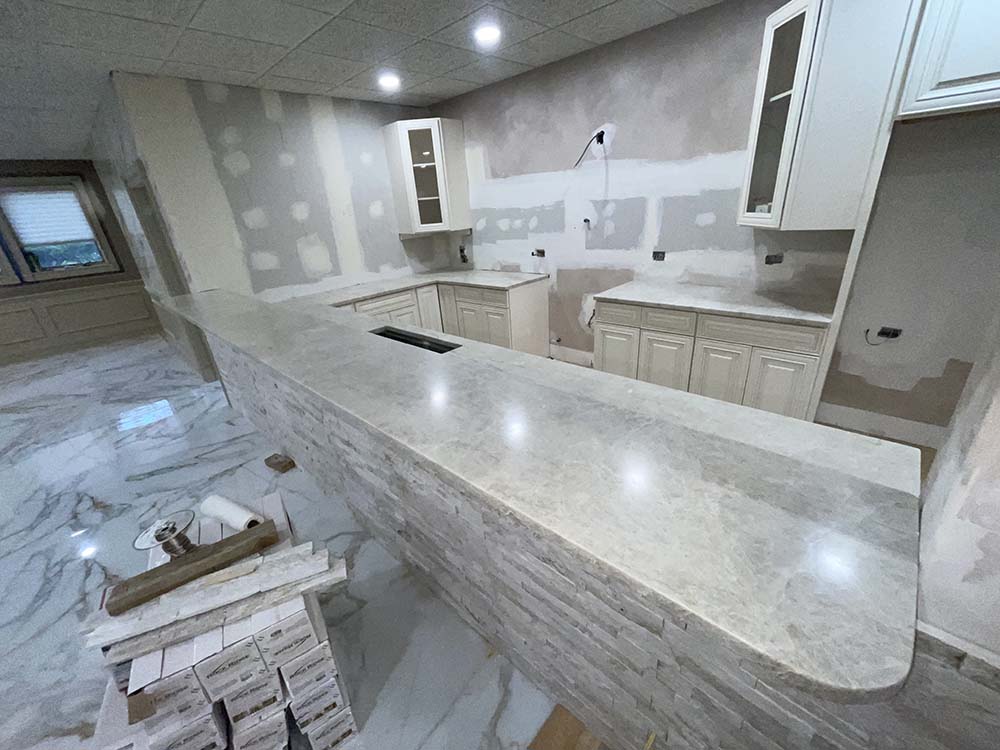
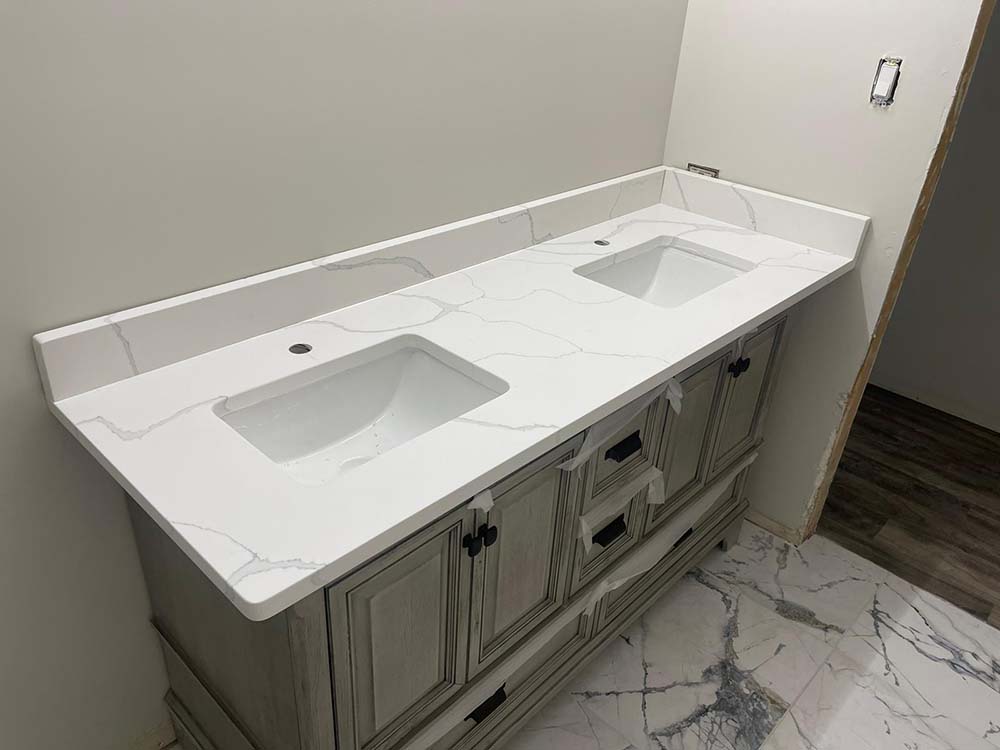
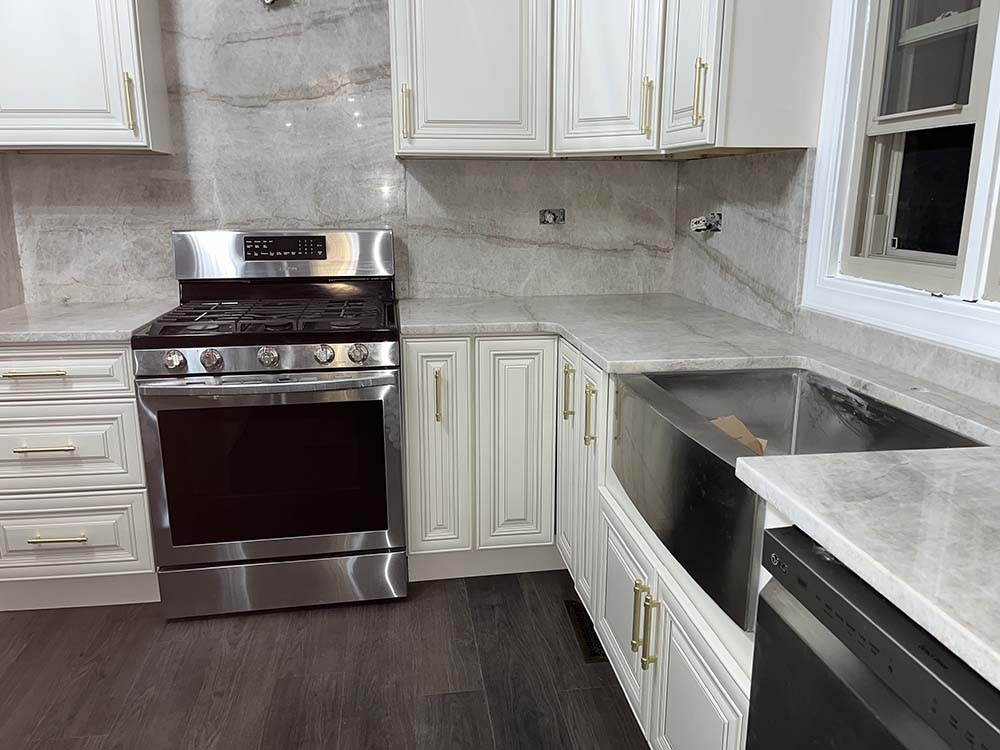
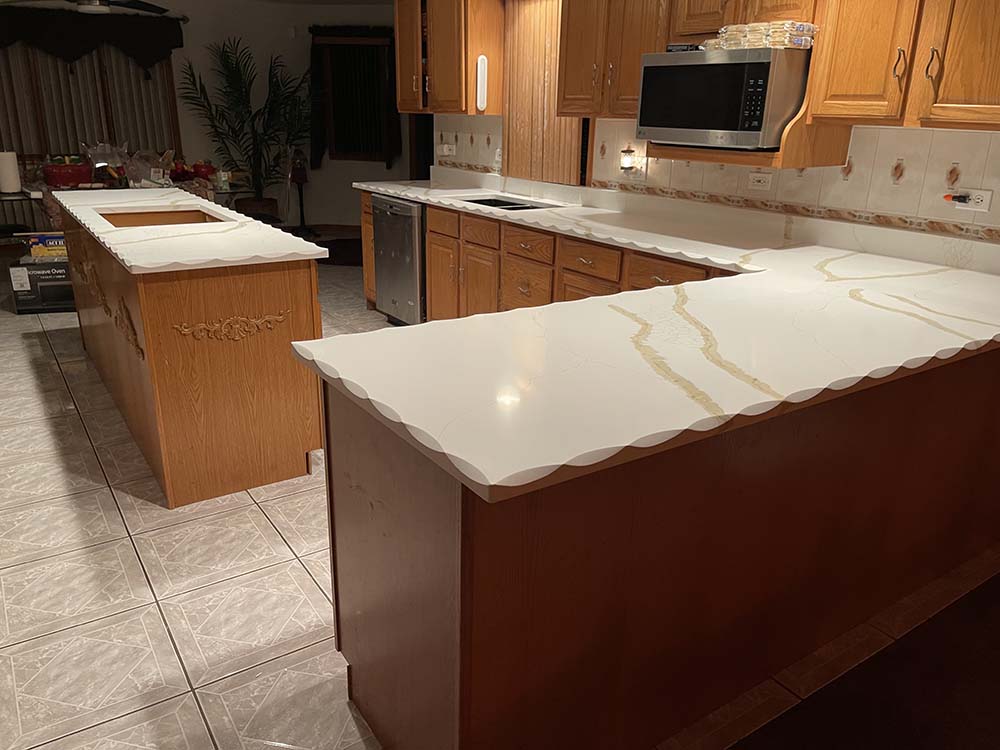
The Al Jory countertop gallery shows kitchen, bathroom and commercial fabrication work and can help homeowners see how full-size surfaces read after installation.
A slab standing vertically under showroom lighting is only part of the decision.
The real question is how the material looks once it becomes a horizontal countertop surrounded by cabinetry, lighting and hardware.
Butler Pantry Countertops Chicago FAQs
What is the best countertop material for a butler pantry?
There is no single best option. Quartz is excellent for low maintenance, granite and quartzite provide durable natural stone, while marble can work especially well in lower-traffic pantries where its natural aging is acceptable.
Can I use a different countertop from the main kitchen?
Yes. A butler pantry can either match the main kitchen or use a contrasting material as a secondary design feature.
Is marble good for a butler pantry?
It can be. Butler pantries often expose marble to less aggressive daily food preparation than main kitchen counters, making them one of the more practical places to use the material if you accept etching and patina.
Can a countertop remnant be used?
Often, yes. Smaller pantry counters can be excellent candidates for remnants if the available piece is large enough for the actual dimensions and fabrication requirements.
Should a coffee bar use quartz?
Quartz can be an excellent coffee-station surface because it is nonporous and low maintenance. Granite and quartzite are also strong choices depending on the desired appearance and heat exposure.
Can a butler pantry have a full-height stone backsplash?
Yes. Continuing countertop material up the wall can create a very clean appearance, but it should be included during slab planning because it requires additional material and fabrication.
Do I need the sink before measuring the countertop?
The exact sink should be selected before final fabrication, particularly for an undermount installation.
Can I replace a pantry countertop without replacing the cabinets?
Often, yes, provided the existing cabinets are structurally sound, secure and suitable for the new surface.
Make the Butler Pantry Work as Hard as It Looks
A butler pantry may be smaller than the main kitchen, but that does not make its countertop an afterthought.
Decide whether the space is primarily for coffee, serving, drinks, food preparation, storage or cleanup.
Then select the stone around that use.
For homeowners comparing butler pantry countertops Chicago, the smaller footprint can also create opportunities to use a premium natural stone, a dramatic remnant or a more distinctive finish than they would choose for the entire kitchen.
If the pantry is being planned alongside new Chicago kitchen countertops, include both areas in the same slab and fabrication conversation. That gives the fabricator a better chance to use the material efficiently and coordinate the two spaces.
Al Jory Marble templates, fabricates and installs quartz, granite, quartzite and marble countertops from its Crestwood shop for homes throughout Chicago and the surrounding suburbs.
Call (708) 362-7674 or request a free written countertop estimate.
Contact Al Jory Marble
Al Jory Marble
Phone: (708) 362-7674 — Request a Free Quote
Address: 4711 135th St, Crestwood, IL 60418
Email: aljorymarble9446@gmail.com
Hours: Mon–Sat 9 AM–6 PM

Serving Chicago & Surrounding Areas
Get Your Free Kitchen Countertop Estimate
Fill out the form and our team will get back to you in next 24 hours.