Written by the Al Jory Marble team, countertop fabricators and installers in Crestwood, Illinois. Updated October 16, 2026.
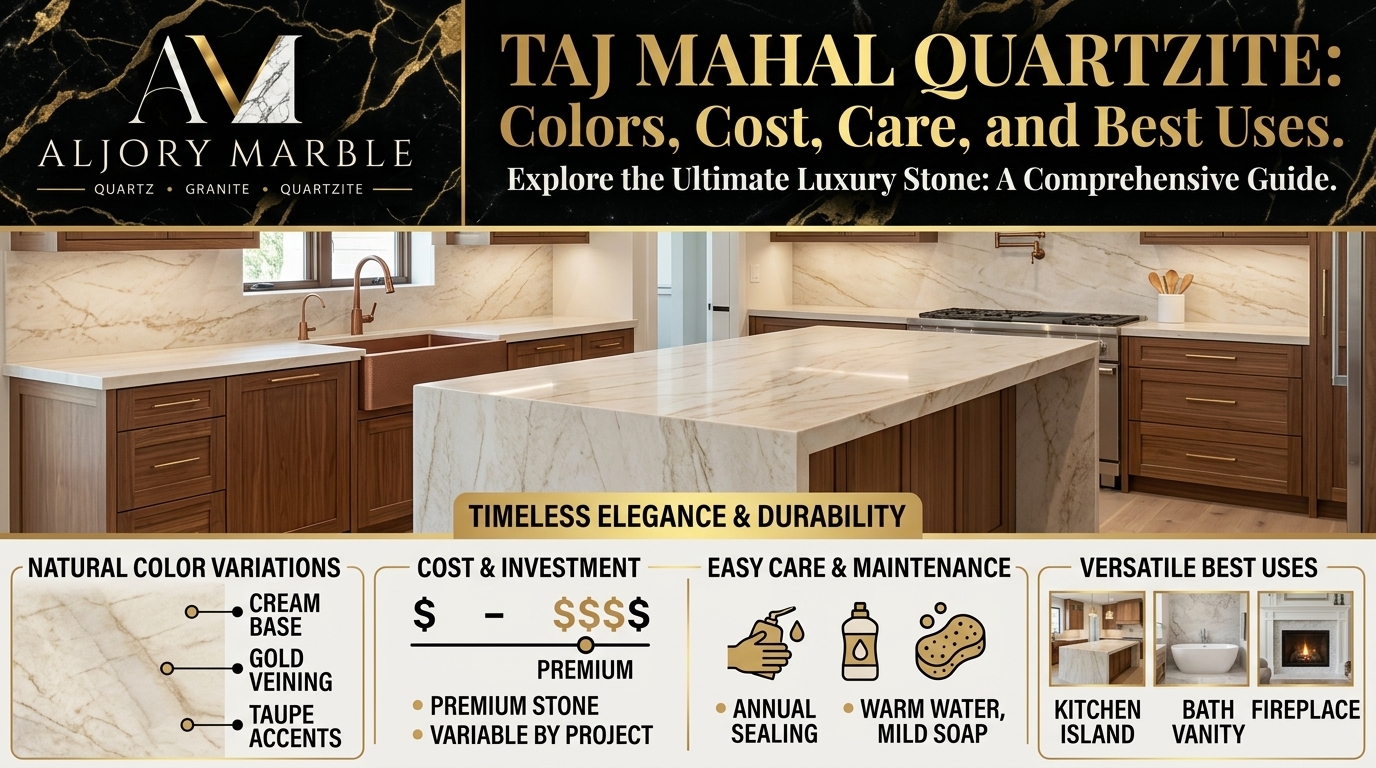
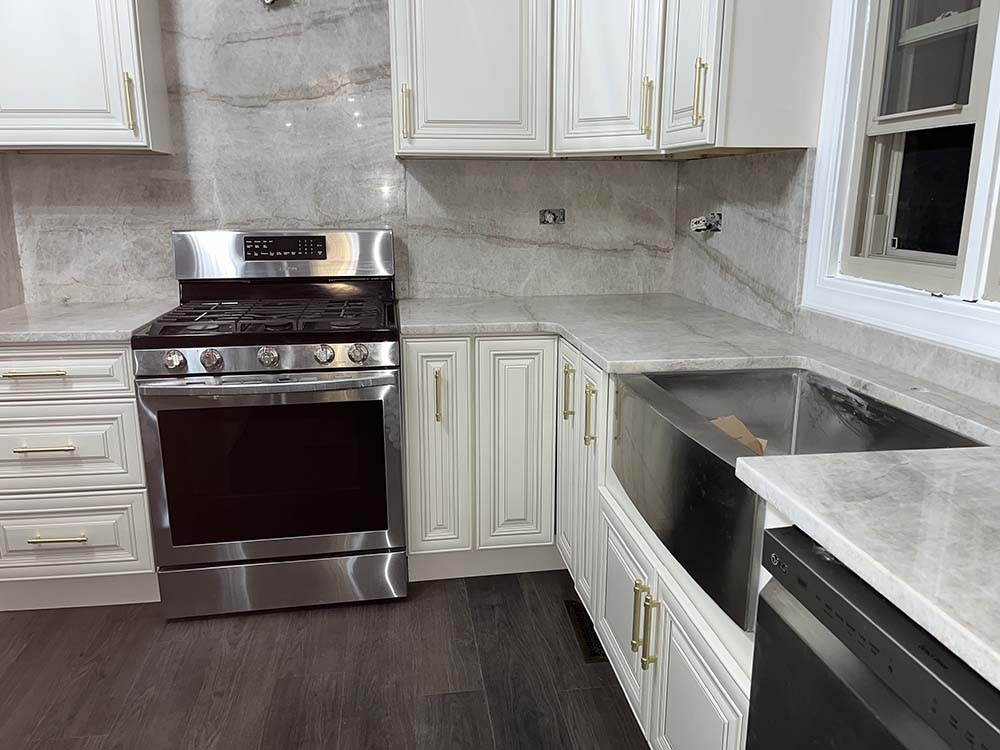
Taj Mahal quartzite is a natural stone from Brazil with a cream to soft white background and warm gold and taupe veins. It has the soft look of a warm marble, but it is far harder and does not etch from lemon juice or wine. That mix is why it has become one of the most requested stones for kitchen islands, perimeter countertops, and full-height backsplashes.
This guide covers what Taj Mahal looks like from slab to slab, what it costs installed in 2026, how to care for it, where it works best, and how to make sure the slab you buy is the real thing.
What Is Taj Mahal Quartzite?
Taj Mahal is a true quartzite. It started as sandstone and was fused into a dense, crystal-hard stone by heat and pressure over millions of years. It is quarried in the state of Ceara in northeast Brazil, around the town of Uruoca. The name refers to the ivory tones of the famous building in India. The stone itself has no link to India.
Key facts at a glance:
- Type: natural quartzite
- Origin: Ceara, Brazil
- Hardness: about 7 on the Mohs scale, compared with 3 to 4 for marble
- Etching: does not etch from lemon, vinegar, wine, or tomato
- Porosity: porous, so it needs sealing
- Thickness: sold in 2cm and 3cm slabs
Colors and Patterns
No two slabs of Taj Mahal look exactly alike, but most share the same palette:
- Background: cream, soft white, or light beige
- Veins: warm gold, amber, and taupe, sometimes with a little soft gray
- Movement: soft and wispy in most slabs, with long, gentle lines rather than sharp contrast
Some lots lean almost white with faint veining. Others are warmer, with heavier gold movement. Suppliers sell the warmest, most veined slabs under names like Taj Mahal Gold or Golden Taj Mahal.
You will also see related quartzites from the same part of Brazil, such as Perla Venata. They can look close to Taj Mahal, but they come from different quarries and are not always the same stone. If a slab yard offers one as a swap, look at the full slab and test a sample before you decide.
Why you should see the full slab
A small sample chip cannot show you how the veins move across a 10-foot island. Variation between lots can be large, even under the same name. Always pick from the actual slabs that will be cut for your job, and ask to see them laid out side by side. Our post on how we select, template, and cut slabs explains what happens next.
Matching cabinets and finishes
The warm cream and gold tones make Taj Mahal one of the easiest stones to pair with cabinets:
- White and warm white cabinets for a soft, bright kitchen
- Natural or medium wood tones, which pick up the gold in the veins
- Sage, olive, and other muted greens
- Navy or deep blue for contrast
- Brass and warm bronze hardware
Cool, stark whites and very gray cabinets can make the stone look more yellow than it is. Hold your cabinet door next to the slab before you commit. For more pairings, see our guide on matching countertop colors with cabinets.
How Much Does Taj Mahal Quartzite Cost?
Most Taj Mahal kitchens land around $90 to $150+ per square foot installed in 2026. That puts it in the middle to upper part of our quartzite range of about $80 to $200+ per square foot, from our countertop cost guide. National sources put premium quartzites like Taj Mahal in a similar $100 to $150+ range for typical high-end work.
For a sense of scale, a 40 square foot kitchen at $90 to $150 per square foot comes to about $3,600 to $6,000 before extras.
What moves the price:
- Slab lot and grade. Whiter, cleaner slabs and the warmest gold slabs often cost more.
- Thickness. 3cm costs more than 2cm but needs no build-up on the edge.
- Edges and waterfalls. Mitered edges and waterfall legs take more labor and more stone.
- Vein matching. Lining up veins across seams can mean buying an extra slab.
- Cutouts. Each sink and cooktop cutout adds cost.
- Backsplash. A full-height slab backsplash adds material and labor.
- Tear-out. Removing old countertops is usually priced separately.
Taj Mahal quartz usually costs less installed than the natural stone, because it is easier and faster to fabricate. Our guide on what drives a countertop quote up shows where you can save. These are planning ranges, not a quote.
How Durable Is It?
Taj Mahal is one of the toughest natural stones you can put in a kitchen.
- Scratches: At about 7 on the Mohs scale, it is harder than a steel knife. It will not scratch in normal use. Still use a cutting board, because it will dull your knives.
- Etching: It does not etch from citrus, vinegar, wine, or tomato.
- Heat: It handles heat well. A trivet is still smart, because a very hot pan can damage the sealer or the resin in natural pits, and sudden temperature changes can stress any stone.
- Chips: Like any hard stone, the edges can chip if hit hard by a heavy pot. An eased or slightly rounded edge holds up better than a sharp square one.
- Stains: It is porous. Without a good sealer, oil and dark liquids can soak in.
Care and Sealing
Care is simple once the stone is sealed.
Daily
- Wipe with warm water and a pH-neutral stone cleaner or mild dish soap
- Dry with a soft cloth to avoid water spots
- Wipe up oil, wine, coffee, and turmeric quickly
Avoid
- Bleach, ammonia, vinegar, and harsh degreasers. They will not etch the stone, but they wear down the sealer.
- Abrasive pads and scouring powders
Sealing
- Use a penetrating sealer made for quartzite. Quartzite is dense, so some general sealers do not soak in well.
- Do the water test every few months. Leave a few drops of water on the surface for 15 minutes. If the stone darkens, it is time to reseal.
- Most kitchens need resealing about every 12 to 18 months. Busy areas near the sink and range may need it sooner.
Chicago tap water is hard and can leave mineral spots on any stone. Our post on hard water and countertops explains how to remove them safely. For a routine that covers every material, see our countertop care guide.
Best Uses in the Home
Taj Mahal works almost anywhere you would put a countertop or stone panel:
- Kitchen perimeter countertops. Hard enough for daily cooking, and acid spills will not etch it.
- Kitchen islands. The soft veins look good across a large, open surface without feeling busy.
- Waterfall islands. The stone is strong enough for mitered waterfall edges, and the gold veins can wrap down the sides. See how waterfall islands are made.
- Full-height backsplashes. A single slab behind the range shows off the movement. See our full-height stone backsplash guide.
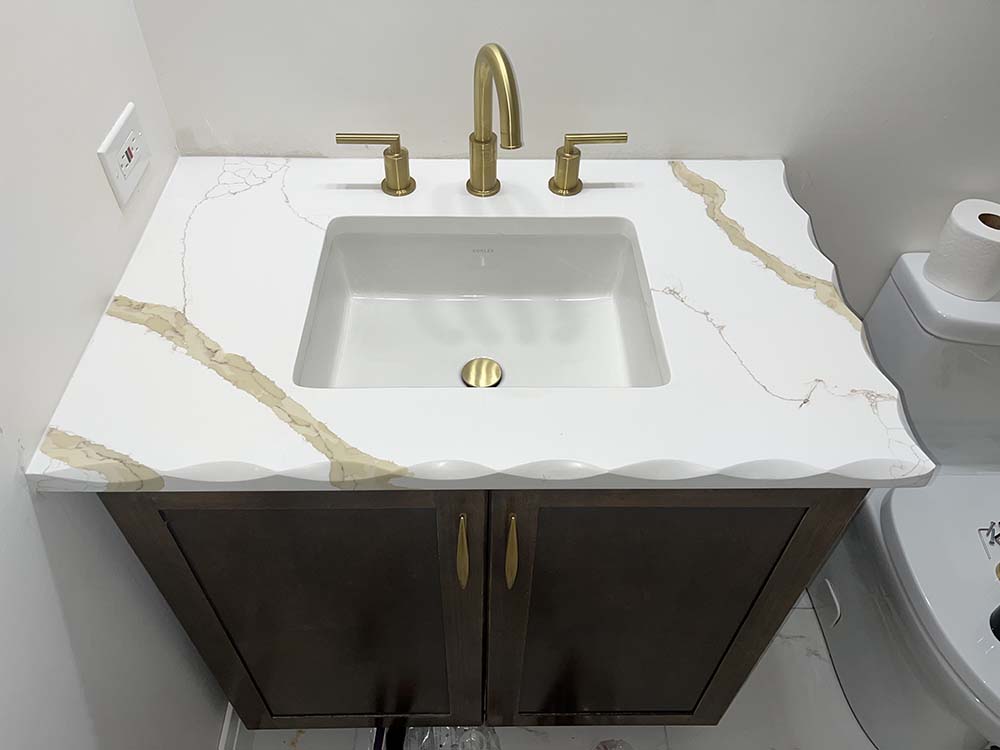
- Bathroom vanities. The warm white background brightens a bathroom. See our bathroom vanity tops.
- Fireplace surrounds. It handles heat well and gives a soft, light look. See our stone fireplace surround guide.
- Outdoor kitchens. Natural quartzite will not fade or yellow in sun the way some engineered surfaces can. Keep it sealed, and read our notes on outdoor kitchen countertops in Chicago weather.
What to know before fabrication
- Edges: Taj Mahal is very hard, so simple edges like eased, bevel, and mitered work best. Some suppliers say a detailed ogee may not be possible. See our edge profiles guide.
- Resin: Most slabs get a thin epoxy resin coat during polishing to fill small natural pits. This is normal and does not affect durability.
- Seams: With soft veining, seams are easier to hide than on a bold Calacatta. Ask where they will go before the slab is cut.
How It Compares to Other Popular Stones
Taj Mahal quartzite vs. Taj Mahal quartz
Taj Mahal quartz is an engineered product made to copy the natural stone. They share a name, not a material.
- Quartzite: natural, every slab different, needs sealing, handles heat better
- Quartz: engineered, even pattern, no sealing, needs trivets for hot pans
If you want the real veining and better heat resistance, choose quartzite. If you want zero sealing and a repeatable look, choose quartz. Our heat resistance guide covers how each one handles hot pans.
Taj Mahal vs. Calacatta marble
Both give a soft, veined, marble look. Calacatta is brighter white with bolder gray veins. Taj Mahal is warmer and creamier. The big difference is upkeep: Calacatta marble etches from acid, and Taj Mahal does not. Our Calacatta countertops page covers marble and quartz Calacatta options.
Taj Mahal vs. Super White
These two are often shopped together. Super White is cooler white and gray. It is usually a dolomite, so it can etch. Taj Mahal is a true quartzite and will not.
Taj Mahal vs. granite
Granite is about as hard and also handles heat well. Most granites have a speckled look. Taj Mahal gives you the soft veins of marble with similar toughness.
How to Tell If Your Slab Is Real Quartzite
Stone names are not standardized. Softer stones are sometimes sold as quartzite, so it is worth testing a sample from your actual slab:
- Acid test. Leave a few drops of lemon juice or vinegar on the sample for 10 to 15 minutes, then wipe it off. Real Taj Mahal will not change. A dull spot means the stone contains calcite and can etch.
- Glass test. Drag the edge of a glass bottle across the sample. Real quartzite will scratch the glass. Marble and dolomite will get scratched.
- Water test. Leave a few drops of water on the surface for 15 minutes. If it darkens quickly, the stone needs sealing before use.
Any good fabricator will let you test a sample before you buy.
Frequently Asked Questions
Is Taj Mahal quartzite good for kitchens?
Yes. It is hard, heat resistant, and does not etch from kitchen acids. It needs sealing about once every 12 to 18 months, but otherwise it is one of the easiest natural stones to live with.
Does Taj Mahal quartzite etch?
No. True Taj Mahal is quartzite, which has no calcite, so lemon juice, vinegar, and wine will not etch it. If a sample etches, it is not true quartzite.
Is Taj Mahal quartzite the same as Taj Mahal quartz?
No. Taj Mahal quartzite is a natural stone from Brazil. Taj Mahal quartz is an engineered slab made to copy its look. The quartz needs no sealing, while the quartzite handles heat better and every slab is unique.
How much does Taj Mahal quartzite cost installed?
Most kitchens land around $90 to $150+ per square foot installed in 2026. Slab grade, edges, waterfalls, cutouts, and vein matching move the final price.
What color cabinets go with Taj Mahal quartzite?
Warm whites, natural wood, sage and olive greens, and navy all work well. Brass and warm bronze hardware bring out the gold veins.
How often should Taj Mahal quartzite be sealed?
Most kitchens need it about every 12 to 18 months. Use the water test: if a few drops darken the stone within 15 minutes, reseal.
Can Taj Mahal quartzite be used outdoors?
Yes. Natural quartzite does not fade in sunlight. Keep it sealed and clean so freeze and thaw cycles do not push water into the stone.
Where does Taj Mahal quartzite come from?
It is quarried in the state of Ceara in northeast Brazil. The name refers to the ivory color of the Taj Mahal building in India, not to where the stone comes from.
See the Slabs in Person
Taj Mahal changes from slab to slab, so photos only tell part of the story. Visit our showroom at 4711 135th St in Crestwood, Monday through Saturday, 9am to 6pm. Bring a cabinet door and a flooring sample and hold them next to full slabs before you choose.
Our own team templates, fabricates, and installs every job, so nothing gets handed off to a subcontractor. Call (708) 362-7674 or request a free quote for your Taj Mahal quartzite countertops.

Serving Chicago & Surrounding Areas
Get Your Free Kitchen Countertop Estimate
Fill out the form and our team will get back to you in next 24 hours.